Biochemistry Notes BI Chapter 3


Biochemistry   All Materials © Cmassengale

I. Cells Contain Organic Molecules

A. Most Common Elements

1. Most common elements in living things are carbon, hydrogen, nitrogen, and oxygen.

2. These four elements constitute about 95% of your body weight.

3. Chemistry of carbon allows the formation of an enormous variety of organic molecules.
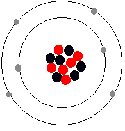
4. Organic molecules have carbon and hydrogen; determine structure and function of living things.

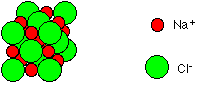
5. Inorganic molecules do not contain carbon and hydrogen together; inorganic molecules (e.g., NaCl) can play important roles in living things.
B. Small Molecules Have Functional Groups

1. Carbon has four electrons in outer shell; bonds with up to four other atoms (usually H, O, N, or another C).

2. Ability of carbon to bond to itself makes possible carbon chains and rings; these structures serve as the backbones of organic molecules.

3. Functional groups are clusters of atoms with characteristic structure and functions.

a. Polar molecules (with +/- charges) are attracted to water molecules and are hydrophilic.  
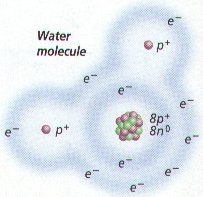
b. Nonpolar molecules are repelled by water and do not dissolve in water; are hydrophobic.

c. Hydrocarbon is hydrophobic except when it has an attached ionized functional group such as carboxyl (acid) ( COOH); then molecule is hydrophilic.  


d. Cells are 70-90% water; degree organic molecules interact with water affects their function.
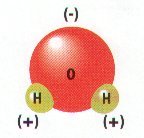
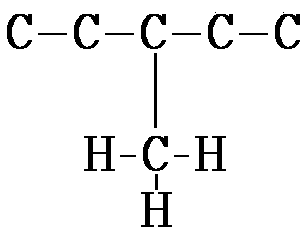
4. Isomers are molecules with identical molecular formulas but differ in arrangement of their atoms


C. Large Organic Molecules Have Monomers

1. Each small organic molecule can be a unit of a large organic molecule called a macromolecule.

2. Small organic molecules (e.g., monosaccharides, glycerol and fatty acid, amino acids, and nucleotides) that can serve as monomers, the subunits of polymers.

3. Polymers are the large macromolecules composed of three to millions of monomer subunits.

4. Four classes of macromolecules (polysaccharides or carbohydrates, triglycerides or lipids, polypeptides or proteins, & nucleic acids such as DNA & RNA) provide great diversity.

D. Condensation Is the Reverse of Hydration

1. Macromolecules build by different bonding of different monomers; mechanism of joining and breaking these bonds is condensation and hydrolysis.

2. Cellular enzymes carry out condensation and hydrolysis of polymers.

3. Condensation involves a dehydration synthesis because a water is removed (dehydration) and a bond is made (synthesis).

a. When two monomers join, a hydroxyl ( OH) group is removed from one monomer and a hydrogen is removed from the other.

b. This produces the water given off during a condensation reaction.

4. Hydrolysis (hydration) reactions break down polymers in reverse of condensation; a hydroxyl
( OH) group from water attaches to one monomer and hydrogen ( H) attaches to the other.

II. Carbohydrates

A. Monosaccharides, Disaccharides, and Polysaccharides

1. Monosaccharides are simple sugars with a carbon backbone of three to seven carbon atoms.
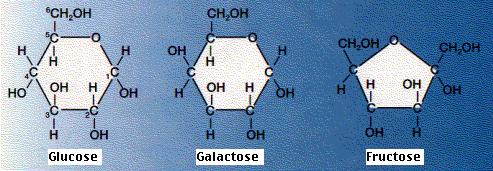
a. Best known sugars have six carbons (hexoses).

[Glucose Straight Structure]

1) Glucose and fructose isomers have same formula (C6H12O6) but differ in structure.

2) Glucose is commonly found in blood of animals; is immediate energy source to cells.

3) Fructose is commonly found in fruit.

4) Shape of molecules is very important in determining how they interact with one another.

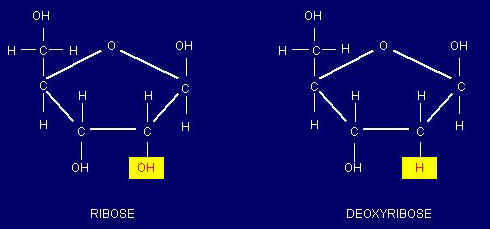
2. Ribose and deoxyribose are five-carbon sugars (pentoses); contribute to the backbones of RNA and DNA, respectively.

3. Disaccharides contain two monosaccharides joined by condensation.

a. Sucrose is composed of glucose and fructose and is transported within plants.
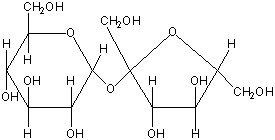
sucrose molecule - Sucrose

b. Lactose is composed of galactose and glucose and is found in milk.

c. Maltose is two glucose molecules; forms in digestive tract of humans during starch digestion.


Sugar Sweetness
fructose 173%
sucrose 100%
glucose 74%
maltose 33%
galactose 33%
lactose 16%


B. Polysaccharides Are Varied in Structure and Function

1. Polysaccharides are chains of glucose molecules or modified glucose molecules

a. Starch is straight chain of glucose molecules with few side branches.

b. Glycogen is highly branched polymer of glucose with many side branches; called “animal starch,” it is storage carbohydrate in the liver of animals.

c. Cellulose is glucose bonded to form microfibrils; primary constituent of plant cell walls.
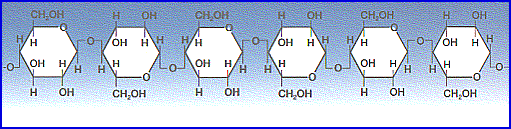
d. Chitin is polymer of glucose with amino acid attached to each; it is primary constituent of crabs and related animals like lobsters and insects.

III. Lipids

A. Lipids

1. Lipids are varied in structure.

2. Many are insoluble in water because they lack polar groups.

B. Fats and Oils Are Similar

1. Each fatty acid is a long hydrocarbon chain with a carboxyl (acid) group at one end.

a. Because the carboxyl group is a polar group, fatty acids are soluble in water.

b. Most fatty acids in cells contain 16 to 18 carbon atoms per molecule.
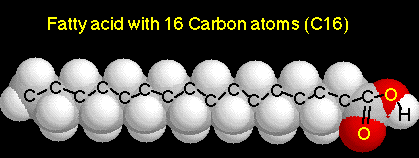
c. Saturated fatty acids have no double bonds between their carbon atoms. (C-C-C-)

d. Unsaturated fatty acids have double bonds in the carbon chain.(C-C-C-C=C-C-)

e. Saturated animal fats are associated with circulatory disorders; plant oils can be substituted for animal fats in the diet.

2. Glycerol is a water-soluble compound with three hydroxyl groups.

3. Triglycerides are glycerol joined to three fatty acids by condensation
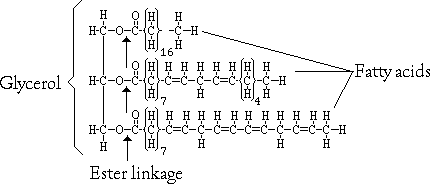
4. Fats are triglycerides containing saturated fatty acids (e.g., butter is solid at room temperature).

5. Oils are triglycerides with unsaturated fatty acids (e.g., corn oil is liquid at room temperature).

6. Fats function in long-term energy storage in organisms; store six times the energy as glycogen.

C. Waxes Are Nonpolar Also

1. Waxes are a long-chain fatty acid bonded to a long-chain alcohol.

a. Solid at room temperature; have a high melting point; are waterproof and resist degradation.

b. Form protective covering that retards water loss in plants; maintain animal skin and fur.

D. Phospholipids Have a Polar Group

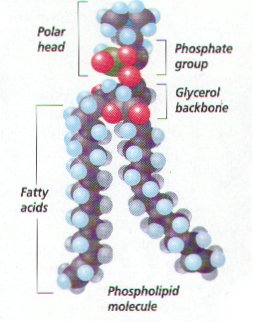
1. Phospholipids are like neutral fats except one fatty acid is replaced by phosphate group or a group with both phosphate and nitrogen

[Lecithin]

2.Phosphate group is the polar head: hydrocarbon chain becomes nonpolar tails

3. Phospholipids arrange themselves in a double layer in water, so the polar heads face outward toward water molecules and nonpolar tails face toward each other away from water molecules.

[Phospholipid Bilayer]

4. This property enables them to form an interface or separation between two solutions (e.g., the interior and exterior of a cell); the plasma membrane is a phospholipid bilayer.  
E. Steroids Have Carbon Rings

1. Steroids differ from neutral fats; steroids have a backbone of four fused carbon rings; vary according to attached functional groups.

2. Cholesterol is a precursor of other steroids, including aldosterone and sex hormones.

3. Testosterone is the male sex hormone.

4. Functions vary due primarily to different attached functional groups.

IV. Proteins

A. Amino Acids  

1. Amino acids are the monomers that condense to form proteins, which are very large molecules with structural and metabolic functions.
2. Structural proteins include keratin, which makes up hair and nails, and collagen fibers, which support many organs.

3. Myosin and actin proteins make up the bulk of muscle.

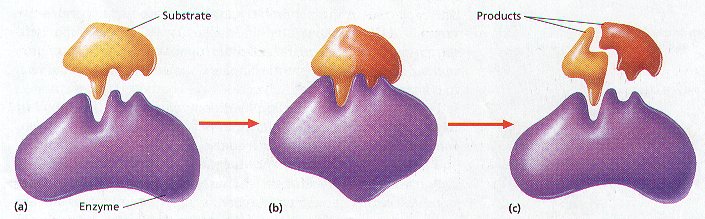
4. Enzymes are proteins that act as organic catalysts to speed chemical reactions within cells.
5. Insulin protein is a hormone that regulates glucose content of blood.

6. Hemoglobin transports oxygen in blood.

7. Proteins embedded in the plasma membrane have varied enzymatic and transport functions.

B. Peptide Bonds Join Amino Acids

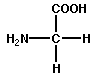
1. All amino acids contain a carboxyl (acid) group ( COOH) and an amino group ( NH2).

2. Both ionize at normal body pH to produce COO- and NH+; thus, amino acids are hydrophilic.

3. Peptide bond is a covalent bond between amino acids in a peptide; results from condensation reaction.

a. Atoms of a peptide bond share electrons unevenly (oxygen is more electronegative than nitrogen).

b. Polarity of the peptide bond permits hydrogen bonding between parts of a polypeptide.

Diagram representing the above description

4. Amino acids differ in nature of R group, ranging from single hydrogen to complicated ring compounds.

a. R group of amino acid cysteine ends with a sulfhydryl ( SH) that serves to connect one chain of amino acids to another by a disulfide bond ( S S).

b. There are 20 different amino acids commonly found in cells.

5. A peptide is two or more amino acids joined together.

a. Polypeptides are chains of many amino acids joined by peptide bonds.

b. Protein may contain more than one polypeptide chain; it can have large numbers of amino acids.

C. Proteins Can Be Denatured

1. Both temperature and pH can change polypeptide shape.

a. Examples: heating egg white causes albumin to congeal; adding acid to milk causes curdling. When such proteins lose their normal configuration, the protein is denatured.

b. Once a protein loses its normal shape, it cannot perform its usual function.

2. The sequence of amino acids, therefore, forecasts the protein’s final shape.

D. Proteins Have Levels of Structure

1. Final 3-D shape of a protein determines function of the protein in the organism.

a. Primary structure is sequence of amino acids joined by peptide bonds.

1) Frederick Sanger determined first protein sequence, with hormone insulin, in 1953.

a) First broke insulin into fragments and determined amino acid sequence of fragments.

b) Then determined sequence of the fragments themselves.

c) Required ten years research; modern automated sequencers analyze sequences in hours.

2) Since amino acids differ by R group, proteins differ by a particular sequence of the R groups.

b. Secondary structure results when a polypeptide takes a particular shape.

1) The (alpha) helix was the first pattern discovered by Linus Pauling and Robert Corey.

a) In peptide bonds, oxygen is partially negative, hydrogen is partially positive.

b) Allows hydrogen bonding between the C O of one amino acid and the N H of another.

c) Hydrogen bonding between every fourth amino acid holds spiral shape of a helix.

d) helices covalently bonded by disulfide (S S) linkages between two cysteine amino acids.

2) The sheet was the second pattern discovered.

a) Pleated sheet polypeptides turn back upon themselves; hydrogen bonding occurs between extended lengths.

b) keratin includes keratin of feathers, hooves, claws, beaks, scales, and horns; silk also is protein with sheet secondary structure.

3. Tertiary structure results when proteins of secondary structure are folded, due to various interactions between the R groups of their constituent amino acids

4. Quaternary structure results when two or more polypeptides combine.

1) Hemoglobin is globular protein with a quaternary structure of four polypeptides.

2) Most enzymes have a quaternary structure.

V. Nucleic Acids

A. Nucleotides

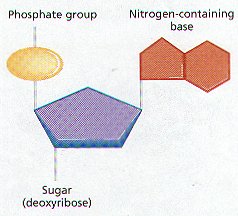
1. Nucleotides are a molecular complex of three types of molecules: a phosphate (phosphoric acid), a pentose sugar, and a nitrogen-containing base.  
2. Nucleotides have metabolic functions in cells.

a. Coenzymes are molecules, which facilitate enzymatic reactions.

b. ATP (adenosine triphosphate) is a nucleotide used to supply energy.

c. Nucleotides also serve as nucleic acid monomers.

B. Nucleic Acids

1. Nucleic acids are huge polymers of nucleotides with very specific functions in cells.

2. DNA (deoxyribonucleic acid) is the nucleic acid whose nucleotide sequence stores the genetic code for its own replication and for the sequence of amino acids in proteins.  
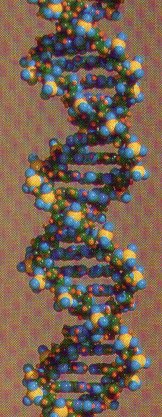
3. RNA (ribonucleic acid) is a single-stranded nucleic acid that translates the genetic code of DNA into the amino acid sequence of proteins.

4. DNA and RNA differ in the following ways:

a. Nucleotides of DNA contain deoxyribose sugar; nucleotides of RNA contain ribose.  
b. In RNA, the base uracil occurs instead of the base thymine, as in DNA.

c. DNA is double-stranded with complementary base pairing; RNA is single-stranded.

1) Complementary base pairing occurs where two strands of DNA are held together by hydrogen bonds between purine and pyrimidine bases

2) The number of purine bases always equals the number of pyrimidine bases; called Chargaff’s rule

3) Adenine pairs with Thymine & guanine pairs with cytoseine on DNA

4) Guanine & adenine are purines; Cytosine & thymine are pyrimidines

d. Two strands of DNA twist to form a double; RNA generally does not form helices.

C. ATP (Adenosine Triphosphate)

1. ATP (adenosine triphosphate) is a nucleotide of adenosine composed of ribose and adenine.

2. Derives its name from three phosphates attached to the five-carbon portion of the molecule.

3. ATP is a high-energy molecule because the last two unstable phosphate bonds are easily broken.

4. Usually in cells, a terminal phosphate bond is hydrolyzed, leaving ADP (adenosine diphosphate).

5. ATP is used in cells to supply energy for energy-requiring processes (e.g., synthetic reactions); whenever a cell carries out an activity or builds molecules, it “spends” ATP.


Summary of Biological Macromolecules:


 Macromolecule  Building Blocks  Functions
 Polysaccharides Sugars (monosaccharides)
  • Energy storage (4 Cal/gm)
  • Structure (cell walls, exoskeletons)
 Lipids (Triglycerides)
Fatty acids, glycerol
  • Energy storage (9 Cal/gm)
 Lipids (Phospholipids) Fatty acids, glycerol, phosphate group
  • Cell membranes
 Proteins Amino acids (20 types)
  • Cell structure
  • Enzymes
  • Molecular motors (muscle, etc)
  • Membrane pumps & channels
  • Hormones & receptors
  • Immune system: antibodies
 Nucleic Acids: DNA
(forms a double helix)
  • 4 Bases: A, C, G, T
  • Deoxyribose sugar
  • Phosphate
  • Subunits called nucleotides
  • Storage of hereditary information (genetic code)
Nucleic Acids (RNA)


3 types:


  • m-RNA
  • t-RNA
  • r-RNA

(usually a single strand)

  • 4 Bases: A, C, G, U
  • Ribose sugar
  • Phosphate
  • Subunits called nucleotides


Protein synthesis:

  • m-RNA: working copy of genetic code for a gene (transcription)
  • t-RNA & r-RNA: translation of the code


BACK

Bioenergetics Powerpoint Worksheet

Bioenergetics
ppt Questions

Energy

1. What is bioenergetics?


2. All organisms require ____________ to perform their functions.

3. Name the 2 main kinds of energy.

4. What is kinetic energy?


5. Give 2 examples of kinetic energy.


6. What is potential energy?


7. Potential energy is stored in ____________ __________.

Two Types of Energy Reactions

8. What is an endergonic reaction?


9. Give an example of an endergonic reaction.


10. What serves as the energy for photosynthesis?

11. During photosynthesis, the light energy is stored in the chemical bonds of what sugar?

12. What are the two raw materials (reactants) for photosynthesis?

13. What is an exergonic reaction?


14. Give an example of an exergonic reaction.

15. Where does the energy for cellular respiration come from?


16. Energy released during cellular respiration that can be used by cells is called _________.

Metabolic Reactions of Cells

17. Define metabolism of cells.


18. From what compound do animals get their energy (ATP) to do cellular work?

19. Name the 2 types of metabolism.


20. Explain anabolic pathways and give an example.


21. Explain catabolic pathways and give an example.


22. The energy that drives catabolic pathways in organisms comes from breaking _____________ ___________ and producing the energy molecule ___________.

Cellular Energy – ATP

23. Name the 3 components that make up ATP.

     a.

     b.

     c.

24. How many phosphate groups are in ATP?

25. The last two phosphate groups on ATP are bonded with ___________ ___________ bonds.

26. Which phosphate bond contains the MOST energy?

27. Give the formula for a phosphate group.

28. Name the process that breaks the bonds of ATP to release energy.

29. How often does phosphorylation occur in cells?


30. What enzyme weakens the last phosphate bond so it can be broken?

31. Organisms use ___________ to break down energy-rich __________ to release the potential  energy stored in its bonds.

32. Energy released from the chemical bonds of glucose are trapped & stored in ________ until a cell needs energy.

33. What does ATP stand for?

34. How much ATP do cells use?


35. What coupled reactions make ATP and then release its energy.


36. Is hydrolysis exergonic or endergonic?

37. Is energy stored or released during hydrolysis?

38. Is dehydration exergonic or endergonic?

39. Is energy stored or released in dehydration?

40. When ATP is broken down to release energy, what two things form?


41. During hydrolysis of ATP, a molecule of ___________ is added to split the ________ phosphate bond.

42. What happens to the energy released from the hydrolysis of ATP?


43. During dehydration of ATP, a molecule of ___________ is removed to join a free phosphate and __________ making more ATP again.

44. Where is the energy stored in the dehydration process to form ATP?


Review

45. How many high-energy phosphate bonds does ATP have?

46. Is photosynthesis anabolic or catabolic?

47. Is photosynthesis exergonic or endergonic?

48. The breakdown of ATP is due to hydrolysis or dehydration?

49. Water is added or removed in the breakdown of ATP?

50. Which of the following are coupled reactions in organisms:

     a. hydrolysis – dehydration?

     b. Anabolism – Catabolism?

     c. Endergonic – Exergonic?


Biology Class Notes – Graphing Practice


C. Massengale
Textbook: Modern Biology by HRW

VENN DIAGRAM TEMPLATE 

All Materials © Cmassengale
The Notes on this website may be USED in class, but may NOT be MODIFIED, or SAVED, or POSTED to ANOTHER WEBSITE! 

Introduction
Safety
Safety Worksheet
Safety Quiz
Equipment
Safety Board Game
Safety Contract
Safety Contract (Espanol)
Scientific prefixes/suffixes (BI)
Scientific prefixes/suffixes (PreAP)
Worksheet
Scientific Method
Scientific Method Steps & vocabulary
Krusty Krab & Other Bikini Bottom Experiments
Designing an Experiment
Sponge Bob Science variables
Theories, Laws, & Hypotheses
Microscopes
How to use a Microscope
Microscope activity
Microscope Lab
Parts of a Light Microscope
Label a Light Microscope
Microscope Coloring Worksheet
Microscope lab BI

Metrics
Online Calculator Biology Career Brochure
Graphing Practice
Graphing Examples
Understanding Graphs & Tables
Graphing Examples Quiz
Graph Paper
Create a Graph
Bar Graph Problems
How to Make a Line Graph on Paper
Practice Making Line Graphs
Chemical Aspect of Life
Introduction – Study of Life
MRS Nerg
Characteristics of Life Worksheet
Study of Life Worksheet
Levels of organization
Review

Chemistry
Periodic Table
Knowing Elements Activity
Water Properties Handout
Biochemistry
Examples of Organic Models
BioChem Quiz
Handout: Macromolecule Chart
Handout: Macromolecule Chart (blank)
Handout: Enzyme Properties
Cells & Metabolic Processes
Structure & Function of Cells
Edible Cells Project
Cell Organelles
Photos of Cells
Review of Cell Organelles
Generalized Cell
Cell Quiz
Cell Size Limits
Homeostasis & Transport
Effect of Solutions on Cells
Web Tutorial Passive Transport
Web Tutorial Active Transport

Photosynthesis
Web Tutorial Photosynthesis
Web Tutorial Electron Transport Chain
Illuminating Photosynthesis web Tutorial
Calvin Cycle web Tutorial
Citric acid Cycle Web Tutorial
Problem Set 1
Problem set 2
Photosynthesis Quiz
Cell Respiration
Do you understand Cellular Respiration?
Web Tutorial Glycolysis
Cell Respiration Quiz
Nucleic Acids & Protein Synthesis
Do you understand nucleic acids & protein synthesis?
DNA Animation
mRNA Codon Table Codon Table worksheet

Cell Growth & Division 
Cell Growth & Division Lecture Guide
Mitosis Activity
Animal Mitosis (whitefish)
Plant Cell Mitosis (onion)
Cell Division PowerPoint
Labeling Meiosis Stages (web)
Labeling Meiosis (Word)
Phases of Meiosis Worksheet

Fundamentals  of Genetics
Genetics Tutorial
Mendel Quiz
Dihybrid Cross Quiz
Probability
Practice Test
SpongeBob Crosses
Genetic Cross template
Alien Genetics
Chromosomes & Human Genetics DNA Technology
Evolution, Taxonomy, & Organisms

Darwin & Natural selection
Population Genetics
Evolution Myths
Hardy Weinberg Problems
Classification
Dichotomous Keying
Keying activity
Animal Cladogram Practice
Bacteria
Aseptic Techniques
Viruses
Examples of Virus Models
Protozoans
Protist Key
Online Protist Quiz

Algal & Fungal like Protists
Six Divisions of Algae

Fungi
More Notes on Fungi
Online Fungi Identification
Mosses & Ferns Classification of Seed Plants
Structure & Function of Seed Plants
Leaf Cross section
Leaf Coloring worksheet
Reproduction of seed Plants
Flower Coloring Worksheet Flowering Plants Online

Introduction to Animals
General Notes on Animals Animal Symmetry Worksheet
Introduction to Animals Worksheet

Invertebrate Notes
Invertebrate Worksheet Chordates
Sponges & Cnidarians
Sponge Coloring Worksheet

Flatworms, Roundworms, & Rotifers
Practice Test

Mollusks
Annelids
Earthworm Coloring Worksheet

Arthropods (non-insects)
Arthropods (Notebook Copy)
Insects
Insect (Notebook Copy)
Insect Key
Pictorial Order Key
Echinoderms
Chordates
Vertebrate Notes
Fish
Fish & Amphibian Review
Amphibians Reptiles Birds
Bird Orders
Mammals

Orders of mammals Table

Vertebrates
Vertebrate Traits
Vertebrate Worksheet

Ecology
Ecology Quiz
Biomes of the World


Pre AP        Biology I

Biochemistry Bi Worksheet


Biochemistry Worksheet


Section 3.1 – Properties of Water  


1. Why is water such an important molecule to living things?


2. Describe the chemical make up and type of bonding found in water molecules.


3. Explain why the hydrogen and oxygen atoms don’t share electrons equally in a water molecule.


4. What is the effect of this uneven sharing of electrons in water?


5. Sketch a molecule of water showing the charges on the molecule.


6. What is the overall charge on a water molecule? Explain why.


7. Define polar compound and give an example.


8. Water’s polarity makes it very effective in _____________ other substances.

9. Name 2 types of compounds that dissolve well in water.

10. What happens when an ionic compound such as sodium chloride (table salt) dissolves in water?


11. Water molecules are ___________ to other water molecules.

12. What type of bonding holds 2 or more water molecules together?

13. Are hydrogen bonds strong or weak bonds? Can they be easily broken?

14. Water molecules attracting other water molecules is called _________________.

15. Cohesion of water molecules produces ________________ tension making water seem like it has a “skin” on it. Surface tension enables some _____________ to walk across the surface of the water.

16. Water molecules attracting other types of molecules is called _________________.

17. Adhesion and cohesion together enable water molecules to move ____________ through narrow tubes against the force of gravity.

18. The above property of water is called _________________.

19. Give an example of an organism using capillarity.


20. What must be true for water to change temperature?

21. What effect does heating water have on the hydrogen bonds holding the water molecules together? What happens to the speed at which the molecules are moving?


22. Give an example of how this water property helps organisms in the environment.


Section 3.2 – Carbon Compounds

23.  What is an organic compound?


24. Besides carbon, name 3 other elements that make up most organic compounds.

25. Carbon dioxide, CO2, is NOT an organic compound. Explain why.


26. How many electrons are in the outermost energy level of carbon? How many does it need to have this energy level filled?

27. How many covalent bonds can carbon form?

28. Name 3 structural shapes that form whenever carbon atoms bond to other carbon atoms.


29. How many electrons are being shared in a single covalent bond? double covalent bond? triple covalent bond? quadruple covalent bond?


30. Draw these 3 molecules and circle a single bond, double bond, and a triple bond in your drawings — benzene, acetylene, and ethanol.


31. Explain what is meant by a functional group, & tell what effect they have on the molecules they are attached to.


32. Write the formula for these functional groups (use your textbook & handout) — hydroxyl, carboxyl, phosphate group, amino group, and methyl group.


33. Hydroxyl groups attached to carbon atoms forms an _____________. Name an alcohol used in humans to assemble molecules needed for life.

34. Large carbon molecules are built from smaller, simpler molecules called ____________.

35. Large carbon molecules made of monomers are called _______________.

36. What are large polymers called?

37. What type of reaction links monomers to make polymers?

38. Sketch a molecule of sucrose (table sugar) formed from condensation. Name the 2 sugars that were combined to form sucrose.


39. Condensation reactions involve the removal of a molecule of ____________.

40. What reaction is used to breakdown polymers? Is water added or removed? How does this compare to condensation?


41. All life processes require a constant supply of ____________. Name the molecule used by cells to get energy. Give its abbreviation.

42. ATP contains what 3 functional groups covalently bonded together? Write the formula for this functional group.

43. Which bonded phosphate group on ATP releases the MOST energy when broken?

Section 3.3 – Macromolecules

44. Name the 4 main classes of macromolecules (organic molecules) & tell what 3 elements all of these contain.


Carbohydrates store energy for organisms!

45. In what ratio are hydrogen & oxygen atoms in carbohydrates?

46. In what 3 forms do carbohydrates exist?

47. What are the monomers of carbohydrates called? What is their common name? Give the ratio of carbons, hydrogens, & oxygens.

48. Name the 3 MOST common monosaccharides.

49. Sketch & label a molecule of each of these monosaccharides. How do they compare? Write the chemical formula for all three.


50. Because all 3 simple sugars have the same chemical, but different structural formulas, they are called _______________.

51. What are double sugars called? Name & describe the process that forms them.


52. Name a disaccharide.

53. What forms a polysaccharide? Name a polysaccharide found in animals. Name 2 found in plants?


54. What chemical reaction formed these large molecule? What reaction would be needed to break these molecules?


Proteins are used to build cells, & they act as enzymes!

55. What are the 4 main elements making up proteins? How many covalent bonds does each of these elements form?


56. Sketch these two amino acids — glycine & alanine.  Circle the center carbon, place a triangle around the amino group, and put a box around the carboxyl group.


57. What are the monomers of proteins called? How many are there? Name the 4 things bonded to the center carbon of this monomer.


58. The main difference among amino acids is their ___________ group. What is the R-group on glycine? on alanine?

59. Differences in R-groups give different proteins different ______________.

60. How does a dipeptide form? Sketch the dipeptide formed from glycine and alanine. What molecule had to be removed to join these 2 amino acids?


61. What do you call the covalent bonds that hold amino acids together? Put a box around these bond in the sketch you did on question 60.

62. Long chains of amino acids are called ___________________ and these join together to make a ________________.

63. Hydrogen bonding among individual amino acids in a chain cause what effect on the protein’s shape?

64, What is the effect of temperature on protein shape? Give an example of this.


65. Most proteins act as catalysts or __________________ inside of cells.

66. The substance an enzyme is acting upon is called the _____________ and it must ______ into a place called the active site on the enzyme.

67. When a substrate joins with an enzyme, what effect does this have on chemical bonding of that substrate? Is the enzyme affected temporarily or permanently? How is it affected?


68. When chemical bonds in a substrate are weakened, what effect does this have on activation energy needed to start the reaction?

69. After the reaction, what happens to the products? Can the enzyme be re-used & why?


70. Besides temperature, what else can effect how an enzyme works by changing the enzyme’s shape? Can the reaction still take place?

Lipids include fats that are used for long-term energy storage!

71. Are lipids polar or nonpolar? What happens to lipids when they are placed in water?

72. Compared to carbohydrates, what is true about the ratio of carbon & hydrogen atoms to oxygen atoms? If a compound has more bonds, what can it store more of in those bonds?


73. Most lipids are made of ______________ acids. Describe their shape. What functional group is found on the head end of the molecule?


74. Sketch these 2 fatty acids — palmitic & linoleic.  Circle the carboxyl group on the “head” of the molecule. Is this end polar or nonpolar? Will this end be attracted to  or repelled by water?


75. Are both ends of a fatty acid polar? Explain.

76. Hydophilic means water ___________. Which end of  a fatty acid is hydrophilic. The nonpolar end of a fatty acid is said to be _______________ or “water fearing”.

77. Which end of a fatty acid chain WOULD dissolve in water? Which WOULDN’T?


78. In what type of fatty acid are there only single bonds in the carbon chain? Name one such fatty acid.

79. What type of bond appears in an unsaturated fatty acid? Give an example of an unsaturated fatty acid. Go back to your fatty acid drawings in question 74 and put a box around the double bond in the unsaturated fatty acid.


80. Name the 3 groups of complex lipids.

81. What makes up a triglyceride? What is the difference between a saturated & unsaturated triglyceride?


82. What type of triglycerides tend to be solids at room temperature & why? Which are liquids & why?


83. What type of triglyceride would this of  substance be — vegetable oil?  butter & shortening?

84. What makes up a phospholipid? How are they different from triglycerides? What main part of a cell is made of phospholipids?


85. What is meant by a lipid bilayer? What makes this such an effective barrier between the inside & the outside of the cell?


86. Wax is another complex lipid. Describe its structure.


87. Waxes are highly _________________. Explain how plants make use of this property? animals?


88. What makes up steroids? To what group of organic compounds do steroids belong? How are they used in animals?


89. Name a steroid made by the body & used by nerve cells.

Nucleic acids  store genetic information for cells!

90. Give the name & abbreviation for 2 nucleic acids found in cells.


91. DNA and RNA are both examples of _____________ made of linked monomers called ________________.  The instructions in these molecules is used to make ____________.

92. Name the 3 parts to a nucleotide then draw and label one.


BACK