AP Sample Lab 2 Catalysis 2


Lab 2    Enzyme Catalysis


Introduction:


Enzymes are proteins produced by living cells. They are biochemical catalysts meaning they lower the activation energy needed for a biochemical reaction to occur. Because of enzyme activity, cells can carry out complex chemical activities at relatively low temperatures. The substrate is the substance acted upon in an enzyme-catalyzed reaction, and it can bind reversibly to the active site of the enzyme. The active site is the portion of the enzyme that interacts with the substrate so that any substrate that blocks or changes the shape of the active sit effects the activity of the enzyme. The result of this temporary union is a reduction in the amount of energy required to activate the reaction of the substrate molecule so that products are formed. The following equation demonstrates this process: E + S ↔ ES ↔ E + P Enzymes follow the law of mass reaction. Therefore, the enzyme is not changed in the reaction and can be recycled to break down additional substrate molecules.

Several factors can affect the action of an enzyme: salt concentration, pH of the environment, temperature, activations and inhibitors. If salt concentration is close to zero, the changed amino acid side chains of the enzyme molecules will attract one another. The enzyme will then denature and form an inactive precipitate. Denaturation occurs when excess heat destroys the tertiary structure of proteins. This usually occurs at 40 to 50º Celsius. If salt concentration is high, the normal interaction of charged groups will be blocked. An intermediate salt concentration is normally the optimum for enzyme activity. The salt concentration of blood and cytoplasm are good examples of intermediate concentrations. The pH scale is a logarithmic scale that measures the acidity or H+ concentration in a solution and runs from 0 to 14, with 0 being highest in acidity and 14 lowest. Amino acid side chains contain groups such as –COOH that readily gain or lose H+ ions. As the pH is lowered an enzyme will tend to gain H+ ions, disrupting the enzyme’s shape. If the pH is raised, the enzyme will lose H+ ions and eventually lose its active shape. Reactions usually perform optimally in neutral environments. Chemical reactions generally speed up as the temperature is raised. More of the reacting molecules have enough kinetic energy to undergo the reaction as the temperature increases. However, if the temperature goes above the temperature optimum, the conformation of the enzyme molecules is disrupted. An activator is a coenzyme that increases the rate of the reaction and can regulate how fast the enzyme acts. It also makes the active site a better fit for the substrate. An inhibitor has the same power of activator regulation but decrease the reaction rate. An inhibitor also reduces the number of S-S bridges and reacts with the side chains near activation sites, blocking them.

The enzyme used in this lab is catalase. It has four polypeptide chains that are each composed of more than 500 amino acids. One catalase function is to prevent the accumulation of toxic levels of hydrogen peroxide formed as a by-product of metabolic processes. Many oxidation reactions that occur in cells involve catalase. The following is the primary reaction catalyzed by catalase, the decomposition of hydrogen peroxide to form water and oxygen:

2 H2O2 → 2 H2O + O2 (gas) Without catalase this reaction occurs spontaneously but very slowly. Catalase speeds up the reaction notably.

The direction of an enzyme-catalyzed reaction is directly dependent on the concentration of enzyme, substrate, and product. For example, lots of substrate with a little product makes more product. Another example is lots of product with a little enzyme forms more substrate. Much can be learned about enzymes by studying the kinetics of enzyme-catalyzed reaction. It is possible to measure the amount of product formed, or the amount of substrate used, from the moment the reactants are brought together until the reaction has stopped.


Hypothesis:

Enzyme catalase, when working under optimum conditions, noticeably increases the rate of hydrogen peroxide decomposition.


Materials:


Exercise 2A

The materials needed for exercise 2A of the lab are: 30 mL of 1.5% (0.44 M) H2O2, a 50- mL glass beaker, 6 mL of freshly made catalase solution, a test tube, boiling water bath, 1 cm³ of liver, a knife for maceration, paper towels, safety goggles, lab apron, pencil, eraser, and paper to record results.

Exercise 2B

The materials needed for exercise 2B are: 10 mL of 1.5% H2O2, two clean glass beakers, 1 mL of H2O, 10 mL of H2SO4, a white sheet of paper, a 5 mL syringe, approximately 5 mL of KMnO4, paper, pencil, eraser, safety goggles, and lab aprons.

Exercise 2C

The materials needed for exercise 2C of the lab are: 20 mL of 1.5% H2O2, two glass beakers, 1 mL of H2O, 10 mL of H2SO4, a white sheet of paper, a 5 mL syringe, approximately 5 mL of KMnO4, paper, pencil, eraser, safety goggles, and lab aprons.

Exercise 2D

For this part of the experiment, the materials needed are 12 cups labeled 10, 30, 60, 120, 180, and 360 on two each, six cups labeled acid, 60 mL of 1.5% H2O2, a clean 50-mL beaker, 6 mL of catalase extract, two 5-mL syringes, KMnO4, a timer, paper, pencil, black marker, eraser, safety goggles, and lab aprons.


Methods:


Exercise 2A

Transfer 10 mL of 1.5% H2O2 into a 50-mL glass beaker and add 1 mL of freshly made catalase solution. Remember to keep the catalase solution on ice at all times. Record the results. Then transfer 5 mL of purified catalase extract to a test tube and place it in a boiling water bath for five minutes. Transfer 10 mL of 1.5% H2O2 into a 50-mL beaker and add 1 mL of the cooled, boiled catalase solution. Again record the results. To demonstrate the presence of catalase in living tissue, cut 1 cm of liver, macerate it, and transfer it into a 50-mL glass beaker containing 10 mL of 1.5% H2O2. Record these results.

Exercise 2B

Put 10 ml of 1.5% H2O2 into a clean glass beaker. Add 1 mL of H2O. Add 10 mL of H2SO4 (1.0 M) using extreme caution. Mix this solution well. Remove a 5 mL sample and place it into another beaker. Assay for the amount of H2O2 as follows. Place the beaker containing the sample over white paper. Use a 5-mL syringe to add KMnO4 a drop at a time to the solution until a persistent pink or brown color is obtained. Remember to gently swirl the solution after adding each drop. Record all results. Check with another group before proceeding to see that results are similar.

Exercise 2C

To determine the rate of spontaneous conversion of H2O2 to H2O and O2 in an uncatalyzed reaction, put about 20 mL of 1.5% H2O2 in a beaker. Store it uncovered at room temperature for approximately 24 hours. Repeat the steps from Exercise 2B, using the uncatalyzed H2O2, to determine the proportional amount H2O2 of remaining after 24 hours. Record the results.

Exercise 2D

If a day or more has passed since Exercise B was performed, it is necessary to reestablish the baseline. Repeat the assay and record the results. Compare with other groups to check that results are similar. To determine the course of an enzymatic reaction, how much substrate is disappearing over time must be measured. First, set up the cups with the times and the word acid up. Add 10 mL of H2SO4 to each of the cups marked acid. Then put 10 mL of 1.5% H2O2 into the cup marked 10 sec. Add 1 mL of catalase extract to this cup. Swirl gently for 10 seconds. (Calculate time using the timer for accuracy.) At 10 seconds, add the contents of one of the acid filled cups. Remove 5 mL and place in the second cup marked 10 sec. Assay the 5-mL sample by adding KMnO4 a drop at a time until the solution obtains a pink or brown color. Repeat the above steps except allow the reactions to proceed for 30, 60, 120, 180, and 360 seconds, respectively. Use the times’ corresponding, marked cups. Record all results and observations.


Results:

Table 1: Test of Catalysis Activity


Experiment


Observations

Hydrogen Peroxide + Fresh Catalase Bubbling in solution with the release of oxygen.
Hydrogen Peroxide + Boiled Catalase No reaction occurred.
Hydrogen Peroxide + Liver Much bubbling in solution with the release of O2.


Table 2: Establishing a Baseline #1


Baseline Calculations (syringe contains KMnO4)


Readings

Final Reading of Syringe 1.2 mL
Initial Reading of Syringe 5.0 mL
Baseline 3.8


Table 3: Uncatalyzed H2O2 Decomposition


(Syringes Contain KMnO4)


Results

Final Reading of Syringe 1.3 mL
Initial Reading of Syringe 5.0 mL
Amount of H2O2 Spontaneously Decomposed 3.7 mL
Percent of H2O2 Spontaneously Decomposed in 24 Hours 94.3%


Table 4: Establishing a Baseline #2


Baseline Calculations (syringe contains KMnO4)


Readings

Final Reading of Syringe 1.5 mL
Initial Reading of Syringe 5.0 mL
Baseline 3.5


Table 5: Time-Course Determination


Potassium Permanganate (mL)

Time in Seconds

10 30 60 120 180 360
Baseline 3.5 3.5 3.5 3.5 3.5 3.5
Final Reading 1.3 1.6 1.8 2.0 2,4 2.7
Initial Reading 5.0 5.0 5.0 5.0 5.0 5.0
Amount of KMnO4 Consumed 3.7 3.4 3.2 3.0 2.6 2.3
Amount of H2O2 Used 0.2 0.1 0.3 0.5 0.9 1.2


Effect of Time on the Amount of H2O2 Remaining after an Enzyme Catalyzed Reaction

Exercise 2A:

1.a. What is the enzyme in this reaction? The enzyme in this reaction is the catalase solution.

1.b. What is the substrate in this reaction? The substrate is hydrogen peroxide.

1.c. What are the products in this reaction? The products are water and oxygen gas.

1.d. How could you show that the gas evolved is oxygen? Referring to the equation 2H2O2 + Catalase solution→H2O + O2, the only gas released is oxygen.

2. How does the reaction compare to the one using the unboiled catalase? Explain the reason for this difference. With the boiled catalase, there was no sign of bubbling because the catalase was denatured by the heat and caused no reaction.

3.a. What do you observe? I observe quite a bit of gas being released from the solution.

3.b. What do you think would happen if the liver were boiled before being added to the hydrogen peroxide? I think that no signs of a reaction occurring would be shown. The catalase that occurs naturally within the liver would have been denatured.

4. From the formula described earlier recall that rate = G y/G x . Determine the initial rate of the reaction and the rates between each of the time points. Record the rates in the table below.


Time Intervals (seconds)
Initial 0-10 10-30 30-60 60-120 120-180 180-360
Rates 37/100 -3/200 -1/150 -1/300 -1/150 -1/600


5. When is the rate the highest? Explain why. The rate is the highest in the first ten seconds because the rate decreases as the concentration of the catalase decreases over time.

6. When is the rate the lowest? For what reason is the rate low? The rate is lowest during the last time period of 360 seconds because the most time has passed. The catalase concentration has been reduced and the product amount has increased, blocking the enzymes from reacting with the hydrogen peroxide.

7. Explain the inhibiting effect of sulfuric acid on the function of the catalysis. Relate this to enzyme structure and chemistry. The sulfuric acid’s high concentration of H+ ions gives the acid a low pH. Because enzymes can only function in the pH range of six to eight, the addition of an acidic solution denatures the enzyme, stopping the reaction.

8. Predict the effect of lowering the temperature would have on the rate of the enzyme activity. Explain your prediction. Enzymes generally only work at the between the temperatures of forty and fifty degrees Celsius. Lowering the temperature would slow the reaction until the enzyme is denatured and no longer able to react.

9. Design a controlled experiment to test the effect of varying pH, temperature, or enzyme concentration.


Part One (the effects of a strong acid on enzyme activity): Add 10 mL of 1.5-% hydrogen peroxide to a 50-mL beaker, and add 1 mL of catalase solution. Mix well and then add 1 mL of (0.5 M) HCl to the beaker. Observe the reaction and record the results.

Part Two (the effects of a neutral solution on enzyme activity): Add 10 mL of 1.5-% hydrogen peroxide to a 50-mL beaker, and add 1 mL of catalase solution. Mix well and then add 1 mL of pure water with a pH of 7.0. Observe the reaction and record the results.


Part Three (the effects of a strong base on enzyme activity): Add 10 mL of 1.5-% hydrogen peroxide to a 50-mL beaker, and add 1 mL of catalase solution. Mix well and then add 1 mL of (0.5 M) NaOH to the beaker. Observe the reaction and record the results.


Error Analysis:

Several errors could have occurred throughout the experiment. Miscalculations involving numbers and amounts of solutions would have a severe effect upon the results. Mathematical errors may also have of occurred. When the catalase arrived, it had melted. Because it is to remain on ice at all times, this may have caused errors. The age of the hydrogen peroxide effected results. For example, when calculating the percent of hydrogen peroxide spontaneously decomposed after 24 hours, new hydrogen peroxide yielded a much higher percentage than the aged hydrogen peroxide. Errors occur in every experiment and that is why is it is necessary to repeat an experiment several times for the most accurate results.

Discussion and Conclusion:

Catalase, or enzymes, drastically increases the rate of hydrogen peroxide decomposition. This lab shows how catalase added to hydrogen peroxide leads to the release of oxygen, boiled catalase is denatured, and the presence of catalase in living things can lead to the breaking down of hydrogen peroxide in the body. In the lab it was shown that the natural decomposition hydrogen peroxide is slower than decomposition taking place with the addition of enzymes. If hydrogen peroxide was required to decompose naturally, life could not survive. The addition of catalase increases this decomposition rate allowing life to continue.

BACK


AP Sample Lab 12 Dissolved Oxygen


Dissolved Oxygen and Primary Aquatic Productivity
Laboratory 12


Introduction


Dissolved oxygen levels are an extremely important factor in determining the quality of an aquatic environment. Dissolved oxygen is necessary for the metabolic processes of almost every organism.

Terrestrial environments hold over 95% more oxygen than aquatic environments. Oxygen levels in aquatic environments are very vulnerable to even the slightest change. Oxygen must be constantly be replenished from the atmosphere and from photosynthesis. There are several factors that effect the dissolved oxygen levels in aquatic environments.

Temperature is inversely proportional to the amount of dissolved oxygen in water. As temperature rises, dissolved oxygen levels decrease.

Wind allows oxygen to be mixed into the water at the surface. Windless nights can cause lethal oxygen depletions in aquatic environments.

Turbulence also increases the mixture of oxygen and water at the surface. This turbulence is caused by obstacles, such as rocks, fallen logs, and water falls, and can cause extreme variations in oxygen levels throughout the course of a stream.

The Trophic State is the amount of nutrients in the water. There are two classifications: oligotrophic and eutrophic. Oligotrophic lakes are oxygen rich, but generally nutrient poor. They are clearer and deeper than eutrophic lakes and are younger. Oxygen levels are constant. Eutrophic lakes are more shallow and nutrient rich. The oxygen levels constantly fluctuate from high to low.

Primary production is the energy accumulated by plants since it is the first and basic form of energy storage. The flow of energy through a community begins with photosynthesis. All of the sun’s energy that is used is termed gross primary production. The energy remaining after respiration and stored as organic matter is the net primary production, or growth. The equation for photosynthesis is as follows:

12H2O + 6CO2 → C6H12O6 + 6O2 + 6H2O

There are two ways to measure primary production, the oxygen method and the carbon dioxide method. The oxygen method uses a dark and light bottle to compare the amount of oxygen produced in photosynthesis and used in respiration. Respiration rate is determined by subtracting the dark bottle from the initial bottle. The carbon dioxide method places a transparent plastic bag over one sample and a dark plastic bag over the other. Each bottle is set up so that air is drawn through the enclosure and passes over carbon dioxide-absorbent material. The amount of carbon under the dark bag is respiration, while the amount of carbon under the transparent bag is the amount of photosynthesis minus the amount of respiration.

There are three main gases dissolved in aquatic environments: nitrogen, oxygen, and carbon dioxide. Most gases obey Henry’s law, which says that at a constant temperature, the amount of gas absorbed by a given volume of liquid is proportional to the pressure in the atmosphere that the gas exerts.

c = K ×p

                                                             c = Concentration of the gas that is absorbed

K = Solubility factor

                     p = Partial pressure of the gas


Altitude may affect the p value of the equation. Higher altitudes decrease the solubility of gases in water. Temperature also has an affect, as temperature rises, solubility decreases. Salinity, the occurrence of various minerals in solution, also lowers the solubility of gases in water.

The method used to determine the amount of dissolved oxygen in the water is the Winkler titrametric method. It involves a series of chemical reactions which ends with a quantity of free iodine equal to the amount of oxygen in the sample. The iodine is then titrated with thiosulfate to find this quantity.


Hypothesis

The temperature and amount of light an aquatic environment receives greatly affects the dissolved oxygen levels, along with the amount of primary aquatic productivity.


Materials


Measurement of Dissolved Oxygen

This part of the lab required a sample bottle of water from a natural source, a BOD bottle, thermometer, mangonous sulfate, alkaline iodide, thiosulfate, a 2-mL pipette, sulfuric acid, a 20-mL sample cup, a white piece of paper, starch solution, and a nomograph.

Measurement of Primary Productivity

Part B required a sample bottle of water from a natural source, 7 BOD bottles, aluminum foil, 17 cloth screens, rubber bands, a light, thermometer, concavity slides, light microscope, mangonous sulfate, alkaline iodide, thiosulfate, a 2-mL pipette, sulfuric acid, a 20-mL sample cup, a white piece of paper, starch solution, and a nomograph.

Productivity Simulation

This section required pencil, paper, calculator, and graph paper.


Methods


Measurement of Dissolved Oxygen

The sample bottle was filled completely so that there were no air bubbles in the bottle. The sample bottle was left in the refrigerator until it reached 5° C. A BOD bottle was filled with the sample water until it contained no air bubbles.

Eight drops of mangonous sulfate were added to the bottle. Next, eight drops of alkaline iodide was added and the precipitate manganous hydroxide was formed. The bottle was inverted several times and then allowed to settle until the precipitate was below the shoulders of the bottle. While the solution was settling, a 2mL pipette was filled with thiosulfate. A scoop of sulfuric acid was added, and the bottle was inverted until all of the precipitate dissolved. The sample turned a clear yellow.

20mL of the sample were poured into the sample cup. The cup was placed on a white sheet of paper so that the color changes could be observed. 8 drops of starch solution were added to the sample, making it turn purple. The sample was then titrated with the thiosulfate. One drop of the titrant was added at a time until the color changed to a pale yellow color.

A nomograph was used to determine the percent saturation of dissolved oxygen in the sample.

Measurement of Primary Productivity

A second sample bottle was filled from a natural source making sure there were no air bubbles. Seven BOD bottles were filled completely with the sample with no air bubbles. The first bottle was labeled #1-Initial. The second bottle served as the dark bottle and was labeled #2-Dark. The other five bottles were labeled according to the light intensity: #3-100%, #4-65%, #5-25%, #6-10%, and #7-2%.

Bottle #2 was wrapped completely in aluminum foil so that it received no light. The other five bottles were wrapped in screens to produce the desired light intensity. Bottle #3 had no screens, bottle #4 had 1 screen, bottle #5 had 3 screens, bottle #6 had 5 screens, and bottle #7 had 8 screens. The screens were held in place with rubber bands. Bottles #2-7 were placed under a light source and left overnight.

Bottle #1 was fixed by following the Winkler method. Eight drops of mangonous sulfate were added to the bottle. Next, eight drops of alkaline iodide was added and the precipitate manganous hydroxide was formed. The bottle was inverted several times and then allowed to settle until the precipitate was below the shoulders of the bottle. A scoop of sulfuric acid was added, and the bottle was inverted until all of the precipitate dissolved. The sample turned a clear yellow. It was left at room temperature until the other samples were processed.

A wet mount was observed under a light source, so that the different organisms present could be identified.

The next day, bottles #2-7 were fixed by following the same method used on Bottle #1. The dissolved oxygen levels were determined in each of the seven bottles by titrating. 20mL of the sample were poured into the sample cup. The cup was placed on a white sheet of paper so that the color changes could be observed. 8 drops of starch solution were added to the sample, making it turn purple. The sample was then titrated with the thiosulfate. One drop of the titrant was added at a time until the color changed to a pale yellow color.

Productivity Simulation

The respiration data from Part B was converted to carbon productivity. The data was graphed with comparison to water depths.


Results


A. Measurement of Dissolved Oxygen


Table 1

Dissolved Oxygen Concentration


Temperature


Dissolved Oxygen (mg/l)


% Dissolved Oxygen


5° C

2.0 mg/l 16%
 

21.5° C

1.28 mg/l 19%


How does temperature affect the solubility of oxygen in water?


As temperature goes up the solubility of oxygen in water goes down. They are inversely proportional.


How does salinity affect the solubility of oxygen in water?


The occurrence of various minerals in solution lowers the solubility of oxygen in water.


Would you expect to find a higher dissolved oxygen content in a body of water in winter or summer?


Oxygen levels would be higher in the winter because the solubility of oxygen in water is higher at lower temperatures.


List and discuss three factors that could influence the dissolved oxygen concentration of a body of water.


Temperature-As temperature goes up solubility goes down.

Pressure- As pressure decreases solubility decreases. Pressure is directly affected by altitude

Salinity-The occurrence of various minerals in solution lowers the solubility of oxygen in water.


Do you think it would be wise to stock a pond with game fish if it had a dissolved oxygen content of 3ppm? Why or why not?


It would not be wise to stock a pond with an oxygen level of 3ppm with game fish because their optimal levels range from 8 to 15ppm. A concentration of dissolved oxygen less than 4ppm is stressful to most forms of aquatic life.

B. Measurement of Primary Productivity


Respiration Rate = 4.6 ml O2/l


Table 3

Gross and Net Productivity/ Respiration Rate


Percent Light


Dissolved Oxygen


Gross Productivity


Net Productivity


Gross Productivity (mg C/m3)


Initial

9.2 ml O2/l NA NA NA
 

Dark

4.6 ml O2/l NA NA NA
 

100%

6.4 ml O2/l 1.8 ml O2/l -2.8 ml O2/hr 0.965 mg C/m3
 

65%

3.8 ml O2/l -0.8 ml O2/l -5.4 ml O2/hr -0.429 mg C/m3
 

25%

4.5 ml O2/l -0.1 ml O2/l -4.7 ml O2/hr -0.054 mg C/m3
 

10%

3.7 ml O2/l -0.9 ml O2/l -5.5 ml O2/hr -0.482 mg C/m3
 

2%

4.0 ml O2/l -0.6 ml O2/l -5.2 ml O2/hr -0.322 mg C/m3


Were any of the samples light limited? Why?


Each sample was given a certain amount of light by the use of aluminum foil and screen. Bottle #2 received no light, because it was covered with aluminum foil. Bottles #3-7 had varying numbers of screen ranging from 100% to 2% light intensity.

Productivity Simulation


Based on your analysis, which lake is more productive?


Lake 2 would be more productive because there is more oxygen available in the lower layers than in Lake 1.


What is used as the basis for measuring primary productivity?


Primary productivity is measured by the amount of dissolved oxygen available in the water. This shows the amount of oxygen produced by photosynthesis and the amount used by respiration.


Error Analysis


The Part A experiment was affected mainly by human error and inexperience with the Winkler method. The sample may have been over exposed to the air or the temperature may have changed before the fixing procedure was finished.

The original Part B experiment performed was unsuccessful. There were substantially more decomposing bacteria than photosynthetic organisms in the water sample use. The initial dissolved oxygen level was only 0.84 causing the other samples to have little or no oxygen. The amount of oxygen was so low that it was unable to form the free iodine and could not be titrated. This left no quantifiable data to use in graphs and tables.


Discussion and Conclusion


Temperature is inversely proportional to the solubility of gases in water. As temperature rose the dissolved oxygen levels should have decreased. This was qualified in the data obtained from this experiment, as the 5° C water sample measured 2.0 mg/l and the 21.5° C sample measured 1.28 mg/l. The percent saturation showed that even though the 5° C sample contained more oxygen it was still less saturated than the 21.5° C sample.

Part B of the lab was used to measure dissolved oxygen concentration, gross and net productivity, and respiration rate of the water samples. It also demonstrated the effect of light and nutrients on photosynthesis. In aquatic environments oxygen production and oxygen usage must be balanced to prevent anoxia. In the original experiment this balance was interrupted by the limiting of light by screens and aluminum foil. The amount of respiration in all of the bottles exceeded the amount of photosynthesis occurring. This was due to the types of organisms present in the sample, which was mainly decomposing bacteria and protozoan. The experiment was correct in its methods however the data received was not quantifiable. This absence of sufficient oxygen in the water samples is an indicator of poor water quality, which may require further investigation. Excess pollution or dumping of wastes into the water sample is a suspected cause of the poor water quality.

The data used in this report shows that as more light was limited, there was less dissolved oxygen present in the water. This is caused because photosynthesis cannot occur without sufficient light.

BACK


AP Sample 6 Lab 5 – Cellular Respiration


Lab 6 Cellular Respiration


Introduction


Cellular respiration is the release of energy from organic compounds by metabolic chemical oxidation in the mitochondria within each cell. Enzyme mediated reactions are required. The equation for cellular respiration is:

C6H12O6 + 6 O2 à 6 CO2 + 6 H2O + 686 kilocalories of energy/mole of glucose oxidized

Several different measures can be taken from this equation. The consumption of oxygen, which will tell you how many moles of oxygen are consumed during cellular respiration. That is what was measured in this lab. The production of CO2 can also be measured. And of course the release of energy can be measured. Cellular respiration is a catabolic pathway and the mitochondria houses most of the metabolic equipment for cellular respiration. It will break down glucose in what we call an exergonic reaction. Like previously said, the consumption of oxygen molecules will be measured in a gas form. One must know the physical laws of gases when working with them. The laws are summarized by the following equation.

PV=Nrt

Where:

P stands for the pressure of the gas

V is the volume of the gas

n is the number of molecules of gas

R is the gas constant (fixed value)

T is the temperature of the gas ( in K° )

The CO2 produced during cellular respiration will be removed by potassium hydroxide (KOH) and will form a solid potassium carbonate (K2CO3) when the following reaction occurs: CO2 + 2 KOH à K2CO3+ H2O

Since the CO2 is removed, the change in the volume of gas in the respirometer will be directly related to the amount of oxygen consumed. If the water temp and volume stay constant then the water will move toward the region of lower pressure. During respiration, oxygen will be consumed and its volume will be reduced because the CO2 is being converted to a solid. The net result is a decrease in gas volume in the tube and a decrease in pressure of the tube. The vial with beads will detect any atmospheric changes.

Hypothesis

Several different things will affect the rate of O2 consumption. The non germinating peas will have a lower rate than the germinating peas and the coldness of the water will slow the rates.

Materials

The materials used for this lab were: a 100 mL graduated cylinder, 6vials,germinating peas, dry peas, glass beads, 2 water baths, absorbent cotton and non-absorbent cotton, weights, KOH, water, stoppers, pipettes, rubber bands, masking tape, glue, thermometer, ice, a pencil, and paper.

Methods

Set up a 25° C and a 10° C water bath. Ice may be used to obtain 10° C.

Respirometer 1:Obtain a 100 mL graduated cylinder and fill it with 50 mL of H2O.

Drop in 25 germinating peas. Determine the amount of water displaced. Pea volume =11 mL. Take peas out and place on paper towel.

Respirometer 2: refill cylinder with 50 mL of H2O. Drop 25 dry peas into the cylinder. Add glass beads to obtain the same volume that you got in respirometer 1. Remove peas and beads to a paper towel.

Respirometer 3: Add 50 mL of water to the cylinder. Put only beads in to get an equivalent volume to the first 2 respirometers. Put on paper towel when finished. Repeat respirometer 1 steps for respirometer 4. And 2 for 5. And 3 for 6. Listen to your teacher on how and where to set up the respirometers. Now fill your vials with the required items shown in the table and in figure 5.1. Seal the vials after your items have been put in to stop any gas or water leaks. Place a weighted collar onto the bottom of your vials so they will stay submerged in the water baths. During equilibration use masking tape attached to each side of the water baths to hold the respirometers out of water for 7 minutes. Vials 1-3 should be in the 25° C water bath and vials 4-6 should be in the 10° C water bath. Finally submerge totally the respirometers and let them equilibrate for 3 more minutes. Read the water line where the oxygen is and record in intervals of 5 minutes all the way up to 25 minutes. Record in table 5.1.


Results

Table 5.1: Measurement of O2 Consumption by Soaked and Dry Pea Seeds at Room Temperature and 10° C Using Volumetric Methods


Beads Alone

Germinating Peas

Dry Peas and Beads

Reading at time X Diff. Reading at time X Diff. Corrected Diff. Reading at time X Diff. Corrected Diff.
Initial-0 1.35 1.62 1.32
0-5 1.33 .02 1.20 .42 .4 1.32 .0 .02
5-10 1.33 .02 1.12 .50 .48 1.3 .02 .0
10-15 1.32 .03 1.02 .60 .57 1.29 .03 .0
15-20 1.32 .03 .92 .7 .67 1.3 .02 .01
 

Initial-0

1.48 1.37 1.46
 

0-5

1.48 .0 1.15 .22 .22 1.45 .01 .01
 

5-10

1.45 .03 .98 .39 .36 1.44 .02 .01
 

10-15

1.43 .05 .84 .53 .48 1.43 .03 .02
 

15-20

1.41 .07 .70 .67 .6 1.41 .05 .02


In this activity, you are investigating both the effects of germination versus non-germination and warm temperature versus cold temperature on respiration rate. Identify the hypothesis being tested on this activity.
The nongerminating peas will have a slower rate of respiration than the germinating peas and the coldness of the water will slow down the rate as it gets colder.


This activity uses a number of controls. Identify at least three of the controls, and describe the purpose of each.
The three controls are the beads in one vial controlling the barometric pressure, the KOH keeps equality in the consumption of CO2, and the time intervals give each vial the same amount of time so the results will not be affected.

Describe and explain the relationship between the amount of oxygen consumed and time.
The relationship was pretty constant, there may have been a gradual rising in O2 consumption.

5.


Condition


Calculations


Rate in mL O2/ minute


Germinating Peas/ 10 oC


(1.62-.92)

20

.035
 

Germinating Peas/ 20 oC


(1.37-.7)

20

.0335
 

Dry Peas/ 10 oC


(1.32-1.30)

20

.001
 

Dry Peas/ 20 oC

(1.46-1.41)

20

.0025


Why is it necessary to correct the readings from the peas with the readings from the beads?
The beads were just a control, experiencing no gas change.


Explain the effects of germination (versus non-germination) on pea seed respiration.
The germinating seeds had a higher metabolic rate and therefore consumed more oxygen than the nongerminating.

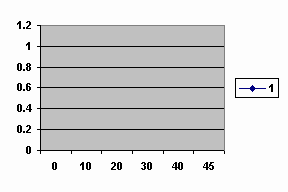
Above is a sample graph of possible data obtained for oxygen consumption by germinating peas up to about 8 oC. Draw in predicted results through 45 oC. Explain your prediction.
Once the temperature gets above about 30 degrees C, the enzymes will denature and that will be the end of respiration.


What is the purpose of KOH in this experiment?
The KOH will take the CO2 and turn it to a precipitant at the bottom of the vial and it will have no affect on the O2 readings.


Why did the vial have to be completely sealed under the stopper?
The vial had to be sealed or gas would leak out and water could leak in and affect the results.


If you used the same experimental design to compare the rates of respiration of a 35g mammal at 10 oC, what results would you expect? Explain your reasoning.
Respiration would be higher in the mammal because they are warm-blooded.


If respiration in a small mammal were studied at both room temperature (21 oC) and 10 oC, what results would you predict? Explain your reasoning.
The rate of respiration would be higher in the 21-degree bath because the mammal would perform better when its body was more comfortable.


Explain why water moved into the respirometer pipettes.
The water moved in the vial because it was fully submerged in water but it came to a stop when it met the oxygen coming out of the vial.

14. Design an experiment to examine the rates of cellular respiration in peas that have been germinating for 0, 24, 48, and 72 hours. What results would you expect? Why?
You could put peas in vials each from a time interval above. You would have a vial with just started germinating peas, one with 24 hour germinating peas, another with 48 hour peas, and the last with 72 hour peas. Place them in a room temp water bath. Take readings at intervals of 5 min up to 20 min. The 72-hour peas should have more O2 consumption because they will use more oxygen because they have been germinating the longest. The just started germinating peas would use the least O2 because they haven’t been germinating vary long. The other two will be in the middle of the “just started peas” and the “72 hour peas”.


Error Analysis


Many errors could have been made in this lab. There could have been miscalculations when trying to equal the pea volumes. The stoppers might not have been sealed and gas could have been lost from the vials affecting the results with vengeance. The water temperatures had to be maintained precisely or the results would not be what they should be. There was also a lot of math in this lab when figuring results and many numbers could have been affected by this poor math.


Disussion and Conclusion

This lab showed many things about thew rates of cellular respiration. This lab showed that germinating peas consume more O2 than nongerminating peas. The colder temperature also slowed the rate of oxygen consumption. The oxygen could be clearly seen because of the following reaction

CO2+2KOH à K2O3 +H2O

This reaction gets rid of the CO2 so that it would not affect the readings of oxygen. It is absorbed by KOH to give you a precipitant K2CO3 + H2O. I conclude that the rate of O2 consumption is directly proportional to the respiration rate in that when the rate increases the gas consumption increases. When the gas consumption is low then the rate is low. Organisms go through cellular respiration more proficiently when the body of the organism is comfortable with its outside temp and environment. This lab showed many things affecting the rate of cellular respiration.

BACK


AP Lecture Guide 08 – Cell Membranes


AP Biology: CHAPTER 8

Cell Membranes


1. What evidence supports the fluid mosaic model of the cell membrane? __________________

___________________________________________________________________________

2. What is meant by membrane fluidity? ____________________________________________

___________________________________________________________________________

3. How is fluidity reduced in animal cells? ___________________________________________

___________________________________________________________________________

4. Describe the orientation of the membrane proteins

a. Peripheral _______________________________________________________________

b. Integral _________________________________________________________________

5. How are the two sides of the membrane different? __________________________________

___________________________________________________________________________

6. List and briefly define the roles of the membrane proteins.

a. _______________________________________________________________________

b. _______________________________________________________________________

c. _______________________________________________________________________

d. _______________________________________________________________________

e. _______________________________________________________________________

f. _______________________________________________________________________

7. What membrane structures are important for cell-cell recognition? ______________________

___________________________________________________________________________

8. Which molecules easily cross the membrane? _____________________________________

9. How are molecules transported that do not easily cross the membrane? _________________

___________________________________________________________________________

10. Define the following:

a. Diffusion ________________________________________________________________

b. Osmosis ________________________________________________________________

c. Hypotonic _______________________________________________________________

d. Hypertonic ______________________________________________________________

e. Isotonic _________________________________________________________________

11. What is happening in the diagram below?

12. What do cells do when placed in solutions that are:

a. Hypotonic _______________________________________________________________

b. Hypertonic ______________________________________________________________

c. Isotonic _________________________________________________________________

13. How does the Paramecium maintain osmoregulation? _______________________________

___________________________________________________________________________

14. What is meant by facilitated diffusion? __________________________________________________________________________

___________________________________________________________________________

15. How do active and passive transport differ? ________________________________________

___________________________________________________________________________

___________________________________________________________________________

16. The sodium-potassium pump uses __________________ to pump __________________

out of the cell and _______________ into the cell.

17. How does the membrane generate voltage? _______________________________________

___________________________________________________________________________

18. What can the cell do with the voltage generated in the membrane? _____________________

___________________________________________________________________________

19. Define co-transport and give an example. __________________________________________

___________________________________________________________________________

___________________________________________________________________________

20. What is the difference between exocytosis and endocytosis? __________________________

___________________________________________________________________________

___________________________________________________________________________

21. Describe an example of receptor-mediated endocytosis. _____________________________

___________________________________________________________________________

___________________________________________________________________________


AP Lab 5 Sample 7


Cellular Respiration

Blake Lockwood

Introduction:


The human body has to have energy in order to perform the functions that allow life. This energy comes from the process of cellular respiration. Cellular respiration releases energy that the body can use in the form of ATP from carbohydrates by using oxygen. Cellular respiration is not just one singular reaction, it is a metabolic pathway made up of several reactions that are enzyme mediated. This process begins with glycolysis in the cytosol of the cell. In glycolysis, glucose is split into two three-carbon compounds called pyruvate, producing a small amount of ATP The final two steps of cellular respiration occur in the mitochondria. These final two steps are the electron transport system and the Krebs Cycle. The overall equation for cellular respiration is

C6H12O6 + 6O2 -> 6CO2 + 6H2O + 686 kilocalories of energy per mole of glucose oxidized.

There are three ways to measure the rate of cellular respiration. These three ways are by measuring the consumption of oxygen gas, by measuring the production of carbon dioxide, or by measuring the release of energy during cellular respiration. In order to measure the gases, the general gas law must be understood. The general gas law state: PV=nRT where P is the pressure of the gas, V is the volume of the gas, n is the number of molecules of gas, R is the gas constant, and T is the temperature of the gas (in K). The gas law also shows concepts about gases. If temperature and pressure are kept constant, then the volume of the gas is directly proportional to the number of molecules of the gas. If the temperature and volume remain constant, then the pressure of the gas changes in direct proportion to the number of molecules of gas present. If the number of gas molecules and the temperature remain constant, then the pressure is inversely proportional to the volume. If the temperature changes and the number of gas molecules is kept constant, then either pressure of volume will change in direct proportion to the temperature.

In this experiment, the rate of cellular respiration will be measured by measuring the oxygen gas consumption by using a respirometer in water. This experiment measures the consumption of oxygen by germinating and non-germinating at room temperature and at ice water temperature. The carbon dioxide produced in cellular respiration will be removed by potassium hydroxide (KOH). As a result of the carbon dioxide being removed, the change in the volume of gas in the respirometer will be directly related to the amount of oxygen consumed. The respirometer with glass beads alone will show any changes in volume due to atmospheric pressure changes or temperature changes.


Hypothesis:


The germinating peas will have a higher rate of respiration, than the beads and non-germinating peas.


Materials:


This lab requires two thermometers, two water baths, beads, germinating and non-germinating peas, beads, six vials, twelve pipettes, 100 mL graduated cylinder, scotch tape, tap water, ice, KOH, absorbent and non-absorbent cotton, six washers, six rubber stoppers, scotch tape, and a one mL dropper.


Methods:


Start the experiment by setting up two water baths, one at room temperature and the other at 10 degrees Celsius. Then, find the volume of twenty-five germinating peas. Next, put 50 mL of water in a graduated cylinder and put twenty-five non-germinating peas in it. Then, add beads until the volume is the same as twenty-five germinating peas. Next, pour our the peas and beads, refill the graduated cylinder with 50 mL of water, and add only beads until the volume is the same as the twenty-five germinating peas. Repeat these steps for another set of peas and beads. Also, put together the six respirometers by gluing a pipette to a stopper and taping another pipette to the pipette for all six respirometers. Then, put two absorbent cotton balls, several drops of KOH, and half of a piece of non-absorbent cotton into all six vials. Next, add the peas and beads to the appropriate respirometers. Place one set of respirometers into the room temperature water bath and the other set in the ice water bath. Elevate the respirometers by setting the pipettes onto masking tape and allow them to equilibrate for five minutes. Next, lower the respirometers into the water baths and take reading at 0, 5, 10, 15, and 20 minutes. Record the results in the table.


Results:


Table:


Beads Alone Germinating Peas

Dry Peas and Beads

Reading at time X Diff. Reading at time X Diff. Corrected Diff.


Reading at time X Diff. Corrected Diff.
Initial 13.2 12.7 12.9
0 to 5 11.0 2.2 10.5 2.2 0.0 11.1 1.8 -0.4
5 to 10 10 3.2 9.0 3.7 0.5 10.0 2.8 -0.3
10 to 15 9.2 4.0 8.0 4.7 0.7 9.4 3.5 -0.5
15 to 20 9.1 4.0 7.5 5.1 1.2 9.3 3.6 -0.4
Initial 14.0 13.5 14.0
0 to 5 13.3 0.7 12.1 1.4 0.7 13.6 0.4 -0.3
5 to 10 12.9 1.1 11.0 2.5 1.4 13.2 0.8 -0.3
10 to 15 12.6 1.4 10.0 3.5 2.1 12.9 1.1 -0.3
15 to 20 12.2 01.8 9.0 4.5 2.7 12.5 1.5 -0.3


Questions

1. In this activity, you are investigating both the effect of germination versus non-germination and warm temperature versus cold temperature on respiration rate. Identify the hypothesis being tested in this activity. Increasing the temperature could increase the oxygen consumption. Germinating peas have a higher respiration rate than non-germinating.


2. This activity uses a number of controls. Identify at least three of the controls, and describe the purpose of each control. One control was the respirometer with only beads in it because it didn’t use respiration. Another control was that the water temperatures were constant. The final control was that there was the same amount of KOH in each vial.


3. Graph the results from the corrected difference column for the germinating peas and dry peas at both room temperature and at 10 degrees Celsius. On graph paper.


4. Describe and explain the relationship between the amount of oxygen gas consumed and time. The oxygen gas consumed increased fairly constantly in respect to time.


5. From the slope of the four lines on the graph, determine the rate of oxygen gas consumption of germinating and dry peas during the experiments at room temperature and at 10 degrees Celsius. Recall that rate = _y over _x.


Condition Show Calculations Here Rate in mL oxygen gas/minute
Germinating Peas/10°C (1.2-0.7)/5 0.1
Germinating Peas/ Room Temperature (2.7-2.1)/5 0.12
Dry Peas/10°C (-.4-0)/5 -0.08
Dry Peas/Room Temperature (-.3-(-.3))/5 0


6. Why is it necessary to correct the readings from the peas with the readings from the beads? The gas changes in the beads were only due to pressure and temperature, and not gas consumption, so the beads act as a control.


7. Explain the effect of germination (versus non-germination) on pea seed respiration. Germinating peas consumed more oxygen than non-germinating.


8. Below is a sample graph of possible data obtained for oxygen consumption by germinating peas up to about 8 degrees Celsius. Draw in predicted results through 45 degree Celsius. Explain your predictions.


The amount of oxygen consumed will steadily increase until the temperature reaches a point at which the enzymes become denatured.


9. What is the purpose of KOH in this experiment? The purpose of the KOH was to remove the effect of carbon dioxide from the readings.


10. Why did the vial have to be completely sealed around the stopper? The vial had to be completely sealed so that gases couldn’t escape and water couldn’t leak into the respirometer.


11. If you used the same experimental design to compare the rates of respiration of a 25 g. reptile and a 25 g. mammal, at 10 degrees Celsius, what results would you expect? Explain your reasoning. The reptile would use less oxygen because it is cold-blooded and wouldn’t be as active at a colder temperature as the mammal would.


12. If respiration in a small mammal were studied at both room temperature (21°C) and 10°C, what results would you predict? Explain your reasoning. The respiration of the small mammal would be higher at 10 degrees Celsius because it would need more energy to keep its normal body temperature.


13. Explain why water moved into the respirometers’ pipettes. Water moved into the respirometer’s pipettes because pressure decreased when the amount of oxygen was decreased.


14. Design an experiment to examine the rates of cellular respiration in peas that have been germinating for 0, 24, 48, and 72 hours. What results would you expect? Why?


Set up five respirometers containing beads, non-germinating peas, peas that have germinated for one day, peas that have germinated for two days, and peas that have germinated for three days. Measure the water readings in intervals of five minutes for twenty minutes. The peas that have been germinating for three days will have the highest rate of respiration and the beads will have the lowest rate of respiration.


15. According to your graph, what happens to the rate of oxygen consumed by germinating peas over time? What does this indicate to you? The rate of oxygen consumption is fairly constant.


16. How did the KOH affect the water movement in the respirometer? It allows more water into the pipette.


17. Which of the two pea types, germinating or non-germinating, consumes the most oxygen? Why? Germinating peas consume more oxygen because they are growing and are more active than non-germinating peas.


18. What was the effect of temperature on pea respiration? Warmer temperatures allow for the peas to respire at a faster rate.


19. During aerobic respiration, glucose is broken down to form several end products. Which end products contain the carbon atoms from glucose? The hydrogen atoms from glucose? The oxygen atoms from glucose? The energy stored in the glucose molecules? Carbon dioxide contains the carbon, water contains the hydrogen, both carbon dioxide and water contain the oxygen, and ATP contains the energy.


20. What is fermentation? What are the two types of fermentation? What organisms use fermentation? Fermentation is a catabolic process that makes a limited amount of ATP from glucose without an electron transport chain and that produces an end-product such as ethyl alcohol or lactic acid. The two types of fermentation are alcoholic and lactic acid fermentation. Plants use alcoholic while animals use lactic acid.


21. Draw a Venn diagram showing how respiration and fermentation are similar and how they differ.


22. What are the three pathways involved in the complete breakdown of glucose to carbon dioxide and water? What reaction is needed to join two of these pathways? What are the substrates and products of this reaction and where does it take place? The three pathways are glycolysis, the electron transport chain, and the Krebs Cycle. The reaction of the pyruvate joining with CoA enzyme and NAD to produce acetyl CoA, NADH, and carbon dioxide. The acetyl CoA goes to the Krebs Cycle and NADH to the electron transport chain in the mitochondria.

23. Write the letter of the pathway that best fits each of the following processes.

Pathway

a. Glycolysis

b. Krebs Cycle

c. Electron Transport System

Process

1. Carbon dioxide is given off b.

2. Water is formed c.

3. PGAL a.

4. NADH becomes NAD+ c.

5. Oxidative phosphorylation c.

6. Cytochrome carriers c.

7. Pyruvate a.

8. FAD becomes FADH2 b.

24. Calculate the energy yield of glycolysis and cellular respiration per glucose molecule. Distinguish between substrate-level phosphorylation and oxidative phosphorylation. Where does the energy for oxidative phosphorylation come from? 36 ATPs are formed per glucose moelcule. Four of the ATPs are formed from substrate level and 32 from oxidative.


Substrate

Oxidative Total
Glycolysis 2 4 6
Transition 0 6 6
Krebs 2 22 24
Total 4 32 36


Error Analysis:

Some of the errors that could have occurred during the experiment were water leaking into the respirometers, gas escaping the respirometers, water temperature in the bath changing, and mathematical mistakes.

Discussion and Conclusion:

This lab showed that germinating peas consumed more oxygen at a faster rate than the non-germinating peas and the beads did. The non-germinating peas and the beads didn’t consume hardly any oxygen at all. It also showed that the respiration rate of germinating peas was faster than the respiration rate of non-germinating peas. Finally, this experiment showed that respiration rates increase as the temperature increases. This shows that temperature and respiration rates are directly proportional to each other.