AP Lecture Guide 12 – Cell Cycle


AP Biology: CHAPTER 12

CELL CYCLE


1. What is meant by the concept that cells go through a cell cycle?

__________________________________________________________________________

__________________________________________________________________________

2. What are the key roles of cell division?

__________________________________________________________________________

__________________________________________________________________________

3. What is the significance of chromosome replication?

__________________________________________________________________________

__________________________________________________________________________

4. Sketch and label replicated chromosomes.


5. List the phases of the cell cycle with a brief description of what occurs in each phase.

a. _______________________________________________________________________

b. _______________________________________________________________________

c. _______________________________________________________________________

d. _______________________________________________________________________

e. _______________________________________________________________________


6. Label the stages and key features of each stage.
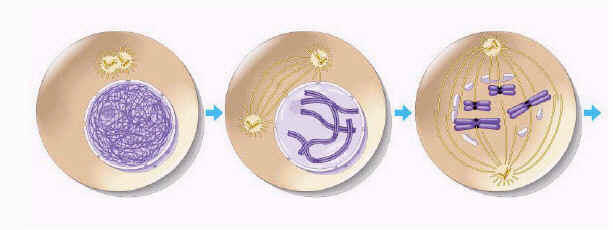
7. How does the spindle apparatus distribute chromosomes to the daughter cells?

__________________________________________________________________________

__________________________________________________________________________

8. What is the role of the kinetochores and the microtubules?

__________________________________________________________________________

__________________________________________________________________________
9. How does cytokinesis differ in animal and plant cells? Label the diagrams below.

__________________________________________________________________________

__________________________________________________________________________

__________________________________________________________________________

10. Eukatyotic mitosis is thought to have evolved from _________________________________

11. Why is the regulation of the cell cycle critical to normal cells?

__________________________________________________________________________

__________________________________________________________________________

12. What is the G1 checkpoint and where does it fit into the cycle?

__________________________________________________________________________

__________________________________________________________________________

13. What evidence is there that regulation is chemical in nature?

__________________________________________________________________________

__________________________________________________________________________

__________________________________________________________________________

14. Identify the role of the following in the cell cycle clock:

a. Kinase _________________________________________________________________

__________________________________________________________________________

b. Cyclin _________________________________________________________________

__________________________________________________________________________

c. CDKs _________________________________________________________________

__________________________________________________________________________

15. Describe the mechanism for regulating the passage of the cell into anaphase.

__________________________________________________________________________

__________________________________________________________________________

16. Describe what triggers mitosis from G2.

__________________________________________________________________________

__________________________________________________________________________

17. What is the role of ubiquitin?

__________________________________________________________________________

__________________________________________________________________________

__________________________________________________________________________

18. Describe a model for an external signal for growth.

__________________________________________________________________________

__________________________________________________________________________

__________________________________________________________________________

19. What happens when cancer develops?

__________________________________________________________________________

__________________________________________________________________________

__________________________________________________________________________

__________________________________________________________________________

20. What is the role of p53?

__________________________________________________________________________

__________________________________________________________________________

__________________________________________________________________________


AP Lecture Guide 22 – Descent with Modification


AP Biology: CHAPTER 22- DESCENT WITH MODIFICATION


1. Identify the three significant historical themes that set the stage for Darwinian evolutionary

theory.

__________________________________________________________________________

__________________________________________________________________________

2. What were the two major points made in The Origin of Species?

__________________________________________________________________________

__________________________________________________________________________

3. What were the conventional paradigms in the 1800’s when Darwin developed his theories?

__________________________________________________________________________

__________________________________________________________________________

4. What was the contribution of Carolus Linnaeus to the evolutionary theories?

__________________________________________________________________________

__________________________________________________________________________

5. How did the study of fossils help Darwin shape his theories?

__________________________________________________________________________

__________________________________________________________________________

6. How did geological gradualism and uniformitarianism influence Darwin?

__________________________________________________________________________

__________________________________________________________________________

7. Identify the two principles of Lamarck’s theory of evolution.

__________________________________________________________________________

__________________________________________________________________________

8. How did the observations during his voyage on the Beagle influence Darwin’s theories?

__________________________________________________________________________

__________________________________________________________________________

9. Why were the Galápagos Islands so important to Darwin’s observations?

__________________________________________________________________________

__________________________________________________________________________

10. What are the elements for the formation of new species?

__________________________________________________________________________

__________________________________________________________________________

11. What is the driving force behind the evolution of the 14 species of finches on the

Galapagos?

__________________________________________________________________________

__________________________________________________________________________

12. What was Wallace’s role in the Theory of Natural Selection?

__________________________________________________________________________

__________________________________________________________________________

13. What were the main points of The Origin of Species?

__________________________________________________________________________

__________________________________________________________________________

14. Define Descent with Modification.

__________________________________________________________________________

__________________________________________________________________________

15. How does the “tree analogy” represent the evolutionary relationships of creatures?

__________________________________________________________________________

__________________________________________________________________________

16. Summarize the observations and inferences recognized as the backbone of evolution by

natural selection.

__________________________________________________________________________

__________________________________________________________________________

__________________________________________________________________________

17. Observations:

a. ______________________________________________________________________

b. ______________________________________________________________________

c. ______________________________________________________________________

d. ______________________________________________________________________

e. ______________________________________________________________________

18. Inferences:

a. ______________________________________________________________________

b. ______________________________________________________________________

c. ______________________________________________________________________

19. How did Darwin’s experience with artificial selection influence his theories of evolution?

__________________________________________________________________________

__________________________________________________________________________

20. For each of the following, indicate how it is used as evidence of evolution by natural

selection.

a. Paleontology ____________________________________________________________

__________________________________________________________________________

b. Biogeography ___________________________________________________________

__________________________________________________________________________

c. Resistance to insecticides _________________________________________________

__________________________________________________________________________

d. Drug Resistance _________________________________________________________

__________________________________________________________________________

e. Homology ______________________________________________________________

__________________________________________________________________________

f. Homologous structures ___________________________________________________

__________________________________________________________________________

g. Vestigial organs _________________________________________________________

__________________________________________________________________________

h. Embryology ____________________________________________________________

__________________________________________________________________________

i. Biochemical similarity _____________________________________________________

__________________________________________________________________________


AP Lecture Guide 05A – Macromolecules


AP Biology: CHAPTER 5A

MACROMOLECULES


1. Define the following:

a. monomer _______________________________________________________________

___________________________________________________________________________

b. polymer _________________________________________________________________

___________________________________________________________________________

c. condensation reaction _____________________________________________________

___________________________________________________________________________

d. hydrolysis _______________________________________________________________

___________________________________________________________________________

2. Which foods do you think will enter the blood the quickest? Why?

___________________________________________________________________________

___________________________________________________________________________

3. What are the general roles of carbohydrates? ______________________________________

___________________________________________________________________________

___________________________________________________________________________

4. List some monosaccharides with their molecular formulas.

___________________________________________________________________________

___________________________________________________________________________

5. Double sugars are called ______________________________________________________

6. List the monosaccharides that form each:

a. maltose _________________________________________________________________

b. sucrose _________________________________________________________________

c. lactose __________________________________________________________________

6. Polymers of sugars form _______________________________________________________

7. Which forms of polysaccharide is best for each function:

a. Strength of structure _______________________________________________________

b. Storage and sugar release __________________________________________________

c. What theme is this addressing? ______________________________________________

8. How does the alpha differ from the beta form of glucose and why is it significant to animals?

___________________________________________________________________________

___________________________________________________________________________

9. How do the role and structure of the following polysaccharides compare?

a. starch___________________________________________________________________

b. glycogen ________________________________________________________________

c. cellulose_________________________________________________________________

10. Ninety percent of Asians, 75% of African-Americans, and a much smaller percent of

northern Europeans are lactose intolerant. Why do you suppose we see this pattern?

___________________________________________________________________________

___________________________________________________________________________

___________________________________________________________________________


AP Lecture Guide 13 – Meiosis and Sexual Life Cycles

AP Biology: CHAPTER 13

MEIOSIS AND SEXUAL LIFE CYCLES

1. The key features of the two versions of reproduction.

a. Asexual Reproduction ____________________________________________________

__________________________________________________________________________

__________________________________________________________________________

b. Sexual Reproduction _____________________________________________________

__________________________________________________________________________

__________________________________________________________________________

2. What is the role of meiosis in sexual reproduction?

__________________________________________________________________________

__________________________________________________________________________

__________________________________________________________________________

3. What is a karyotype?

__________________________________________________________________________

__________________________________________________________________________

__________________________________________________________________________

4. Identify several things the can be seen with a karyotype?

__________________________________________________________________________

__________________________________________________________________________

__________________________________________________________________________

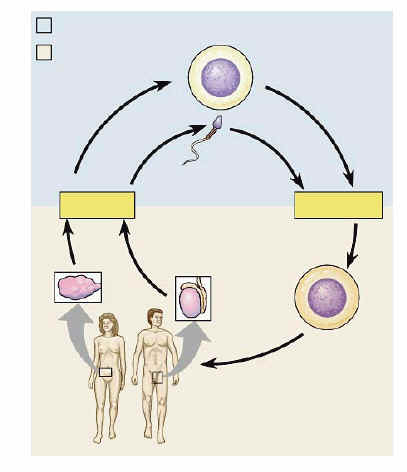
5. Label the diagram of the human lifecycle. Include the chromosome numbers.

6. Compare the products of mitosis with meiosis.

a. Mitosis ________________________________________________________________

__________________________________________________________________________

b. Meiosis ________________________________________________________________

__________________________________________________________________________

7. Meiosis is said to be a double division. Explain.

__________________________________________________________________________

__________________________________________________________________________

8. Meiosis is an important source of variation. Define and describe how each of the following

contributes to variation within a species.

a. Independent Assortment __________________________________________________

__________________________________________________________________________

b. Random fertilization ______________________________________________________

__________________________________________________________________________

c. Crossing Over __________________________________________________________

__________________________________________________________________________

9. Draw a pair of homologous chromosomes and indicate a crossing over event and the products.


10. List the significant differences between mitosis and meiosis.

__________________________________________________________________________

__________________________________________________________________________

__________________________________________________________________________

__________________________________________________________________________

11. What is the significance of genetic variation and natural selection?

__________________________________________________________________________

__________________________________________________________________________

AP Lecture Guide 23 – The Evolution of Populations


AP Biology: CHAPTER 23- THE EVOLUTION OF POPULATIONS


1. How does the “modern synthesis” theory of evolution differ from Darwin’s Theory of Natural

Selection?

__________________________________________________________________________

__________________________________________________________________________

2. Population genetics puts a mathematical approach to the study of microevolution. Define

each of the terms commonly used in population genetics.

a. population: _____________________________________________________________

b. gene pool: ______________________________________________________________

c. gene frequency: _________________________________________________________

3. What are the gene frequencies for the red and white flowers?

a. p = ____________________________________________________________________

b. q = ____________________________________________________________________

4. List the five condition that must be met by a populations to insure stability (no evolution).

a. ______________________________________________________________________

b. ______________________________________________________________________

c. ______________________________________________________________________

d. ______________________________________________________________________

e. ______________________________________________________________________

5. Assuming Hardy-Weinberg distribution of genes in a population, write the equation that

describes genotype frequencies.

__________________________________________________________________________

6. Define the following:

a. p2 = ___________________________________________________________________

b. 2pq = __________________________________________________________________

c. q2 = ___________________________________________________________________

7. Work out these practice problems. Find both the gene and genotype frequencies:

a. In Drosophilia, the allele for normal length wings is dominant over the allele for vestigial

wings. In a population of 1,000 individuals, 160 show the recessive phenotype.

b. The allele for the hair pattern called “widow’s peak” is dominant over the allele for no

“widow’s peak.” In a population of 1,000 individuals, 360 show the dominant phenotype.

8. What is the H-W assumption that is broken when genetic drift occurs? Explain

__________________________________________________________________________

__________________________________________________________________________

9. How does genetic drift apply to each of the following? Give an example of each.

a. Founders effect: _________________________________________________________

__________________________________________________________________________

__________________________________________________________________________

b. Bottleneck effect _________________________________________________________

__________________________________________________________________________

10. How do each of the following break H-W assumptions?

a. natural selection: ________________________________________________________

__________________________________________________________________________

b. gene flow: ______________________________________________________________

__________________________________________________________________________

c. mutation: _______________________________________________________________

__________________________________________________________________________

d. selective mating: _________________________________________________________

__________________________________________________________________________

11. Why is genetic variation important to evolution?

__________________________________________________________________________

__________________________________________________________________________

12. How can populations vary along a geographic axis compared to isolated populations?

__________________________________________________________________________

__________________________________________________________________________

13. What is the role of mutations to forming variation?

__________________________________________________________________________

__________________________________________________________________________

14. What factors of sexual reproduction lead to variations within a population?

__________________________________________________________________________

__________________________________________________________________________

15. How does diploidy preserve variation?

__________________________________________________________________________

__________________________________________________________________________

16. What is “balanced polymorphism?”

__________________________________________________________________________

__________________________________________________________________________

17. How can parasites contribute to balanced polymorphism?

__________________________________________________________________________

__________________________________________________________________________

18. In a biological sense, what is fitness?

__________________________________________________________________________

__________________________________________________________________________

19. Label the following graphs of variation in color with the type of selection.


20. What is the effect of sexual selection?

__________________________________________________________________________

__________________________________________________________________________

21. For each of the following, give an example or describe what is meant by the statement.

a. Natural selection cannot fashion perfect organisms: _____________________________

__________________________________________________________________________

b. Evolution is limited by historical constraints: ___________________________________

__________________________________________________________________________

c. Adaptations are often compromises: _________________________________________

__________________________________________________________________________

d. Not all evolution is adaptive: _______________________________________________

__________________________________________________________________________

e. Selection can only edit existing variations: ____________________________________

__________________________________________________________________________