How Much of the MCAT Is Biochemistry?

MCAT Biochemistry

In this brief guide, we are going to answer the question “How much of the MCAT is biochemistry?” We will introduce you to each of the MCAT sections, the main concepts you will need to learn, and some tips for studying biochemistry.

How Much of the MCAT is Biochemistry?

Biochemistry comprises approximately 25% of the MCAT, with 25 to 35 questions covering biochemistry in two of the four sections of the exam.

The Medical College Admission Test (MCAT) is a standardized test administered to individuals who wish to attend medical school in the United States. Almost all American medical schools require MCAT scores from applicants interested in pursuing careers as physicians.

Therefore, the MCAT is an extremely important exam, and both schools and applicants take it seriously. Members of the Association of American Medical Colleges and the American Association of Colleges of Osteopathic Medicine require MCAT scores from their applicants.

The history of the MCAT is quite long. MCAT Test preparation administrations began in the 1920s when standardized intelligence tests became immensely popular in the United States. Medical school administrators were concerned about the high dropout rate among medical students and decided to design a standardized test to assess readiness for medical school.

Dropout rates dropped dramatically after the implementation of this standardized test, and most medical schools adopted it as part of their admissions process.

The MCAT content assesses several areas. The first, of course, is the basic knowledge of the physical sciences and biology. The test also evaluates the applicant’s analytical and critical thinking skills, presenting various passages and arguments that the examinee must analyze during the test.

The MCAT also assesses reading comprehension and communication skills, which are vital for clinicians.

The modern MCAT is a computerized test, although it is not adaptive like the Graduate Record Examination (GRE). This means that examinees can return to a section once they have completed it, as the questions are set and static.

The MCAT takes around five hours to complete, including breaks, and is administered in secure testing centers so applicants have quiet, distraction-free spaces to work.

MCAT Sections

There are four sections on the MCAT. The first tests the applicant’s knowledge of the physical sciences and also challenges the applicant to use their problem-solving skills.

The Verbal Reasoning section, Part Two, provides passages for test-takers to read and analyze, followed by a series of multiple-choice questions that test the applicant’s ability to comprehend and synthesize information. For those looking for additional support, a college paper writing service can help improve writing and analytical skills. 

The third section is a writing sample, in which the applicant responds to two short prompts that assess their communication skills and logical thinking. Finally, the life sciences section covers basic topics in biology.

Chemical + Physical Foundations of Biological Systems

The first section of the MCAT focuses on the physical sciences, specifically general chemistry and physics. It covers content in the following proportions:

30% General Chemistry

25% Biochemistry

25% Physics

15% Organic Chemistry

5% Biology

This section lasts 95 minutes and includes 15 standalone questions and 10 passages, each followed by 4 to 7 questions. To prepare for the chemistry portion, examinees need a strong grasp of the periodic table, chemical processes, and molecular bonding. The physics portion requires understanding fundamental physical laws and concepts such as motion, energy, light, and atomic structure.

Critical Analysis + Reasoning Skills

The CARS section is significantly more challenging than SAT-style reading comprehension and the verbal section of the old exams. This section covers:

50% humanities

50% social science

You are not required to have any outside knowledge; everything you need to know to answer the questions will be provided in the passages. You will have a total of 90 minutes to work through nine passages with a total of 53 questions.  If you’re struggling with essay writing as part of your test preparation, a paper writing service can help you improve your skills. 

In this section, no specific factual knowledge is required. Rather, the questions are designed to test reading comprehension, critical and logical thinking, and analytical skills. In general, test takers prepare for this section of the MCAT primarily by taking practice exams.

Biological + Biochemical Foundations of Living Systems

This section covers:

65% Biology

25% Biochemistry

5% General Chemistry

5% Organic Chemistry

As with the first science section, you’ll have 95 minutes to answer 15 discrete questions and 10 passages with 4 to 7 questions each. The topics in this section vary widely, from enzyme structure to evolution. Test-takers require a thorough understanding of molecular biology, including the structure and function of DNA, as well as microbiology, including the characteristics of viral, bacterial, and eukaryotic cells.

In addition, examinees should be familiar with all major biological systems of larger animals. Finally, organic chemistry topics range from covalent bonds to the characteristics of biological molecules.

MCAT Scores

Each section of the MCAT allows a student to score between a minimum of 118 points and a maximum of 132 points. For the total sum of the four sections, a student can achieve a score ranging from a minimum of 472 to a maximum of 528.

You may have heard scores like 23 or 31 mentioned in the past. However, it’s important to clarify that these scores were used before the MCAT underwent its most recent change in 2015. Currently, all students applying to medical school are doing so with the new scoring system.

What is considered a good GMAT score?

The average for the total MCAT score is 510-511.

The average total MCAT score is 510-511. However, for the most accurate estimate, you should check directly with the programs. Especially for those who must juggle the MCAT alongside other jobs, it helps to know how much effort and time to put into preparing for the exam.

Here are some important questions to consider before beginning your research.

What MCAT Scores Do You Need for Acceptance?

To determine the MCAT score you need, it’s essential to have a target score in mind. Start by contacting the admissions office of the medical schools you’re interested in to request their preferred cutoff score. If the school doesn’t provide a specific cutoff, you can find the average GPA and MCAT scores for accepted students here.

Keep in mind that some schools may use your MCAT scores for course placement or scholarship decisions. In such cases, aiming for a score higher than the minimum requirement may increase your chances of receiving additional benefits.

How can I prepare for the MCAT?

To excel on the MCAT® Biology exam, start by gathering detailed information about the test. This knowledge will help you craft an effective study plan. The MCAT is a standardized exam with primarily multiple-choice questions. Besides biology concepts, it also assesses your understanding of physical sciences, verbal reasoning skills, and writing abilities. There are many MCAT preparation courses available online and in person.

Exploring the Biochemistry Section

For specific details about the MCAT biochemistry section, visit the Association of American Medical Colleges website. The site provides a comprehensive overview of the content covered in the biology and chemistry sections of the MCAT.

Importance of Early Preparation

A high score on the MCAT can significantly enhance your chances of getting accepted into your desired medical school. Therefore, it is beneficial to begin your study preparation early. Many experts recommend starting at least three months before the exam date.

Additionally, if you find yourself struggling with other academic tasks, you might consider using an online paper writing service to help manage your workload. Dedicating substantial study time each day can ensure thorough preparation, allowing you to cover all necessary concepts and avoid last-minute cramming, which is generally ineffective for achieving a high score.

Utilizing Study Guides and Practice Tests

Consider obtaining a copy of the Official MCAT Exam Guide, available on the Association of American Medical Colleges website. This guide contains content and questions similar to those on the actual MCAT, along with answers and detailed explanations. It also offers tips for answering questions correctly and insights into how a strong MCAT score can impact medical school acceptance.

Practice tests are an essential tool for preparing for the MCAT® Biology section. The Association of American Medical Colleges website offers practice tests, and additional tests can be found on other preparatory websites and in study guides. If you opt for an MCAT® Biochemistry Prep course, practice tests, and expert commentary are often included in the package.
From Water to Land: 10 Amazing Types Of Amphibians

There are nearly 8,000 types of amphibians, including some of the most unusual and exciting creatures found on land and water.

About two million species of animals inhabit Planet Earth. More than that, scientists discover and categorize about 10,000 other new species every year. Animals are broken down into classes which include vertebrates and invertebrates, or animals with or without spines.

Amphibians belong to the vertebrate class along with birds, fish, mammals, and reptiles. All amphibians are cold-blooded, meaning they cannot generate body heat on their own. For that reason, they must rely on their environment to keep them cold or warm enough for survival.

Going further, most amphibians undergo a metamorphosis from a juvenile to an adult form. For example, frogs begin as tadpoles with gills and a tail. As they mature, they develop lungs. Over time, four legs replace most types of amphibians tails.

The Types of Amphibians

Amphibian species include three subgroups or orders. Firstly, there is the Order Anura which includes about 6,500 species of frogs and toads.

Secondly, the Order Caudata or Urodela includes about 680 species of newts and salamanders. Thirdly, Order Apoda or Gymnophiona, includes about 200 species of caecilians.

Frogs and Toads

European Common Frog (Rana temporaria) & European Toad (Bufo bufo): Image CC by 2.0 Generic, by Thomas Brown, via Wikipedia Commons

Frogs and toads typically have short bodies, webbed fingers and toes, and no tails. And, they usually have bulging eyes.

Newts and salamanders

yellow-spotted salamander, an amphibian, on a white background
Spotted salamander -Ambystoma maculatum

Newts and salamanders look similar to lizards and have short legs, skinny bodies, and long tails. Surprisingly, salamanders and newts have the remarkable ability to re-grow lost limbs and tails.

Caecilians

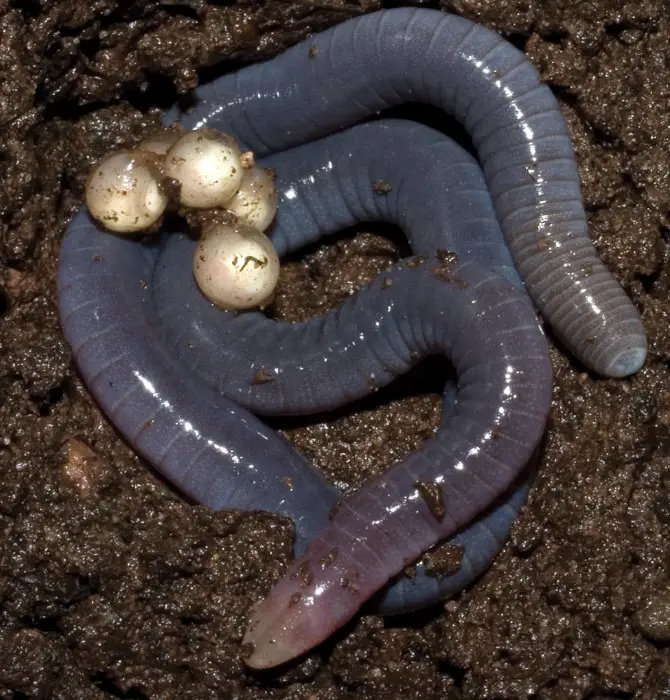
Caecilian: one of the types of amphibian with eggs in wet soil
Presumed Microcaecilia dermatophaga mother with eggs: Image CC by A 2.5 Generic, by Wilkinson M, Sherratt E, Starace F, Gower DJ (2013), via Wikipedia Commons

Caecilians don’t have any legs and resemble worms or snakes. That is because they mostly live underground, or in the substrate under streams. As a result, they have strong skulls and pointed noses to help them burrow through mud and dirt.

Fun Facts About Types of Amphibians

Amphibians are an evolutionary link between water-dwelling animals such as fish and land-dwelling animals such as mammals. Let’s be honest, they are some of the most fascinating animals on Planet Earth.

For example, amphibians have extremely primitive lungs. However, they have thin, moist skin that absorbs limited amounts of oxygen. So, you could say some types of amphibians breathe through their skin.

Another exciting fact about them, amphibians are carnivores and predators. But, they cannot chew their food. So, they swallow their prey whole.

Amphibians are also one of the planet’s most endangered animal species. It is believed that nearly half of the world’s amphibians are threatened species. That’s due to a combination of factors, including habitat loss, pollution, and climate change.

10 Amazing Types of Amphibians

Amphibians include some of the most amazing and unusual vertebrates found on earth. Much like their ancestors, most of them stick close to water.

We gathered a collection of photos of 10 of the most exciting types of amphibians currently roaming the earth, below. Then, we included a brief introduction to each one.

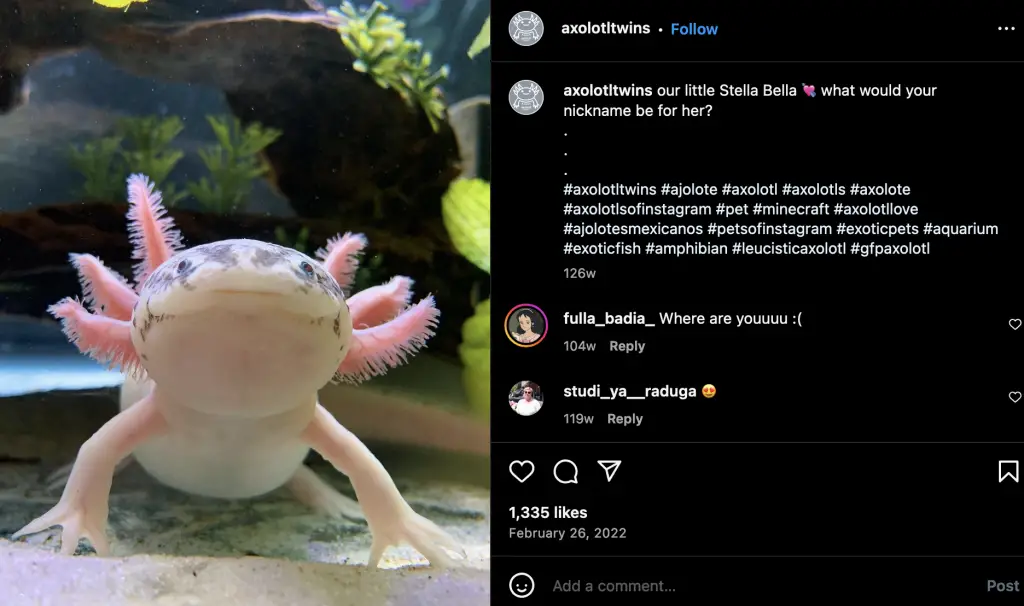
1. Axolotl

The axolotl is a type of salamander that is native to central Mexico. Unlike many other types of amphibians, axolotl larvae do not undergo metamorphosis when they reach maturity. As a result, they retain their gills, and tails, and are entirely aquatic throughout their life cycle.

photograph of an axolotl under wooden structure in a tank - one of the types of amphibian
Courtesy of Instagram – axolotltwins

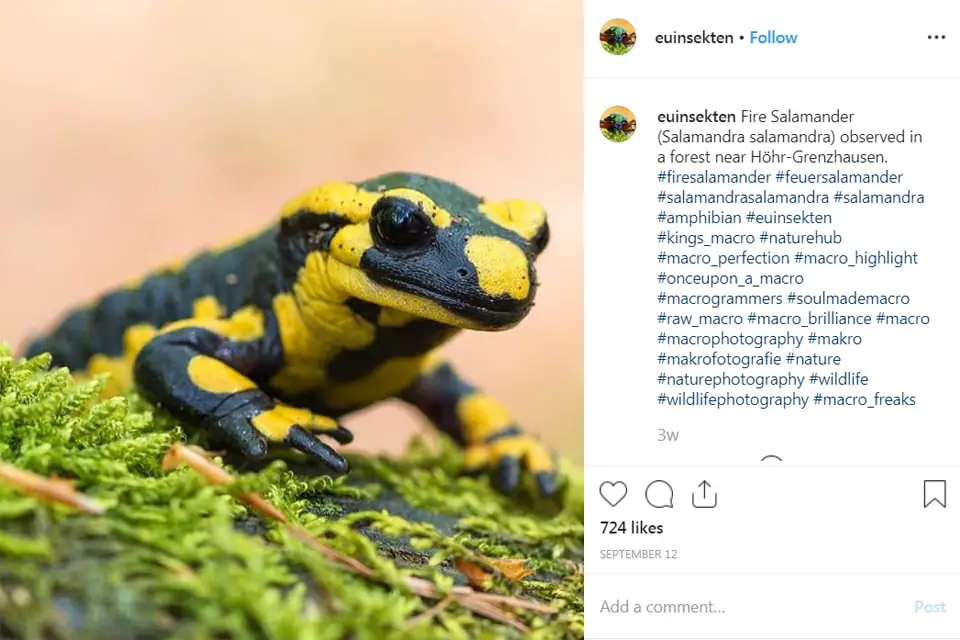
2. Fire Salamander

Fire salamanders are native to the forests of central and southern Europe. These types of amphibians stay near to ponds and streams, which they rely on for breeding. Another cool fact, they are active both night and day.

photograph of a fire salamander - a type of amphibian
Fire Salamander. Image via Instagram.

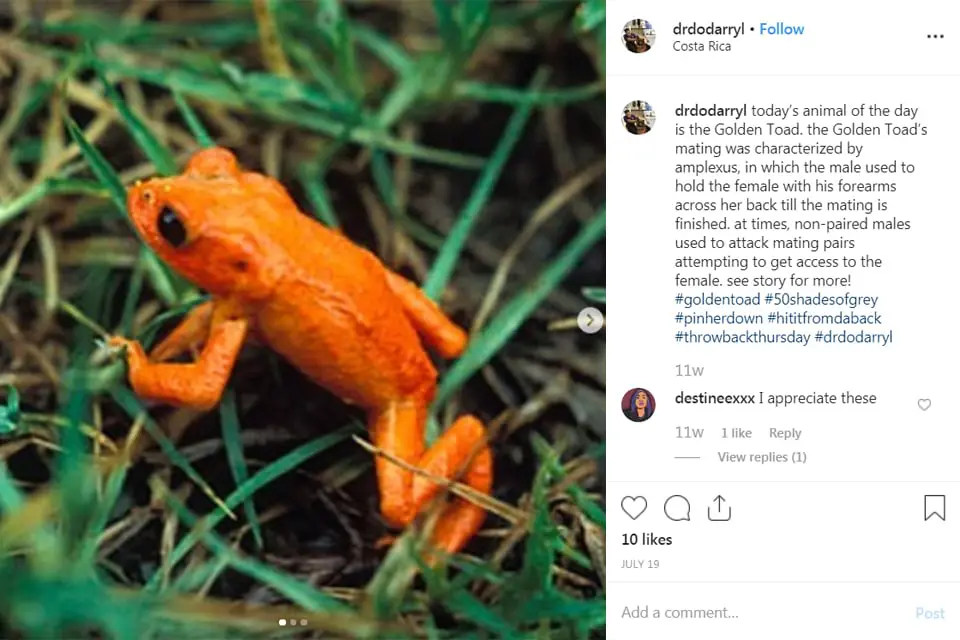
3. Golden Toad

The golden toad was native to the tropical mountain regions of Costa Rica, known as montane cloud forests. Sadly, golden toads are one of many types of amphibians thought to be extinct since they have not been seen since 1989.

photograph of a golden toad - a type of amphibian
Golden Toad. Image via Instagram.

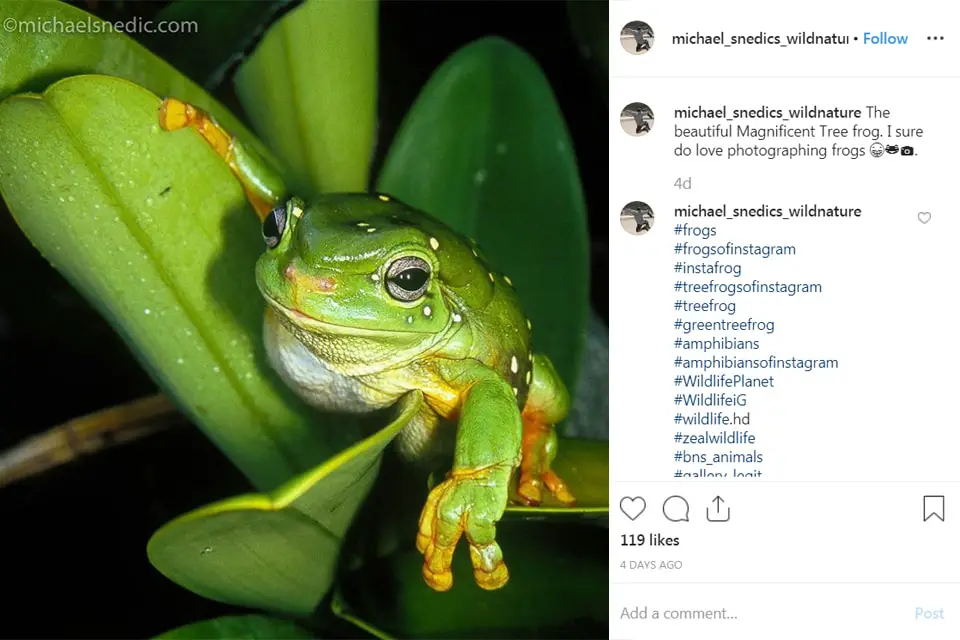
4. Green Tree Frog

Green tree frogs are native to New Guinea and Australia. Their colors range from brown to green, depending on the surrounding air temperature. These are one of the most abundant types of amphibians dwelling in trees.

photograph of a green tree frog - a type of amphibian
Green Tree Frog. Image via Instagram.

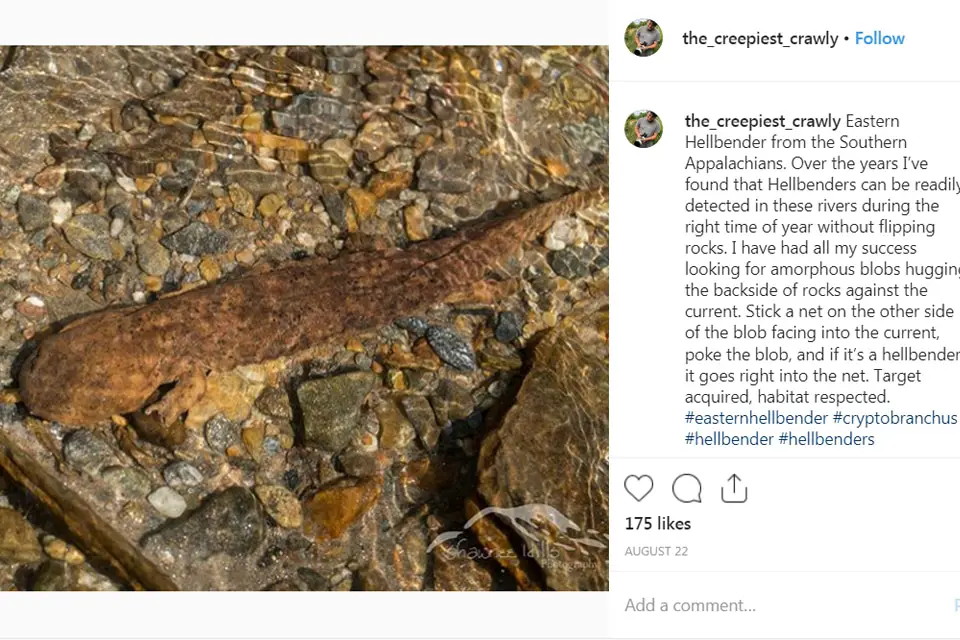
5. Hellbender

Hellbenders are native to wetlands of Kentucky, Pennsylvania, and Tennessee. However, they are sometimes located in smaller numbers in the surrounding states. Sadly, hellbenders join other types of amphibians on the IUCN Red List of Threatened Species.

photograph of a hellbender - a type of amphibian
Hellbender. Image via Instagram.

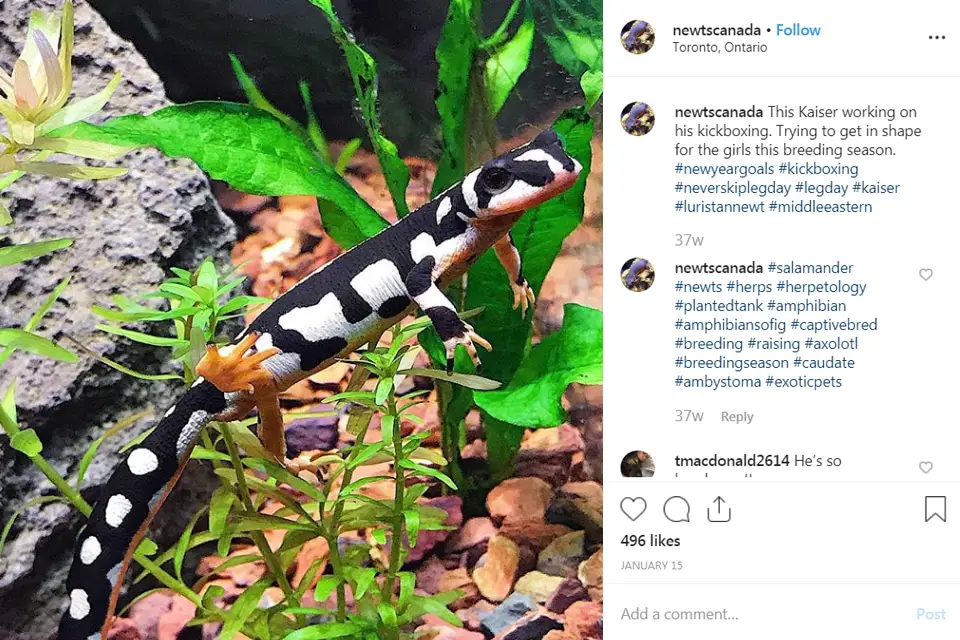
6. Luristan Newt

These black and white spotted newts are native to the Luristan Province of Iran. While they look like cows, they are clearly amphibians. The Luristan newt is listed as “critically endangered” on the IUCN Red List of Threatened Species. However, they are currently protected under Iranian law.

photograph of a black and white spotted luristan newt - a type of amphibian
Luristan Newt. Image via Instagram.

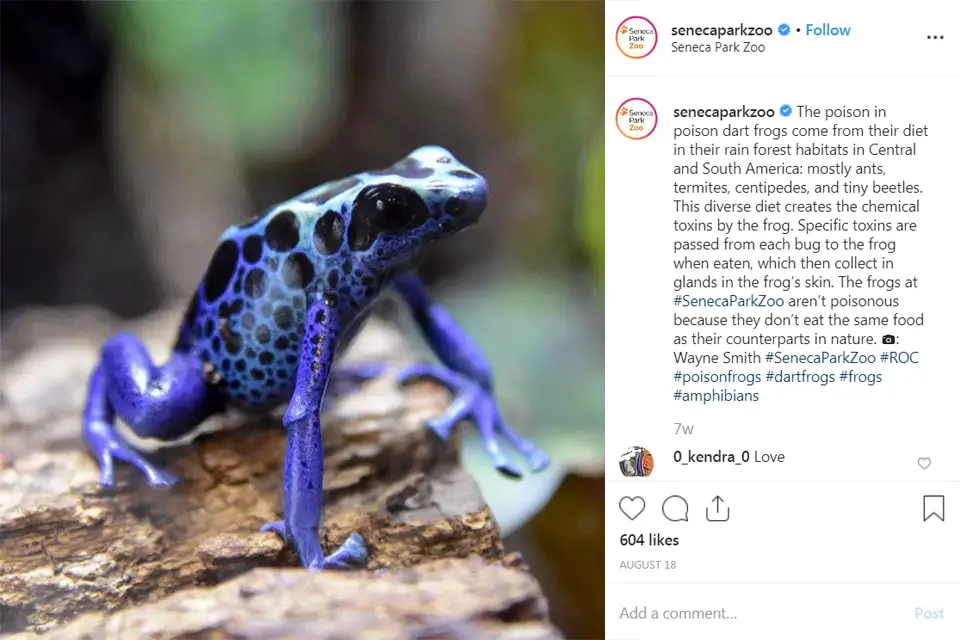
7. Poison Dart Frog

The poison dart frog is native to the subtropical and tropical regions of South America. They can also be found in Central America. Bright colored dart frogs are extremely poisonous. However, dart frogs with cryptic or dull coloring have nominal toxicity. In fact, some are not toxic at all.

photograph of a poison dart frog - a type of amphibian
Poison Dart Frog. Image via Instagram.

8. Red-Eyed Tree Frog

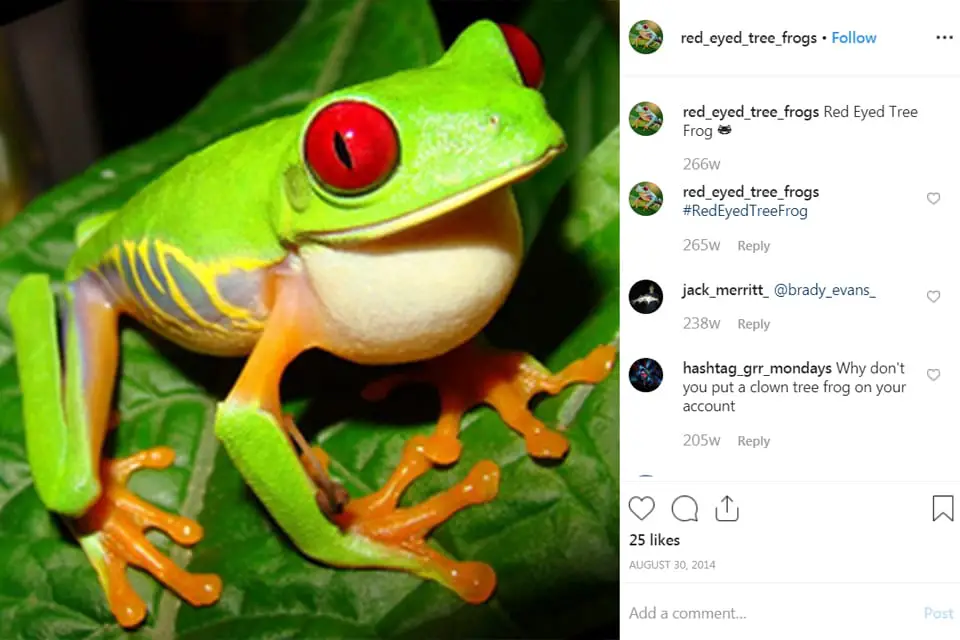
The red-eyed tree frog is native to the Neotropical rainforests of Mexico and Central America. In addition to their bulging red eyes, these tree frogs have webbed orange feet and blue and yellow flanks. Luckily, due to their large number, they are listed as “least concerned” by the IUCN Red List of Threatened Species.

photograph of a red-eyed tree frog - a type of amphibian
Red-Eyed Tree Frog. Image via Instagram.

9. Endemic Tailed Caecilian

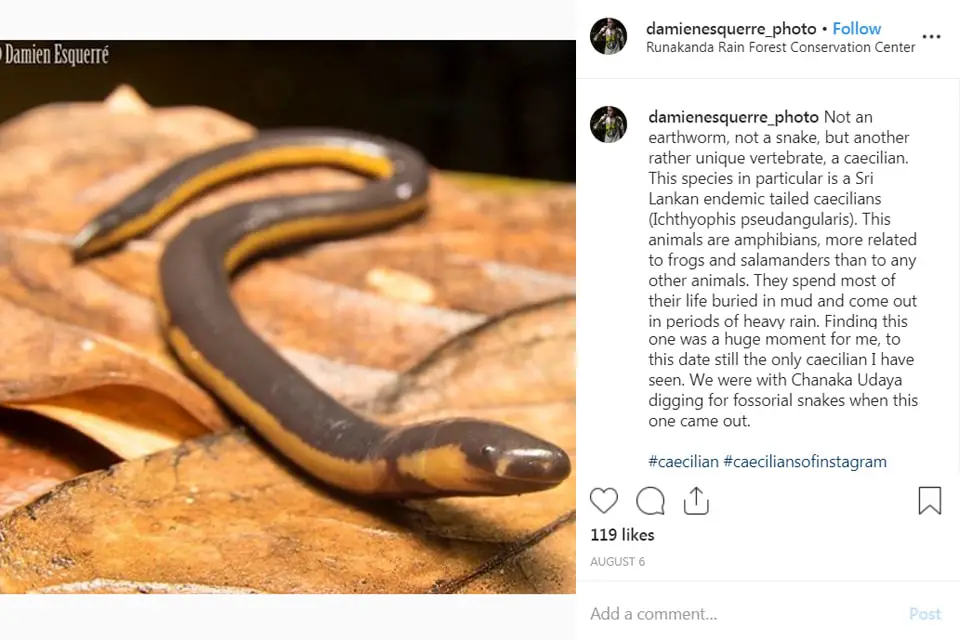
The endemic tailed caecilian is native to the tropical regions of Sri Lanka. Resembling a giant earthworm, endemic tailed caecilians range in size from 9 inches to nearly 16 inches. Additionally, the endemic tailed caecilian is listed as vulnerable by the IUCN Red List of Threatened Species.

photograph of a sri lankan endemic tailed caecilian - a type of amphibian
Sri Lankan Endemic Tailed Caecilian. Image via Instagram.

10. Tiger Salamander

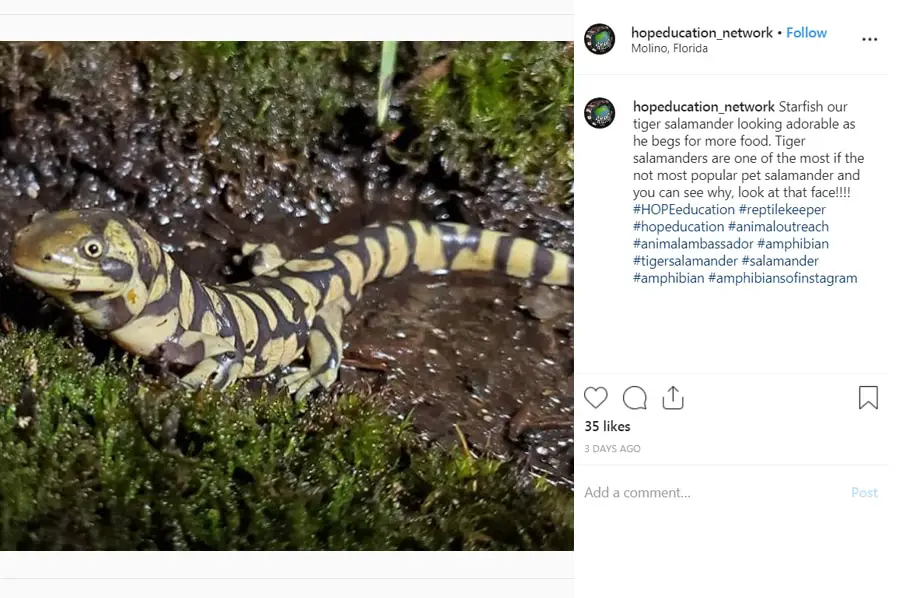
The tiger salamander is native to the mountainous and lowland regions of the United States and Mexico. Unlike other types of amphibians, they tend to avoid water. Additionally, they can grow to lengths of 12 inches and larger.

photograph of a tiger salamander - a type of amphibian
Tiger Salamander. Image via Instagram.

What We Learned About the Types of Amphibians

We hope you enjoyed our article and accompanying photos of amazing and unique types of amphibians.

You have seen our favorite types of amphibians. Now we want to know about your faves. Using the comments section, let us know any unusual types of amphibians you would like to see included in future articles.

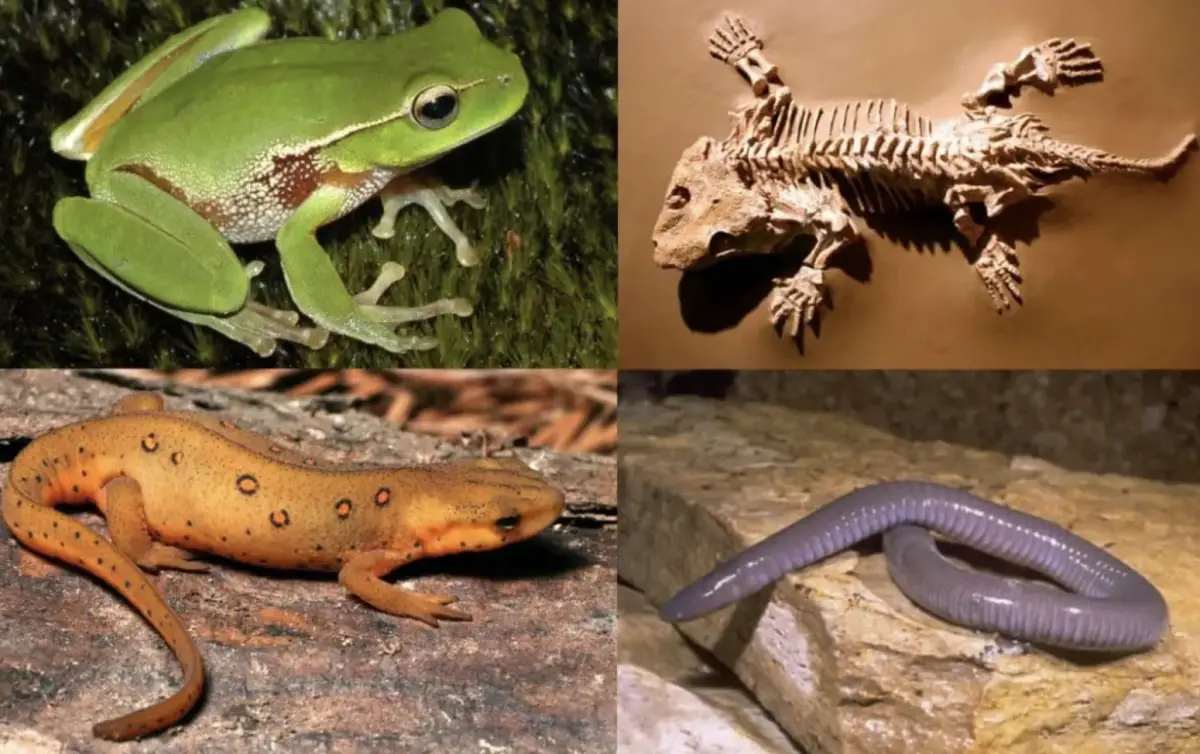
Featured image: A collage of various amphibians CC by ASA 3.0 Unported, by Various Artists: File:Litoria phyllochroa.JPG, File:Seymouria1.jpg, File:Notophthalmus viridescensPCCA20040816-3983A.jpg, File:Dermophis mexicanus.jpg, via Wikimedia Commons

5 Golden Rules of Successful Biology Research

Successful Biology Research

Doing successful biology research is not as easy as it seems. There are 5 golden rules that you should always follow if you want to get the most out of your project. In this blog post, we will discuss these rules and provide some tips on how to implement them in your own work. So, whether you are just starting out in biology research or you have been doing it for years, be sure to read on!

Rule 1: Know Your Audience

When you’re doing research for a biology project, it’s important to keep your audience in mind. You’ll likely be presenting your findings to a teacher or classmates, so you’ll need to choose a topic that’s appropriate for their level of understanding. 

For example, if you’re researching for a high school biology class, you wouldn’t want to write about something too complex or controversial. However, if you’re doing research for a college biology class, you can feel free to explore more complicated topics. In general, it’s always a great idea to check with your teacher before starting your research to make sure you’re on the right track. By taking the time to understand your audience, you’ll be able to create a more successful biology research project.

Rule 2: Don’t Be Afraid to Ask for Help

Asking for help is a natural part of the research process. No one knows everything, and even the most experienced biologists need assistance from time to time. If you’re thinking, should I pay someone to write my research paper? The answer is, it depends. Research paper writing can be very challenging. Without the right tools, you might end up disappointed with your result. If you’re afraid that might happen, then the best thing to do is buy a research paper online. You could search for ‘write my research paper’ on your favorite engine and set up an appointment with a writing specialist.

You could also consult with a professor or other expert in the field. If you don’t know anyone who specializes in biology, you can try reaching out to a librarian or searching for online resources. Another great way to get help is to ask fellow students who might be working on similar projects. No matter how you choose to get help, don’t be afraid to ask for it when you need it. Doing so will allow you to make the most of your research and produce the best possible results.

Learn the 5 Golden Rules for Successful Biology Research

Rule 3: Pick a Topic That You Are Passionate About

When it comes to research, picking a topic that you’re passionate about can make all the difference. Not only will you be more likely to enjoy the process of research, but you’ll also be more likely to stick with it even when the going gets tough. And trust me, there will be tough times. There will be days when you feel like you’re getting nowhere when all your hard work seems to be for nothing. 

But if you care about your topic, if you’re invested in finding out the answer to your question, then you’ll keep going. You’ll find a way to push through the difficult times and come out on the other side with new knowledge and a sense of accomplishment. So if you’re thinking about starting a research project, ask yourself: what is a topic that I’m passionate about? Once you have your answer, you’ll be one step closer to success.

Rule 4: Do Your Research

When you’re doing biology research, it’s important to do your research. That may sound like a no-brainer, but you’d be surprised how many people skimp on this step. They’ll read a few books or articles, maybe talk to a few experts, and then start writing. The problem is that they haven’t really taken the time to understand the topic inside and out. As a result, their work is often inaccurate or incompetent. 

So if you’re serious about doing great, successful biology research, take the time to immerse yourself in the literature. Read everything you can get your hands on. Talk to as many experts as possible. And only when you have a thorough understanding of the topic should you start writing.

Rule 5: Stay Organized and Keep Track of Your Progress

As a biology researcher, it’s also important to stay organized and keep track of your progress. That way, you can avoid duplication of effort and make sure that you’re making the best use of your time. There are a few different ways to do this. First, make sure to keep records of your experiments. Note down what you did, the results you receive, and any observations you made. 

Second, create a project plan that outlines the steps you need to take to complete your research. This will help you stay on track and identify any potential problems early on. Finally, don’t be afraid to ask for help online, from your supervisor or colleagues. They can offer valuable insights and feedback that can help improve the quality of your work!

10 Biology Jokes That’ll Make You Laugh Your Genes Off

Biology, while super informative and exciting to science junkies, can be a little dry. It can also be pretty intimidating. However, we’re going to look at the light side: biology jokes!

We definitely need to insert humor into biology. However, not literally into our biology. That could be painful. Or gassy.

We’ve scoured the web for the best biology jokes to add some fun to your life science. These biology jokes also will help you better learn and remember biological terms and concepts.

Marine Life Sea GIF by Underdone Comics - Find & Share on GIPHY

Jokes 101

Biology is the study of life. And comedy is the art of laughing at the ups and downs of life. Comedy is a way of inserting humor into the serious. Jokes are often a way to relieve tension and stress.

Learning biology is easy and exciting for some. It’s tough and intimidating for others. Humor unites us all. Some truly funny biology jokes will not just get you laughing but help you learn to enjoy the concepts of life science.

Now, while knowing a couple of biology jokes isn’t going to make you a stand-up comedian, they just might help you remember important key terms and help you ace your next exam.

The Science of Funny

What makes things funny? Writing good biology jokes is not just about inserting biology terms or talking about farts. Good jokes are about playing with expectations.

You capitalize on the fact that words have double meanings. You play with expectations and add that little something extra.

In comedy, you play with the way people read or think about things. You make light of the different levels of meaning words or ideas have to give everyone’s brain a little tickle. Comedy is about relieving tension and sometimes you play with where people’s minds may go in order to get them to let out a deep belly laugh. So, onto the list!

The 10 Best Biology Jokes

  • What did the Femur say to the Patella?
  • Which Biochemicals Wash up on Beaches?
  • What is Blood’s Message to the World?
  • What do You Call a Member of the Financial Staff of the Faculty of Biology?
  • Why are men sexier than women?
  • What do You Call a Microbiologist who has Visited 30 Different Countries and Speaks 6 Languages?
  • Is there a Big Difference Between Male and Female Anatomy?
  • What did One Cell Say to His Sister Cell When She Stepped on His Toe?
  • How does Juliet Maintain a Constant Body Temperature?
  • Why didn’t the Dendrochronologist Ever Get Married?

What did the Femur say to the Patella?

I kneed you.

I Love You GIF by Psyklon - Find & Share on GIPHY

Joke Dissection

This joke is humorous because the femur is the thigh bone and the patella is the knee cap. The femur literally needs the patella to walk. It connects the femur to the rest of the leg. Kneed is a play on the word need. The double context makes it a quick chuckle. Now, one might also say this joke was humerus. But the humerus is an arm bone.

Joke Source

http://www.jokes4us.com/miscellaneousjokes/schooljokes/biologyjokes.html

Which Biochemicals Wash Up on Beaches?

Nucleotides

Scientific Illustration Cell Biology Animation Medical Dna Rna Polymerase Transcription GIF - Find & Share on GIPHY

Joke Dissection

This joke is funny because of the play on words between tides on a beach and the suffix -tides of the biochemical molecule called nucleotides. Nucleotides are the organic molecules that make up DNA. There’s also the added humor that they wouldn’t wash up on beaches.

But, technically, if we put on our lab coats and act like sticklers of science, nucleotides do wash up on beaches in the form of organic life. There are millions of microorganisms that live in the ocean, and there are also nucleotides in the various parts of living things that wash up on the shore.

Joke Source

https://www.buzzfeed.com/kellyoakes/biology-jokes

What Is Blood’s Message to the World?

B Positive.

Evolution Thumbs Up GIF - Find & Share on GIPHY

Joke Dissection

This joke makes our list of funniest biology jokes because it has multiple levels. There’s the fact that B positive is a blood type. and it is a play on the phrase, “Be Positive.”

It’s also funny to imagine your blood being super optimistic and sweet considering how little we see of it. Giving it that personality gives it that extra level of humor.

Also if you’re a fan of dark humor, B positive blood is super rare. The argument could be made that optimists are even rarer.

Joke Source

http://www.jokes4us.com/miscellaneousjokes/schooljokes/biologyjokes.html

What do You Call a Member of the Financial Staff of the Faculty of Biology?

A buy-ologist.

Shopping GIF - Find & Share on GIPHY

Joke Dissection

This joke is funny because it’s a play on the word biologist. Not just any biologist but the person who manages the money for biology, which would make them a buyer. Are dad biology jokes a thing?

Joke Source

http://laffgaff.com/biology-jokes-puns-and-one-liners/

Why are Men Sexier than Women?

You can’t spell sexy without a ‘xy’

Sexy Homer Simpson GIF - Find & Share on GIPHY

Joke Dissection

This joke is funny on multiple levels. Now this joke has a nice build up that gets you thinking it’s talking about sexual reproduction. But it’s talking about sex as in the biological sex of someone.

Cis-gendered men are born male because of their XY chromosomes. Cis-gendered women have XX chromosomes.

This joke also sounds like a cheesy pickup line you would hear from a sketchy character, but instead, it’s biologically informative.

Joke Source

https://www.quickfunnyjokes.com/biology.html

What Do You Call a Microbiologist Who Has Visited 30 Different Countries and Speaks 6 Languages?

A man of many cultures

Petri Dish GIF - Find & Share on GIPHY

Joke Dissection

This is one of our favorite biology jokes because it’s a play on the world of microbiologists. Microbiologists need to get cultures in order to study the colonies of bacteria, protozoans, or other microorganisms.

Joke Source

https://www.quickfunnyjokes.com/biology.html

Is There a Big Difference Between Male and Female Anatomy?

Yes, a vas deferens.

Good One Lol GIF by Chicks on the Right - Find & Share on GIPHY

Joke Dissection

This is one of our favorite biology jokes! It’s so hilarious because of the solid wordplay. Vas deferens is a play on vast difference. But literally, one of the biggest differences between male and female anatomy is the vas deferens. The vas deferens are the ducts that lead sperm cells from the epididymis to the ejaculatory ducts.

Joke Source

https://www.buzzfeed.com/kellyoakes/biology-jokes

What Did One Cell Say to His Sister Cell When She Stepped on His Toe?

Mitosis.

Redux GIF - Find & Share on GIPHY

Joke Dissection

This is a great biology joke because it covers the basics. Mitosis is how cells replicate. One cell forms two sister cells. But it also brings in the element of two sisters fighting.

So if one sister steps on another sister’s toes she might say “My toesies.” Which sounds like mitosis. It’s also funny to picture two cells bickering like sisters.

Joke Source

http://laffgaff.com/biology-jokes-puns-and-one-liners/

How Does Juliet Maintain a Constant Body Temperature?

Romeostasis.

No Way Lol GIF by Rosanna Pansino - Find & Share on GIPHY

Joke Dissection

This isn’t just one of the funniest biology jokes, but it brings in some Shakespeare and literature. Literary references can be funny, too. Homeostasis is how animals maintain their internal temperature and the equilibrium of their body. “Romeo & Juliet” is one of the most popular love stories of all time.

Joke Source

http://laffgaff.com/biology-jokes-puns-and-one-liners/

Why Didn’t the Dendrochronologist Ever Get Married?

Because he only dated trees

Tree Hugger GIF - Find & Share on GIPHY

Joke Dissection

A dendrochronologist is a person who studies the lifespan of trees. They literally date trees. But it would be sad to imagine a single, lonely scientist only dating trees. This joke is not just a super deep reference, it also is a play on words.

You also imagine the sad picture of a lonely dendrologist studying their trees but, surprise, it’s about what they literally do.

Joke Source

https://www.buzzfeed.com/kellyoakes/biology-jokes

Now it may be a while before you are touring with Kevin Hart. But you will definitely make your professor laugh with these great biology jokes. Not only can they help you ace your exam, but you’ll also put breathing more life into life science.

What Is Osmosis in Biology? Understanding How Solvents Break the Barrier

Are you getting ready for your first biology class? Or are you trying to shake off the cobwebs and remember your biology from years ago? Either way, you may be asking, what is osmosis in biology?

We want to answer this question in a way that is thorough and understandable at the same time. Dust off your old textbook and put on your reading glasses as you find answers to the question, “What is osmosis in biology?”

What Is Osmosis In Biology?

Osmosis is a type of diffusion. In biology, it is related to cells. Osmosis happens when a solvent flows through a cell membrane, to balance the concentration of a solute — such as salt. If water is a solvent, it will be affected by the amount of salt (solute) that it contains.

Understanding Diffusion

Diffusion happens when molecules move from a highly concentrated area to a less concentrated region. Solids, liquids, and gasses can all diffuse.

When a liquid such as water diffuses in cellular biology, it crosses a semipermeable membrane to balance the concentrations of substances within the cells. As water flows in or out of a cell, the concentration of solutes affects its travel.

Semipermeable Membranes

To answer the question, what is osmosis in biology, we have to understand semipermeable membranes.

Semipermeable membranes are membranes that allow specific molecules or solvents to pass through by diffusion. Every cell in the human body has a cellular membrane, and they are semipermeable.

That word breaks down: “semi” in this biology word means “partly”, and “permeable” means “able to be passed through, or permeated.” So, semipermeable membrane means a membrane partially able to be crossed.

Some things can pass through, and others cannot.

Osmosis happens as solvents pass into and out of the cell, crossing that semipermeable membrane.

Osmosis in Plants and Animals

Plant cells need more water than animal cells. Plants have thicker cell walls that can contain more solution before bursting. For that reason, plants can thrive with the diffusion of hypotonic solutions.

Hypotonic solutions have a much higher ratio of solvent to solute. Hypotonic solutions can make animal cells burst; animal cells have thinner cell walls than plant cells.

Isotonic solutions are much better for diffusion in animal cells. Isotonic solutions contain equal amounts of solvent and solute. Conversely, isotonic solutions will leave plants drooping and unhealthy.

Did you ever hear of someone pouring salt on a slug when they were a child? Hopefully not; but if you did you know the slug shriveled up and essentially disappeared. That is because the water left the slug’s cells in an attempt to balance the concentration of salt outside the cells.

That is osmosis in action.

Examples of Osmosis

Try it at home! If you are looking for an example of osmosis you can easily try at home, and you have some lettuce in your fridge (or any leafy green like kale or spinach) that has become wilted try this experiment:

Types of Solutions

test tube

image source: pixabay.com

Every solution has a solvent and a solute. When you buy contact lens solution, you are essentially buying saltwater; water is the solvent and salt is the solution. The same is basically true of your tears.

Solutions

To answer the question, what is osmosis in biology, we have to understand the types of solutions in biology. Solutions include isotonic, hypotonic, and hypertonic.

Iso means “equal.”

Isotonic solutions have equal amounts of solutes inside and outside the cell. Therefore, isotonic solutions have no net movement because the concentration is already equal.

“Hypo” means “below” or “lower.”

Hypotonic solutions have lower concentrations of solutes outside of the cell than inside. This causes osmosis as solvents enter the cell to even the concentration.

Hyper means “high” or “above.”

Hypertonic solutions have higher concentrations of solutes outside the cell causing osmosis as solvents exit the cell to balance the concentration.

Osmosis Applications and Uses

We asked, what is osmosis in biology, and a logical follow-up question is, what are the applications of osmosis?

Another easy osmosis experiment to try at home:

You need two glass or ceramic cereal-sized bowls, one large carrot or two “baby” carrots, salt, and water.

  1. Pour water into both bowls, sufficient to cover the carrot(s).
  2. Stir salt into one of the bowls until it stops dissolving (hot water will dissolve the salt faster, but let it cool to room temp before adding the carrot).
  3. Place a baby carrot, or half of your large carrot, in both bowls.
  4. Wait: set a timer for one hour, and check your carrots at intervals throughout the day.

We can see something interesting when we drop a carrot into a bowl of saltwater. Within hours the carrot will have become a limp, orange piece of ribbon.

Why? Because the water left the carrot to balance the high concentration of salt surrounding the carrot.

Have you ever watched a suspense movie where the stranded travelers on a desert island are longing for something to drink and one wise traveler warns the others, “Do not drink the ocean water!” A diet of ocean water would leave your cells void of water as it traveled to counteract the salt.

Medicine

Noting the effect of osmosis on our cells, consider the role of osmosis in medicine. Our red blood cells are the giver of life to many who have undergone blood transfusions. In the meantime, red blood cells are stored in an isotonic solution. Remember the solution types?

An isotonic solution is measured to balance the concentration of solutes inside and outside the cells. If the blood cells were stored in a hypotonic or hypertonic solution, the cells would either lose their water or be overtaken by water. Either way, lives could be lost.

A similar phenomenon happens when medicine is received intravenously. If the medicine within the IV solution took on too much solution or lost too much solution, it would not achieve its intended purpose.

Fruits

Have you ever eaten a dehydrated peach chip? Or strawberry chip? Fruits are dehydrated and preserved through osmosis.

Fruits are made primarily of water, so as osmosis causes the water to leave the fruit, it becomes much less likely to spoil

Meat

The opposite is true of meats. Think of the days before refrigerators and ice boxes. How did people preserve their meat? They covered it with salt.

Why did they do that? Unlike fruits that are dehydrated, meats are preserved through drawing solvent into the meat. As the solvent enters, it brings the solute (salt) with it to prevent easy access for bacteria. Salt creates a hypertonic environment that is lethal to bacteria cells.

The Other Side of the Coin

Remember the folks on the desert island? While osmosis could lead to their death through the consumption of saltwater, osmosis could also be their best friend. Since osmosis is a two-way street, it flows into and out of cells depending on concentration levels, it can actually be used to turn saltwater into something salt-free and drinkable.

While the stranded folks wouldn’t have the proper tools to reverse osmosis on the desert island, it is not impossible for someone with an understanding of science and osmosis.

Basically, the pressure is created to push water from highly concentrated areas into an area away from the salt. Today, small units can actually be purchased to reverse osmosis and create safe drinking water.

Here’s an example of a large unit, used in Australia, to clean saltwater for drinking:

Conclusion

water
image source: pexels.com

What is osmosis in biology? Hopefully, you can now answer that question with some thoroughness.

Osmosis is a type of diffusion that happens when a solvent moves through a semipermeable membrane. In biology, water moves through our cells based on the concentration or ratio of solvent (water) to solute (salt).

Semipermeable membranes allow some solutions to pass through, meaning cells can take on too much water or lose too much water. If a cell is in a solution more concentrated than itself (hypertonic), water will enter the cell to balance the high concentration of salt without the cell.

Osmosis also plays a key role in carrying nutrients across the cell membrane. Likewise, waste is escorted out of the cell. Osmosis allows the roots of trees and plants to get the water and nutrients they need to grow strong and healthy.

In return, the plants feed us, either directly or by sustaining the herd animals we eventually eat. Plants rely on osmosis to live, and people rely on plants to live.

Aside from plants, osmosis also is crucial to man’s survival because it expels toxins and waste from our systems.

Hopefully, you have an understanding of osmosis as you move ahead in your biology class or as you reflect on your biology class from many years ago. Osmosis in biology is more than a scientific principle in an old textbook; it is a lifeline for both plants and animals.

You can look around you each day and see it at work, from tall trees in your backyard to patients recovering in the hospital with an IV feeding their veins. Practical examples of osmosis range from accident victims receiving emergency blood transfusions to little kids pouring salt on slugs.

Take note of the osmosis that happens in front of you each day and be amazed by the science all around you.

Featured image: pixabay.com