Squid Dissection

              Squid Dissection

Objectives:

As a result of this lesson, students will be able to:

  1. Locate and identify major external and internal features and organs of a squid.
  2. Understand and use basic dissection techniques and terms.
  3. Critically examine the functions of several squid features and organs.


Teaching Notes: This lab is a very thorough dissection of a squid and can be adapted to different grade levels. Teachers should try the lessons, considering which parts are most appropriate for their students and curriculum. The descriptions use complex dissection terminology. Be certain students understand the vocabulary of dissection prior to beginning the lab.

These lessons were tested with middle school students ages 11 to 13. They followed procedures and understood concepts well. The skills necessary to do all steps in the dissection are within the normal ability range of middle school students.


Materials:

  • squid*
  • scissors
  • toothpicks (for probes and pointers)
  • drawing paper
  • forceps
  • hand lens (5x recommended)
  • small cups (ketchup cups work well)
  • dissecting pan (or lunch trays)
  • paper towels
  • diagram of squid
  • wash bottle
  • microscope (optional)
  • dissecting scopes (optional)
  • slides (optional)
  • slide covers (optional)


*Look for squid at the local supermarket in the seafood and frozen foods sections. You may have to order it in advance. For areas that have them, you can also go to the local fish market or oriental food stores, or you can deal directly with fishermen.


Teaching Notes: Squid specimens tend to deteriorate rapidly. Keep all squid frozen until the morning before dissection. Thaw the squid in the refrigerator. If the entire dissection cannot be completed in one day, do the external activities while the specimens are still partly frozen, and the internal activities the next day after squid are thawed.

Squid may have tentacles or arms missing. Individual squid vary internally, and their relative maturity determines which organs are formed well enough to be seen clearly, and which have lost (or have yet to gain) their shape and coloration. Please advise students that they may not see everything shown in the enclosed diagram. Tissue shrinks and organs become misshapen quickly. To help maintain the freshness of the specimen, cover it with a wet paper towel as you work so it does not dry out so quickly.

Finally, this lesson is a tactile experience. You may want to explore this aspect through sensory activities, written descriptions, poetry, and/or artwork. Encourage students to experience the many textures found inside and outside the squid’s body. Moving fingertips along the suckers is suggested as well – the suckers do not scrape or hurt if you are gentle with them.


Procedure


  • Orientation:

Place the squid with the dorsal (back) side up in the dissecting pan. This means put the side with the funnel down and the fin side up. Make sure the tentacles and arms are towards you. Locate the head, eyes, beaks (mouth), arms (8), two longer feeding tentacles, fins, mantle, and skin. Use the hand lens to examine the suckers on the tentacles and arms as well as the spots on the skin, which are chromatophores.


Step 1A


What are the differences between arm and tentacle suckers? Where are the suckers located on the feeding tentacles as compared to the location of the suckers on the arms?


Step 1B


How do you account for the different locations of the suckers on the tentacles and the arms? What are chromatophores?


  1. The Mouth and Beaks: Locate the dark beaks in the center of the mouth.

    Step 2A


    Open and close the beaks, noting how the ventral beak overlaps the dorsal beak. How is this different from a parrot’s beak? Before you pull out the beaks, imagine what they will look like on the inside. With tweezers, remove the beaks and place beaks together with dark pointed parts opposite one another. Manipulate them (open and close) as if the squid were eating. What makes them work in this way?

    Step 2B Step 2B


    In order to remove the radula (a ribbon with rows of teeth on a tongue-like muscle) from inside the mouth, make small incisions in the edge of the mouth. With tweezers, locate the small, folded, plastic-like radula between beaks and remove it. It is usually very small, yellow or white in color. What is the radula’s function?   Store the radula and the beaks in water in a small cup if you are going to do a microscopic examination.
    Drawing of Squid Radula
  2. Funnel:
  3. Turn the body over, ventral side up, and locate the funnel (a deflated fleshy tube located at the base of the head). A squid swims by squirting water from the mantle through the funnel. The direction it swims depends on which way the funnel is aimed. Move the funnel and note its flexibility.

    Step 3


  4. External Anatomy:
  5. Orient the squid so that the tentacles are away from you, at the top of the dissection tray. Spread out the arms, tentacles, and fins. Draw and label the external parts of the squid: arms, tentacles (have suckers only at the tips), head, eyes, fins, mantle, funnel, tail, suckers, beaks (where each would be found on an intact squid) and mouth. If something cannot be seen, draw an arrow to show where it should be.  

    Step 4 Step 4


    If you have time, slice open an eyeball and locate the lens, pupil, retina, and iris (colored part of the eye). Look for the creamy white brain between the eyeballs. For assistance in identifying these parts, refer to the illustration below.

    Diagram of cephalopod eye


  6. Opening the Mantle:
  7. Keep the squid on its back (the side opposite the funnel). Using forceps, lift up the opening to the mantle behind the funnel (near the head) and separate the mantle from the internal organs. Close the forceps firmly so as to “pinch” the mantle flesh to keep it taut, cut along the ventral midline of the mantle, from its opening all the way to the tail. Be careful to keep the scissors lifted away from the internal organs so they are not damaged.  

    Step 5 Step 5


  8. Locating and Removing Reproductive Organs:
  9. Locate the gonad (reproductive organ) in the posterior end (refer to diagram for shape and location).

    Step 6A


    Upon opening female specimens, the large, firm, white nidamental glands are seen first. Males do not have nidamental glands. The glands lay on top of the other internal organs. These glands create the gelatinous matrix that envelops the eggs. In order to proceed further, carefully remove these glands. In females the eggs are jelly-like in a conical sac at the posterior end of the mantle. The male genital duct is a white, fluid-filled sac in the posterior end of the mantle. The sperm are stored in thin tubes in an elongated sac behind and along one gill.

    Step 6B


  10. Gills:
  11. Find the gills. These are the long, feather-shaped organs that are attached to the sides of the mantle and extend along the anterior half of the mantle. Identify the gill hearts, one on the posterior end of each gill (these are small, flat and white). Questions: Why are they white and our hearts are red or purple? The squid has a third heart (the systemic heart) that pumps blood to the rest of the body.

    Step 7


    Challenge: Why does it have separate hearts for the gills alone?
  12. Digestive Tract:

  13. Step 8A


    The long, silvery dark tube on the bottom of the liver (but appearing to be on top of the liver because of the squid’s inverted position) is the ink sac. Be careful not to break it open. Locate the stomach and caecum. These lie together as one white, silky-looking tube, like a deflated bladder and a coiled sack. The bunched up organs that look like human intestines are digestive ducts for the squid. If you are curious about the liver, wait to cut it open until the end of the dissection. It contains a lot of brown, oily liquid which may obscure other organs. If possible, open the stomach and examine its contents. Many squid will have bits of partially digested crustaceans (pink and white pieces), or tiny fish scales and bones.  

    Step 8B


  14. Removing the Ink Sac:
  15. Find and carefully remove the silvery-black ink sac that lies connected to the intestine. To do this, pinch the opening of the sac (near the back of the funnel) with forceps while gently pulling up and cutting the connective membrane along its length. After cutting about 1/3 to 1/2 of it, hold the sac with your fingers and pull the sac off the liver. Be careful not to puncture it. Squid ink stains clothing and skin. Place the sac in a small cup for later use with the gladius (pen).  

    Step 9 Step 9


  16. Removing the Gladius (Pen):
  17. The gladius is a long, clear feather-shaped structure used to support the mantle and for organ attachment. It and the cranium, or brain case, make up the “skeleton” of the squid. It feels like plastic and is made of tissue similar to a shrimp shell. There are two ways to remove it: from the tail or from inside the cut-open mantle. To remove it from inside the open mantle, grasp the head and organs firmly, and rotate them to the side with your left hand while holding on to one side of the mantle with your right hand and pulling away gently. Pulling the gladius out is like removing a splinter from your skin. You may need to cut away connective tissues that hold the gladius in place.

    Step 10A Step 10A


    The gladius is revealed, lying along the dorsal midline of the mantle.  

    Step 10B Step 10B


    Grab the forward end of the gladius and pull it carefully from its slot in the mantle. It may be helpful to have one person hold down the lower mantle while the other removes the gladius. To remove from the tail end, rotate the organs to one side, cutting connective tissues. Make sure the mantle is slit along the internal dorsal midline all the way to the tip of the tail. Pry out the tail end of the gladius and pull straight back, away from the body.

    Step 10C Step 10C


  18. Writing with the Gladius (Pen) and Squid Ink:

  19. Step 11A Step 11A


    Cut one end of the ink sac open and press it against the bottom of the cup with forceps or toothpick. You can also hold one end and push the ink out with your finger, as you would toothpaste from a tube. This will release the ink. Dip the pointed tip (the anterior end) of the gladius into the ink, filling the tip with the dark fluid. Then, using only the ink-filled tip of the gladius, write your name on your squid illustration or paper. If there is enough ink, create and write the name of your dissected squid under its picture. If the ink seems dry and pasty, add one drop of water at a time to create fluid ink. Though this is an unusual way to write, squid ink was actually used to write and draw in ancient times, and it is used today in some cultures. Unfortunately, it tends to fade over time (except from your clothes!).

    Step 11B


  20. Internal Anatomy:
  21. Draw, label, and identify the function of the following internal parts of the squid:
    • stomach
    • caecum
    • hearts (systemic and gill)
    • gills
    • reproductive organs
    • ink sac
    • liver (digestive gland)
    • gladius
    • brain
    • eyeball


  22. Microscope Slide Option:

    Step 12
    Step 12


    The following parts of the squid make excellent specimens for microscopic study:

    • eggs from the ovaries
    • suckers
    • nidamental glands
    • tips of arms and tentacles
    • spermatophores
    • connective membranes (thinly-sliced: mantle, fin, arm muscle)
    • radula
    • stomach contents
    • liver fluids
    • skin and chromatophores
    • portions of the eye
    • beak


    Teaching Note: Most of these are useful only for a dissecting microscope.

    Questions for further Investigation:

    • Identify the differences between the tentacles and the arms. Why are they different?
    • How are squid mouths and beaks like your jaw and teeth? How are they different?
    • How does the squid use the funnel and mantle for locomotion?
    • How does the squid obtain oxygen from the water?
    • How do squid reproduce?
    • Why are the chromatophores important to the squid?
    • What are the relatives of the squid?
    • What are the characteristics of cephalopods and of mollusks?
    • Why is it difficult to identify stomach contents?
    • What is the function of the fins?
    • What organ systems are the same or different from vertebrates?

    When finished, clean your area completely. Return all equipment and wash your hands. The squid odor will remain for a little while. Lemon juice will alleviate the odor if you find it offensive. To dispose of your specimen, wrap it in plastic or a zip-lock bag and throw it away. You may want to feed it to your cat, cut it up for fish bait, or even serve it as tonight’s calamari. Bon Appetite! Visit Clyde’s Kitchen on this website for tasty squid recipes!


Previous Lesson | Lesson List | Next Lesson
Site Contents | Opening Page | Home

Salamander Key


Dichotomous Key to Salamanders


Introduction:

A dichotomous key is constructed of a series of couplets, each consisting of two separate statements. For example: couplet 1. Seeds round soybeans
1. Seeds oblong 2 (this statement indicates that you go to couplet “2”)

couplet 2. Seeds white northern beans
2. Seeds black black beans

By reading the two statements of each couplet, you progress through the key from typically broad characteristics to narrower characteristics until only a single choice remains. As long as the correct statement of each couplet is chosen, and the unknown organism is included in the key, a confident identification is usually achieved. Many types of organisms can be identified using a dichotomous key. In this lab, you will identify salamanders.

Materials:

pictures of various salamanders, dichotomous key, metric ruler, pencil

Procedure:

  1. Use the dichotomous key provided to identify the salamanders in Figure 1.
  2. Write the pathway you took to get to the name of the salamander next to the drawing.
  3. Write the correct name for the salamander on the line below each picture.

Figure 1 – Types of salamanders

Key to the Salamanders:


1 Hind limbs absent Siren
Hind limbs present Go to 2
2 External gills present in adults Mud puppy
External gills absent in adults Go to 3
3 Large size (over 7 cm long) Go to 4
Small size (under 7 cm long) Go to 5
4 Body background black, large white spots irregular in shape and size completely covering body & tail Tiger salamander
Body background black, small, round, white spots in a row along each side fro eye to tip of tail Spotted Salamander
5 Body background black with white spots Go to 6
Body background light color with dark spots and or lines on body Go to 7
6 Small white spots on a black background in a row along each side from head to tip of tail Jefferson salamander
Small white spots on a scattered throughout a black background from head to tip of tail Slimy salamander
7 Large irregular black spots on a light background extending from head to tip of tail Marbled salamander
b No large irregular black spots on a light background Go to 8
8 a Round spots scattered along back and sides of body, tail flattened like a tadpole Newt
b Without round spots and tail not flattened like a tadpole Go to 9
9 a Two dark lines bordering a broad, light mid-dorsal stripe with a narrow median dark line extending from the head onto the tail Two-lined salamander
b Without two dark lines running the length of the body Go to 10
10 a A light stripe running the length of the body and bordered by dark pigment extending downward on the sides Red-backed salamander
b A light stripe extending the length of the body, a marked constriction at the base of the tail Four-toed salamander


Sample 6a Transformation Lab


Lab 6A – Bacterial Transformation & Ampicillin Resistance


Introduction:
Bacterial transformation occurs when a bacterial cell takes up foreign DNA and incorporates it into its own DNA. This transformation usually occurs within plasmids, which are small circular DNA molecules separate from its chromosome. There can be 10 to 200 copies of the same plasmid within a cell. These plasmids may replicate when the chromosome does, or they may replicate independently. Each plasmid contains from 1,000 to 200,000 base pairs. Certain plasmids, called R plasmids, carry the gene for resistance to antibiotics such as ampicillin, which is used in this lab.

Plasmids function in transformation in two different ways. They can transfer genes that occur naturally within them, or they can act as vectors for introducing foreign DNA. Restriction enzymes can be used to cut foreign DNA and insert it into the plasmid vectors. The bacteria used in this lab were Escherichia coli (E. coli). It was ideal for this transformation study because it can be easily grown in Luria broth or on agar, and it has a relatively small genome of about five million base pairs.

Transformation is not the only method of DNA transfer within bacteria. Conjugation is a DNA transfer that occurs between two bacterial cells. A bridge is formed between the two cells and genetic information is traded. In transduction, a virus is used to transfer foreign DNA into a bacterial cell.

Hypothesis:
The transformed E. coli with the ampicillin resistance gene will be able to grow in the ampicillin plates, but the non-transformed E. coli will not.

Materials:
The materials needed for this lab were 2 sterile test tubes, 500 μL of ice cold 0.05M CaCl2, E. coli bacteria cultures, a sterile inoculating loop, a sterile micropipette, 10 μL of pAMP solution, a timer, ice, a water bath, 500 μL of Luria broth, a spreading rod, 4 plates: 2 ampicillin+ and 2 ampicillin – , and an incubator.


Methods:
One sterile tube was labeled “+” and the other “-“. A sterile micropipette was used to transfer 250 μL of ice cold 0.05M CaCl2 to each tube. A large colony of E. coli was transferred with an inoculating loop to each tube. The suspension was then mixed by repeatedly drawing and emptying a sterile micropipette. 10μL of pAMP solution was added to the cell suspension in the tube marked “+” and mixed by tapping the tube. Both tubes were immediately put on ice for 15 minutes and then soaked in a 42° C water bath for 90 seconds. The tubes were then returned to ice for another 2 minutes.

After the heat shock, 250 μL of Luria broth were added to each tube. The tubes were mixed by tapping. Two plates of ampicillin + agar were labeled LB/AMP+ and LB/AMP-. The two plates of ampicillin- agar were labeled LB+ and LB-. 100 μL of the cell suspension in the “+” tube were placed on the LB+ and the LB/AMP+ plates. 100μL of the cell suspension in the “-” tube were added to the LB- and the LB/AMP- plates. These were spread with a spreading rod that was sterilized by passing it over a flame after each use. The plates were allowed to sit for several minutes and then incubated over night inverted at 37° C.


Results:


LB+

(Positive Control)


LB-

(Positive Control)


LB/AMP+ (Experimental)


LB/AMP- (Experimental)


Bacterial Growth

lawn lawn 3 colonies No growth


Questions:
1. Compare and contrast the number of colonies on each of the following pairs of plates. What does each pair of results tell you about the experiment?
LB+ and LB- Both of these plates had a lawn of bacteria. This proves that the bacteria are capable of growing on the agar and that there was nothing preventing growth beside the ampicillin.

LB/AMP- and LB/AMP+ The LB/AMP- had no growth, but the LB/AMP+ had small growth. This shows that the bacteria was transformed and developed a resistance to ampicillin.

LB/AMP+ and LB+ The LB/AMP+ had less growth than the LB+. This shows that the transformation was not completely effective and only transformed some of the most competent bacterial cells.


2.  Total mass of pAMP used = 0.05 μg


Total volume of cell suspension = 510 μL


Fraction of cell suspension spread on the plates = 0.196


Mass of pAMP in cell suspension = 0.0098


Number of colonies per μg of plasmid = 0.0294

3. What factors might influence the transformation efficiency? Explain the effect of each you mention.
Transformation efficiency could be affected by the size of the colony added to the solution. In a larger colony the efficiency would increase because there would be more receptive cells. Another factor would b the amount of pAMP added. The more pAMP added, the higher the efficiency. The amount of Luria broth added could also affect efficiency. If the amount of Luria broth was increased, the efficiency would decrease.


Error Analysis:
This lab had several steps, each giving the potential for error. All of the measurements had to be precise and accurate, and the heat shock timing was also a very complicated procedure. Error in this lab could have been caused by the concentration of the CaCl2 due to the fact that most of it was frozen.


Discussion and Conclusion:
The bacteria treated with the pAMP solution developed a resistance to ampicillin and were able to grow on the ampicillin+ plate. Those that were not treated with the pAMP were not able to grow on this medium. The plates with no ampicillin served as a control to show how the bacteria would look in normal conditions. Transformation is never fully effective, Only cells that are competent enough are able to take up the foreign DNA. Therefore, the ampicillin + plates showed less growth than the control plate.

BACK


Second Semester Study Guide Bl


Second Semester Review 


Are animals autotrophs or heterotrophs? Explain.
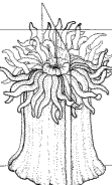
What type of symmetry does a sea anemone have?
At which end of an animal is the tail located?
What supportive rod along the back do all chordates have at some time during their life?
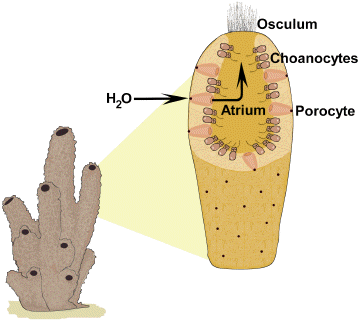
How do sponges differ from all other animals?
How does a sponge obtain its food?
What hard, needle like structures are found in the walls of sponges?
Do all animal cells have cell walls? Explain.
In what phylum are squid & octopus found?
Name 4 animals that are classified as cnidarians.
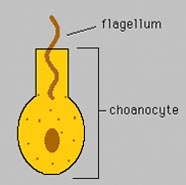
What is the function of collar cells in sponges?
Are animals unicellular or multicellular organisms?
At which end of an animal is the head located?
What kind of symmetry do insects have?
Flatworms use what method to asexually reproduce?
Why do flatworms NOT need circulatory & respiratory systems?
What group of worms has a pseudocoelom?
What is the function of the radula in mollusks?
Which class of mollusks uses “jet propulsion” to move?
Describe torsion in gastropod mollusks.
Give several examples of appendages in arthropods.
Describe the body of all arthropods.
Describe the appendages of all arthropods.
In what group are clamworms found?
Name 3 main classes of mollusks.
What muscles open & close bivalve mollusks?
What makes up the exoskeleton of arthropods?
Name 4 members of the class Crustacea.
What group of animals has 3 body regions & 6 legs?
How do insects benefit agricultural crops?
Name 4 characteristics of all chordates.
In what order are amphibians without tails found?
From what structure in fish did jaws probably arise?
List 4 examples of echinoderms.
What structure in fish filters wastes from blood?
The urinary bladder & kidneys in fish make up what system?
Where are shark eggs fertilized?
What does “Agnatha” mean?
What does “Chondrichthyes” mean?
Describe caecilians.
Name 4 things used by sharks to detect their prey.
What type of symmetry do echinoderms have?
Why do most amphibians have thin, moist skin?
What does “amphibian” mean?
Describe development in placental mammals.
Where is the diaphragm found in mammals?
Name a reptilian characteristic found in birds.
What covers the body of birds?
What covers the body of reptiles?
Describe a reptile’s skin.
Are reptiles ectotherms or endotherms? Explain.
Where are the chorion & amnion found?
How many chambers does a bird’s heart have?
What adaptation of reptiles allowed them to live & reproduce on land?
How many chambers does the heart of most reptiles have?
How many chambers does the heart of mammals have?
Which group of vertebrates has a diaphragm & what is its function?
Are mammals endotherms or ectotherms?
Name 3 groups of ectothermic vertebrates.
BACK


Safety Guidelines

Safety Guidelines
All Materials © Cmassengale


  1. Safety goggles/glasses & aprons must be worn at all times in the laboratory.
  2. Tie back long hair & secure lose clothing.  
  3. No horseplay is allowed in the lab.
  4. No food or drink is allowed in the laboratory.  
  5. Practice good “housekeeping” techniques.  Return items to proper places in good condition.  Avoid cluttering your work area.
  6. Never use chemicals from unlabeled containers.  Check each label before dispensing a chemical, & do not return a chemical to a bottle without the teacher’s permission.
  7. Unless told otherwise, treat all chemicals as poisonous or corrosive.  Wash hands immediately with plenty of water if chemical gets on them and always wash your hands before leaving lab.  
  8. No unauthorized lab work may be done, & a teacher must be present to do lab work.  
  9. Read & study each lab assignment before coming to lab.  Pay attention to safety notes in the lab manual and from the instructor.  Some common lab concerns:
    * Never pipette by mouth
    * Never use chipped or cracked glassware
    * Do not heat a closed system
    * Do not point heated containers at yourself or another person
    * Use a fume hood for noxious fumes
    * Place heated glass on wire gauze until cool
    * Do not use flammable material near open flame
    * Wear gloves when dispensing irritating chemicals
    * Dilute concentrated acids by adding acid to water
    * Turn off burners and water faucets when not in use & before leaving lab
    * Only heat glassware marked Kimex or Pyrex
    * Use glycerin and a twisting motion to insert glass tubing into stoppers
    * Use tongs, test tube holders, or heat-resistant gloves to handle hot glassware
    * Use pins to secure dissecting organisms to the dissecting tray before cutting with a scalpel
    * Wash hands before and after dissecting and keep hands away from your face
  10. Report all accidents immediately to the teacher.
  11. Know the location and proper use of all safety equipment in the lab.
  12. Know where all exits are from the lab.


PRINT SAFETY RULES & LAB CONTRACT HOME      PRINT SAFETY WORKSHEET