Genetics


Mendelian Genetics
All Materials © Cmassengale 


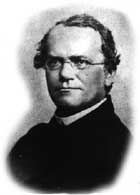
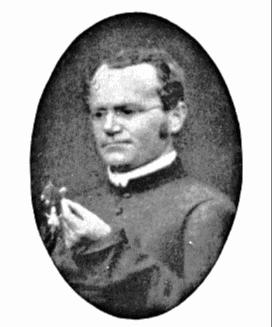
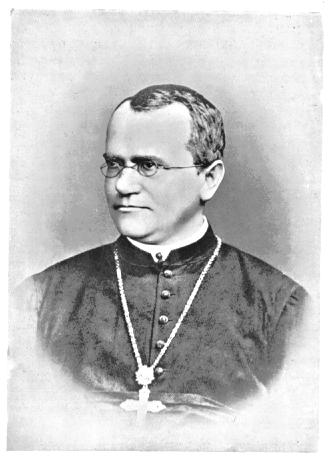
Mendel 1862 Mendel 1868 Mendel 1880
1862 1868 1880


Genetic Terminology:

  • Trait – any characteristic that can be passed from parent to offspring
  • Heredity – passing of traits from parent to offspring
  • Genetics – study of heredity
  • Alleles – two forms of a gene (dominant & recessive)
  • Dominant – stronger of two genes expressed in the hybrid; represented by a capital letter (R)
  • Recessive – gene that shows up less often in a cross; represented by a lowercase letter (r)
  • Genotype – gene combination for a trait (e.g. RR, Rr, rr)
  • Phenotype – the physical feature resulting from a genotype (e.g. tall, short)
  • Homozygous genotype – gene combination involving 2 dominant or 2 recessive genes (e.g. RR or rr); also called pure 
  • Heterozygous genotype – gene combination of one dominant & one recessive allele    (e.g. Rr); also called hybrid
  • Monohybrid cross – cross involving a single trait
  • Dihybrid cross – cross involving two traits
  • Punnett Square – used to solve genetics problems

Blending Concept of Inheritance:

  • Accepted before Mendel’s experiments
  • Theory stated that offspring would have traits intermediate between those of its parents such as red & white flowers producing pink
  • The appearance of red or white flowers again was consider instability in genetic material
  • Blending theory was of no help to Charles Darwin’s theory of evolution 
  • Blending theory did not account for variation and could not explain species diversity
  • Particulate theory of Inheritance, proposed by Mendel, accounted for variation in a population generation after generation
  • Mendel’s work was unrecognized until 1900

Gregor Mendel:

  • Austrian monk
  • Studied science & math at the University of Vienna
  • Formulated the laws of heredity in the early 1860’s
  • Did a statistical study of  traits in garden peas over an eight year period


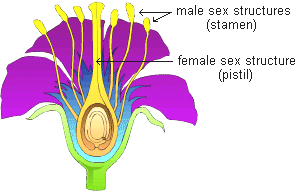
drawing of a flower cross-section showing both male and female sexual structures


Why peas, Pisum sativum?

  • Can be grown in a small area
  • Produce lots of offspring
  • Produce pure plants when allowed to self-pollinate several generations
  • Can be artificially cross-pollinate

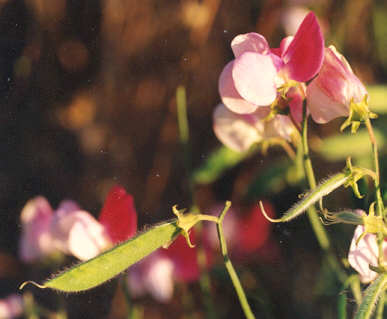
Picture of Pisum sativum
GARDEN PEA

Mendel’s Experiments:

  • Mendel studied simple traits from 22 varieties of  pea plants (seed color & shape, pod color & shape, etc.)
  • Mendel traced the inheritance of individual traits & kept careful records of numbers of offspring
  • He used his math principles of probability to interpret results
  • Mendel studied pea traits, each of which had a dominant & a recessive form (alleles)
  • The dominant (shows up most often) gene or allele is represented with a capital letter, & the recessive gene with a lower case of that same letter (e.g. B, b)
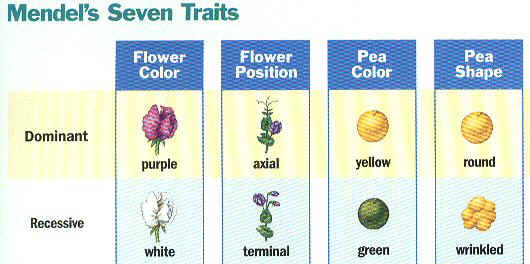
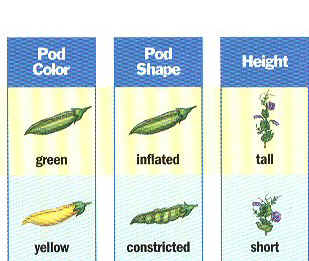
  • Mendel’s traits included:

         a. Seed shape —  Round (R) or Wrinkled (r)
            b. Seed Color —- Yellow (Y) or  Green (y)
            c. Pod Shape — Smooth (S) or wrinkled (s)
            d. Pod Color —  Green (G) or Yellow (g)
            e. Seed Coat Color —  Gray (G) or White (g)
            f. Flower position — Axial (A) or Terminal (a)
            g. Plant Height — Tall (T) or Short (t)
            h. Flower color — Purple (P) or white (p)


  •  Mendel produced pure strains by allowing the plants to self-pollinate for several generations
  • These strains were called the Parental generation or P1 strain
  • Mendel cross-pollinated two strains and tracked each trait through two
    generations (e.g. TT  x  tt )


                  Trait – plant height

                  Alleles – T tall, t short

    P1 cross    TT  x  tt

    genotype      —    Tt
    t t phenotype    —    Tall
    T Tt Tt genotypic ratio –all alike
    T Tt Tt phenotypic ratio- all alike


  • The offspring of this cross were all hybrids showing only the dominant trait & were called the First Filial or F1 generation
  • Mendel then crossed two of his F1 plants and tracked their traits; known as an F1 cross


              Trait – plant height

              Alleles – T tall, t short

F1 cross    Tt  x  Tt

genotype      —    TT, Tt, tt
T t phenotype    —    Tall & short
T TT Tt genotypic ratio —1:2:1
t Tt tt phenotypic ratio- 3:1


  • When 2 hybrids were crossed, 75% (3/4) of the offspring showed the dominant trait & 25% (1/4) showed the recessive trait; always a 3:1 ratio
  • The offspring of this cross were called the F2 generation
  • Mendel then crossed a pure & a hybrid from his F2 generation; known as an F2 or test cross


Trait   –  Plant Height
Alleles – T  tall, t  short

F2 cross       TT  x Tt

F2 cross       tt  x Tt

T t T t
T TT Tt t Tt tt
T TT Tt t Tt tt
          genotype – TT, Tt           genotype – tt, Tt
          phenotype  –  Tall           phenotype  –  Tall & short
          genotypic ratio  – 1:1           genotypic ratio  – 1:1
          phenotypic ratio – all alike           phenotypic ratio – 1:1


  • 50% (1/2) of the offspring in a test cross showed the same genotype of one parent & the other 50% showed the genotype of the other parent; always a 1:1 ratio

Problems: Work the P1, F1, and both F2 crosses for all of the other pea plant traits & be sure to include genotypes, phenotypes, genotypic & phenotypic ratios.

  • Mendel also crossed plants that differed in two characteristics (Dihybrid Crosses)
    such as seed shape & seed color
  • In the P1 cross, RRYY  x  rryy, all of the F1 offspring showed only the dominant form for both traits; all hybrids, RrYy


Traits:      Seed Shape & Seed Color

Alleles:     R round                Y yellow
r wrinkled             y green

 P1 Cross:     RRYY          x     r r yy  


ry Genotype:      RrYy
RY RrYy
Phenotype:      Round yellow seed
Genotypic ratio:      All alike
Phenotypic ratio:      All Alike


  • When Mendel crossed 2 hybrid plants (F1 cross), he got the following results


Traits:       Seed Shape & Seed Color

Alleles:     R round                Y yellow
r wrinkled             y green

     F1 Cross:     RrYy           x     RrYy                   
RY Ry rY ry
RY
RRYY

RRYy

RrYY

RrYy
Ry
RRYy

RRyy

RrYy

Rryy
rY
RrYY

RrYy

r rYY

r rYy
ry
RrYy

Rryy

r rYy

r ryy


Genotypes Genotypic Ratios Phenotypes Phenotypic Ratios
RRYY 1 Round yellow seed
9
RRYy 2
RrYY 2
RrYy 4
RRyy 1 Round green seed
3
Rryy 2
r rYY 1 Wrinkled yellow seed
3
r rYy 2
r ryy 1 Wrinkled green seed
1


Problems: Choose two other pea plant traits and work the P1 and F1 dihybrid crosses. Be sure to show the trait, alleles, genotypes, phenotypes, and all ratios. 

Results of Mendel’s Experiments:

  • Inheritable factors or genes are responsible for all heritable characteristics
  • Phenotype is based on Genotype
  • Each trait is based on two genes, one from the mother and the other from the father
  • True-breeding individuals are homozygous ( both alleles) are the same
  • Law of Dominance states that when different alleles for a characteristic are inherited (heterozygous), the trait of only one (the dominant one) will be expressed. The recessive trait’s phenotype only appears in true-breeding (homozygous) individuals


Trait: Pod Color
Genotypes: Phenotype:
GG Green Pod
Gg Green Pod
gg Yellow Pod


  • Law of Segregation states that each genetic trait is produced by a pair of alleles which separate (segregate) during reproduction


Rr
R r


  • Law of Independent Assortment states that each factor (gene) is distributed (assorted) randomly and independently of one another in the formation of gametes


RrYy

RY Ry rY ry


Other Patterns of Inheritance:

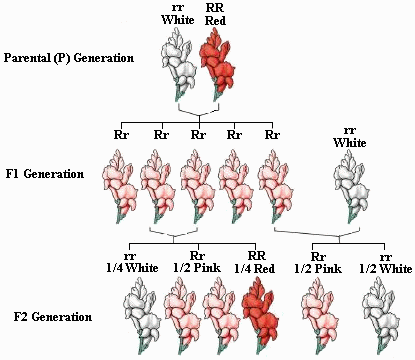
  • Incomplete dominance occurs in the heterozygous or hybrid genotype where the 2 alleles blend to give a different phenotype
  • Flower color in snapdragons shows incomplete dominance whenever a red flower is crossed with a white flower to produce pink flowers

  • In some populations, multiple alleles (3 or more) may determine a trait such as in ABO Blood type
  • Alleles A & B are dominant, while O is recessive


Genotype Phenotype
IOIO Type O
IAIO Type A
IAIA Type A
IBIO Type B
IBIB Type B
IAIB Type AB


  • Polygenic inheritance occurs whenever many variations in the resulting phenotypes such as in hair, skin, & eye color
  • The expression of a gene is also influenced by environmental factors (example: seasonal change in fur color)


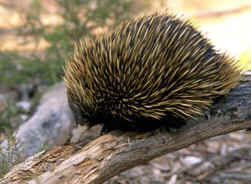
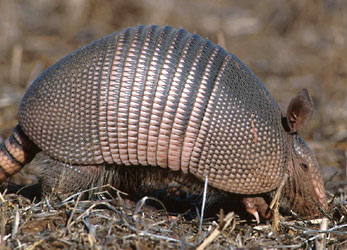
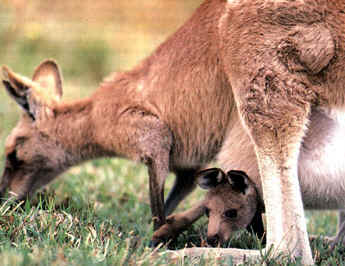
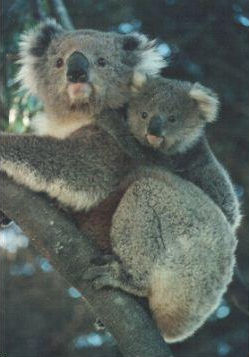
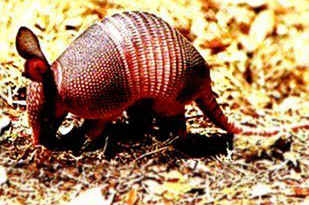
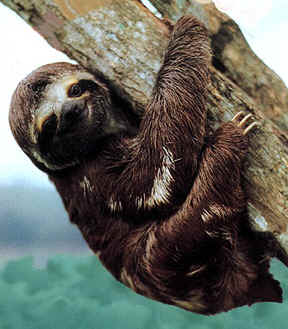
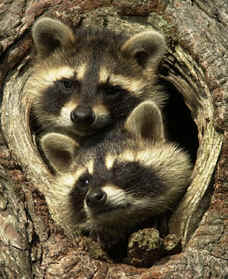
Mammal Orders


Mammal Orders

Locate the orders of mammals and then list the common names of the animals in each order


A T A M E R T O N O M A C A A
M I C S Z E A L R O R R A E P
C C L T E I C O N T P O R C E
C H R A N T D C I Y A V N A R
G B I E I E A O R E K I I T I
N J R R N P D M D N T T V E S
B I G T O A U I I O T C O C S
S T I D C P C S J R I E R J O
T A L T N S T X R C P S A S D
C I Y K O G H E K A M N L Q A
U L I B D F N Y R B M I E P C
A L O X G W F Y Z A E V Q S T
V R L A G O M O R P H A N X Y
P D C A T A T N E D E L C X L
F B T T M M E L P P S O L X A


ARTIODACTYLA CARNIVORA CETACEA
CHIROPTERA EDENTATA INSECTIVORA
LAGOMORPHA MARSUPIALIA MONOTREMATA
PERISSODACTYLA PRIMATES PROBOSCIDEA
RODENTIA SIRENIA


Solution


Leaf Collection Instructions

Arkansas is essentially a forest state because more than half of the state is covered with trees.  The climate and soils of Arkansas also support a great variety of trees, both conifers and deciduous.  Trees are one of Arkansas’ most important crops.  Forests are also valuable in preventing erosion, in offering parks and recreational areas, and in providing homes for wildlife.  In addition, many trees have been introduced into the state as ornamentals.

Leaf collecting is a good way to learn the trees native to your area.  Collecting leaves will also help you to learn leaf margins, shapes, and  venations and how to use different taxonomic keys to identify trees.

Materials needed:

  • leaf press
  • black ink pen
  • pencil
  • small notebook
  • scissors
  • Elmer’s glue
  • art paper, poster board, etc. for mounting
  • labels
  • taxonomic keys (Trees of Arkansas published by the Arkansas Forestry Commission)

Top

Directions for making a leaf press:
1.   Cut 15 – 20 pieces of corrugated cardboard 30 cm by 50 cm in size.
2. Cut several sheets of newspaper the same size as the cardboard.
3. Lay 10 or 12 sheets of newspaper between each cardboard layer sandwich style.  These sheets will need to be changed every couple of days as they absorb moisture from your leaves; therefore, cut extra sheets.
4. Use one, preferably two, stretch belts to bind the press together.
5. Leave the press in an area so that air can circulate &  more quickly dry the leaves.

Top

Getting started with your collection:
1. Study the shapes, margins, venations, tips, bases, etc. in your Trees of Arkansas book.

Click here to view reference page

2. Learn to distinguish simple leaves from compound leaves and conifers from deciduous trees.
3. Learn to distinguish a tree from a shrub.
4. Gather your collecting materials together – press, pencil, scissors, & small notebook.
6. Always get permission before collecting leaves on someone else’s property.
7. Be sure to collect at least
two of each type of leaf so both the bottom & top side of the leaf can be shown in your collection.
8. Place leaves in your press immediately after collecting them so they do not start to dry out and wrinkle.
9. Record the name of each leaf, date collected, and place collected in your notebook as you collect.  Also record tree characteristics such as shape of the crown, color and type of bark, etc.

Top

Collecting:
1. Remember to collect two of every type of leaf!
2. Carefully remove an entire leaf, not a leaflet, from the tree, and place this in your press between newspaper layers.
3. If leaves are damaged or torn, don’t use them because you will not receive credit.
4. Make sure that none of the leaf parts extend beyond the edge of the press.
5. You may also collect &press seeds and/or fruits from some trees if they fit in your press.
6. Leave the leaf in the press for 3 – 5 days depending on its thickness and moisture content.  Remember to change the newspaper when needed.
7. Keep the press in an area where air is circulating (in front of a fan).

Top

Labeling and identifying:
1. Obtain printed labels from your teacher.
2. Use only black ink to write labels, & do not mark out or white out mistakes on the labels; rewrite them.
3. Use taxonomic keys to identify each leaf, and include both the scientific & common name of the tree on the label.
4. Determine the shape, margin, tip, base, and venation of your leaf and whether it is a simple or compound leaf; record this on your label.
5. Use you key to give a description of the tree, not the leaf.
6. Research uses for the tree, its fruit, etc. and record on your label.
7. Tell if the leaf is deciduous or coniferous.

Top

Mounting leaves:
1. Use pieces of cut poster board or art paper to mount your leaves.  Make sure all sheets are uniform in size! (The size of your sheets will be determined by your largest leaf.)
2. Use Elmer’s glue to adhere two leaves to each page — one showing the upper surface of the leaf and the other showing the underside of the leaf.
3. Each page should have only one type of leaf on it.
4. Arrange the leaves so they do not overlap each other and so there is room to glue the label in the lower right hand corner.  The leaves should look nice on the page.
5. On compound leaves, mount the topside of the complete leaf and then mount the underside of a single leaflet. Make sure the leaflet comes from another leaf to receive credit!
6. Use a small amount of Elmer’s glue to adhere the completed label in the lower right hand corner of the page.
7. LET THE PAGES DRY COMPLETELY BEFORE ASSEMBLING THEM TOGETHER IN YOUR COLLECTION OR THE PAGES WILL STICK TOGETHER!!!!!
8. Once the pages are dry, lay them in the correct order (see your list of required leaves), and then number the pages in the lower right corner with black ink.
9. Make a stiff front and back cover for your collection from poster board, cardboard, wood, etc.  Include the following items on your cover:

  • title (Tree Identification Through Leaves)
  • your complete name
  • date collection turned into teacher
  • class period
  • subject
  • teacher’s name

10. Use ribbon, string, etc. to bind the pages together or assemble the collection in a scrapbook.  DO NOT COVER THE LEAVES WITH PLASTIC!!!

Top

Required leaves:
1. Only native, Arkansas trees may be used.  Refer to your Trees of Arkansas book.
2. Leaves must be in perfect condition without damage or tears.
3. No more then 4 oaks are allowed in the collection.
4. No fruit trees such as apple, pear, orange, peach, etc. are allowed.
5. Place the following leaves in your collection first and in this order:

  • sweet gum
  • American sycamore
  • pine (any type)
  • flowering dogwood
  • redbud
  • ash (any type)
  • persimmon
  • Eastern red cedar
  • red or silver maple
  • hickory (any type)
  • pecan
  • pin oak
  • willow oak
  • water oak
  • elm (any type)

6. The remaining leaves that you include must be trees native to Arkansas!

Top

*Pre AP Biology is required to collect 30 leaves including the 15 required.

 *Biology I is required to collect 20 leaves including the 15 required.

   Pre AP      Biology I

Graph Examples

Examples of Graphs

LINE GRAPHS

Line Graph title

A line graph is most useful in displaying data or information that changes continuously over time. The example below shows the changes in the temperature over a week in January. Notice that the title of the graph is “Average Daily Temperature for January 1-7 in degrees Fahrenheit”.

To the left is a table that shows the date in one column and the corresponding temperature in the second column. The line graph on the right shows the degrees of temperature going up the vertical axis (up and down numbers on the left of the graph) and the days of the week on the horizontal axis (going sideways from left to right). The points for the temperature for each day are connected by a line – thus the graph is a line graph.

Average Daily Temperature for January 1-7 in Degrees Fahrenheit

Date
Temperature
1 10
2 25
3 30
4 42
5 23
6 25
7 40
Line Graoh of Average Temperatures


Bar Graph Animated title

BAR GRAPHS

Bar graphs are an excellent way to show results that are one time, that aren’t continuous – especially samplings such as surveys, inventories, etc. Below is a typical survey asking students about their favorite after school activity. Notice that in this graph each column is labeled – it is also possible to label the category to the left of the bar. In this case, the numbers for each category are across the bottom of the chart.

A bar chart is marked off with a series of lines called grid lines. These lines typically mark off a numerical point in the series of numbers on the axis or line. In this case, each grid line going up and down marks a multiple of 20 as the graph is divided.  More gridlines can make it easier to be exact with the amounts being shown on the bar graph, but too many can make it confusing.  Notice that for data that does not fall evenly on a multiple of 20, the bar is in between two grid lines.  Bar graphs are useful to get an overall idea of trends in responses – which categories get many versus few responses.

Favorite Student After School Activity

Activity Number
Visit W/Friends 175
Talk on Phone 168
Play Sports 120
Earn Money 120
Use Computers 65
Bar Graph

Circle Pie Graph Title

CIRCLE/PIE GRAPHS

Circle or pie graphs are particularly good illustrations when considering how many parts of a whole are inception. In the table below both the number of hours in a whole day devoted to certain activities is listed as well as the percent of time for each of these activities. The pie chart is then divided very much as a baker’s pie would be into slices that represent the proportional amounts of time spent on each activity.

To the right of the pie chart is a legend that tells which color stands for which category. In addition, the percents are also near the pie slice that stands for that particular amount of time spent.

Percent of Hours of a Day Spent on Activities

ACTIVITY HOURS PERCENT OF DAY
Sleep 6 25
School 6 25
Job 4 17
Entertainment 4 17
Meals 2 8
Homework 2 8


Pie Graph of Day's Activities


Loss of Biodiversity Activity


Loss of Biodiversity


Students will make a PowerPoint presentation on the topic of loss of biodiverisity in one of the following areas:

  • Fauna of Arkansas
  • North American Vertebrates
  • North American Invertebrates
  • North American Plants
  • Flora of Arkansas
  • Aquatic Habitats of Arkansas
  • Florida Everglades
  • Alaskan Tundra
  • United States Deserts
  • Along the Mississippi River
  • North American Waterfowl
  • North American Raptors
  • North American Reptiles
  • North American Amphibians
  • North American Mammals

The PowerPoint presentation will be presented to the class and must include 25 slides, 15 of which must include graphics such as images from your web search (save on disk as .jpeg), pictures from books or magazines that you have scanned and inserted into your program, or photographs taken with a digital camera. You should also include three of the following as part of your slide presentation:

  1. Maps
  2. Graphs
  3. Lists
  4. Photograph of a person you interviewed

Your PowerPoint presentation must be accompanied by a written script that corresponds to the numbered order of your slides. The following must be included in your PowerPoint presentation and script:

  1. Name/Description of your chosen area (include a picture if available)
  2. Explanation of the physical environment of the area — climate, water, temperature, etc.
  3. Examples of threatened organisms ( include pictures)
  4. Reasons for organisms endangerment
  5. How the loss of these organisms is affecting other organisms &/or the environment
  6. Conservation measures being taken to prevent the loss of biodiversity in this area