Genetics Problems ppt Questions

Genetics Problems
ppt Questions


Independent Assortment

1. How many different kinds of gametes could the following individuals produce? Remember the formula 2n where n equals the number of heterozygotes.

     a. aaBb

     b. CCDdee

     c. AABbCcDD

     d. MmNnOoPpQq

     e. UUVVWWXXYYZz


P1, F1, and F2 Monohybrid Crosses

2. In dogs, wire-haired is due to a dominant gene (W), smooth-haired is due to its recessive allele (w). Show the results of crossing a homozygous wire-haired dog with a smooth-haired dog.


3. What kind of cross is this?

4. What was the genotype of all of the puppies? the phenotype?


5. The puppies belong to the _________ generation.

6. How would you write the F1 cross for this trait?

7. Show the results of working the F1 cross for this trait.


6. What phenotypic ratio did you get from this F1 cross?

7. What genotypic ratio did you get from this F1 cross?

8. Two wire-haired dogs are mated. Among the offspring of their first litter is a smooth-haired pup. If these two dogs mate again, what are the chances of them having another smooth-haired pup?


9. What are the chances that the pup will be wire-haired?


10. A Wire-haired male is mated with a smooth-haired female. The mother of the wire-haired male was smooth-haired. What are the phenotypes and genotypes of the pups they could produce? Show how you got your results.


Incomplete Dominance 

11. In snapdragons, red flower color (R) is incompletely dominant over white flower color (r). The hybrids or heterozygous plants (Rr) are pink in color. Show the genotype for a white flower and for a red flower.


12. If a red-flowered plant is crossed with a white-flowered plant, what are the genotypes and phenotypes of the F1 generation plants? Show your work.


13. What is the phenotype of the flowers? what is their genotype?


14. What genotypes and phenotypes will be produced in the F2 generation? Show your work.


15. How did the genotypic and phenotypic ratio compare to each other in this incomplete dominance cross?

16. What would the phenotypic ratio have been if this had been complete dominance?

17. What kind of offspring can be produced if a red-flowered plant is crossed with a pink-flowered plant? Show your work.


18. What kind of offspring is/are produced if a pink-flowered plant is crossed with a white-flowered plant? Show your work.


Sex-linked Traits

19. What is the genotype for female?  for male?

20. In humans, colorblindness (Xc) is a recessive sex-linked trait. Two people with normal color vision (XC) have a colorblind son. What are the genotypes of the parents?


21. What are the genotypes and phenotypes possible among their other children? Show your work.


22. A couple has a colorblind daughter. What are the possible genotypes and phenotypes of the parents and the daughter?


Dihybrid Crosses

23. In humans, the presence of freckles is due to a dominant gene (F) and the non-freckled condition is due to its recessive allele (f). Dimpled cheeks (D) are dominant to non-dimpled cheeks (d). Two persons with freckles and dimpled cheeks have two children. One child has freckles but no dimples. The other child has dimples but no freckles. What is the genotypes of the parents? the children?


24. What are the possible phenotypes and genotypes of the children that they could produce? Show all your work.


25. What phenotypic ratio did you get?

26. What genotypic ratio did you get?

27. What are the chances that they would have a child whom lacks both freckles and dimples?  What would be the child’s genotype?


28. A person with freckles and dimples whose mother lacked both freckles and dimples marries a person with freckles but no dimples whose father did not have freckles or dimples. What are the chances that they would have a child whom lacks both freckles and dimples? Show the genotypes of the parents and all the offspring.


29. In dogs, the inheritance of hair color involves a gene (B) for black hair and a gene (b) for brown hair. A dominant (C) is also involved. It must be present for the color to be synthesized (made). If this gene is NOT present, a blond condition results. Complete the following table:


Genotype Phenotype Color Deposition gene
BB or Bb CC or Cc
bb CC or Cc
BB or Bb cc
bb cc


30. A brown-haired male, whose father was a blond, is mated with a black-haired female ,whose mother was brown-haired and her father was blond. What is the genotype of the man and woman? Show the genotypes and phenotypes of all of their offspring.


Population Genetics or Hardy-Weinberg Law

Sixteen percent (16%) of the human population is known to be able to wiggle their ears. This trait is determined to be a recessive gene. Use the following equations to answer this population genetics problem:

1 = p2 + 2pq + q2                                      then use 1 = p + q

p2 – frequency of homozygous dominants

2pq – frequency of heterozygotes

q2 – frequency of homozygous recessives

p – frequency of dominant allele

q – frequency of recessive allele

31. What percent of the population is homozygous dominant for this trait? Show your work.


32. What percent of the population is heterozygous for this trait? Show your work.


Multiple Alleles – ABO Blood Type 

33. Henry Anonymous, a film star, was involved in a paternity case. The woman bringing the suit had two children. One child had blood type A and the other child had blood type B. Her blood type was O, the same as Henry’s. The judge in the case awarded damages to the woman, saying that Henry had to be the father of at least one of her children. was the judge correct in his decision? Show how you got your answer.



Genetics Study Guide

Genetics Study Guide 

The two genes or alleles that combine to determine a trait would be the organism’s _______________.
Type AB blood, having two genes dominant for a trait, is an example of ________.
State Mendel’s law of segregation.
Rr x Rr is an example of what type of cross —– P1, F1, or F2?
If both alleles are the same in a genotype, is the genotype homozygous or heterozygous?
Which cross is a cross between two hybrids —– P1, F1, or F2?
__________ dominance results in the blending of genes in the hybrid. Give an example using flower color.
What is another term for a heterozygous genotype?
The _____________ is the physical feature such as round peas that results from a genotype.
How many traits are involved in a monohybrid cross?
What type of organism was used in the first genetic studies done by Gregor Mendel?
What is a karyotype?
The two genes for a trait represented by capital & lower case letters are called __________.
How many traits are involved in a dihybrid cross?
Which of Mendel’s laws states that the dominant gene in a pair will be expressed?
If both alleles are the same, is the genotype homozygous or heterozygous? Write an example.
Write an example of a hybrid or heterozygous genotype.
The genes for sex-linked traits are only carried on which chromosome?
Who is considered to be the “father of genetics”?
A second filial or F2 cross is also called a ____________ cross.
The failure of chromosomes to separate during meiosis (egg & sperm formation) is known as _________________.
A cross between two pure or homozygous organisms is called what type of cross —– P1, F1, or F2?
What genetic disorder results from a sex-linked trait that affects color vision?
The genetic disorder called _______________ is known as the “free bleeders” disease.
Having three 21st chromosomes causes the genetic disorder known as _________.
A person suffering from the genetic disorder called ______________ can not digest fats.
_____________________ disease is a genetic disorder where red blood cells carry less oxygen.
Work a P1 cross for plant height in peas.
Work an F1 cross for plant height in peas.
BACK


Hardy-Weinberg Problems


POPULATION GENETICS AND THE HARDY-WEINBERG LAW


The Hardy-Weinberg formulas allow scientists to determine whether evolution has occurred. Any changes in the gene frequencies in the population over time can be detected. The law essentially states that if no evolution is occurring, then an equilibrium of allele frequencies will remain in effect in each succeeding generation of sexually reproducing individuals. In order for equilibrium to remain in effect (i.e. that no evolution is occurring) then the following five conditions must be met:

  1. No mutations must occur so that new alleles do not enter the population.
  2. No gene flow can occur (i.e. no migration of individuals into, or out of, the population).
  3. Random mating must occur (i.e. individuals must pair by chance)
  4. The population must be large so that no genetic drift (random chance) can cause the allele frequencies to change.
  5. No selection can occur so that certain alleles are not selected for, or against.

Obviously, the Hardy-Weinberg equilibrium cannot exist in real life. Some or all of these types of forces all act on living populations at various times and evolution at some level occurs in all living organisms. The Hardy-Weinberg formulas allow us to detect some allele frequencies that change from generation to generation, thus allowing a simplified method of determining that evolution is occurring. There are two formulas that must be memorized:


p2 + 2pq + q2 = 1 and p + q = 1


p = frequency of the dominant allele in the population
q = frequency of the recessive allele in the population
p2 = percentage of homozygous dominant individuals
q2 = percentage of homozygous recessive individuals
2pq = percentage of heterozygous individuals

Individuals that have aptitude for math find that working with the above formulas is ridiculously easy. However, for individuals who are unfamiliar with algebra, it takes some practice working problems before you get the hang of it. Below I have provided a series of practice problems that you may wish to try out. Note that I have rounded off some of the numbers in some problems to the second decimal place.

PROBLEM #1    You have sampled a population in which you know that the percentage of the homozygous recessive genotype (aa) is 36%. Using that 36%, calculate the following:

  1. The frequency of the “aa” genotype.
  2. The frequency of the “a” allele.
  3. The frequency of the “A” allele.
  4. The frequencies of the genotypes “AA” and “Aa.”
  5. The frequencies of the two possible phenotypes if “A” is completely dominant over “a.”

PROBLEM #2.    Sickle-cell anemia is an interesting genetic disease. Normal homozygous individuals (SS) have normal blood cells that are easily infected with the malarial parasite. Thus, many of these individuals become very ill from the parasite and many die. Individuals homozygous for the sickle-cell trait (ss) have red blood cells that readily collapse when deoxygenated. Although malaria cannot grow in these red blood cells, individuals often die because of the genetic defect. However, individuals with the heterozygous condition (Ss) have some sickling of red blood cells, but generally not enough to cause mortality. In addition, malaria cannot survive well within these “partially defective” red blood cells. Thus, heterozygotes tend to survive better than either of the homozygous conditions. If 9% of an African population is born with a severe form of sickle-cell anemia (ss), what percentage of the population will be more resistant to malaria because they are heterozygous (Ss) for the sickle-cell gene?

PROBLEM #3.    There are 100 students in a class. Ninety-six did well in the course whereas four blew it totally and received a grade of F. Sorry. In the highly unlikely event that these traits are genetic rather than environmental, if these traits involve dominant and recessive alleles, and if the four (4%) represent the frequency of the homozygous recessive condition, please calculate the following:

  1. The frequency of the recessive allele.
  2. The frequency of the dominant allele.
  3. The frequency of heterozygous individuals.

PROBLEM #4.    Within a population of butterflies, the color brown (B) is dominant over the color white (b). And, 40% of all butterflies are white. Given this simple information, which is something that is very likely to be on an exam, calculate the following:

  1. The percentage of butterflies in the population that are heterozygous.
  2. The frequency of homozygous dominant individuals.

PROBLEM #5.     A rather large population of Biology instructors have 396 red-sided individuals and 557 tan-sided individuals. Assume that red is totally recessive. Please calculate the following:

  1. The allele frequencies of each allele.
  2. The expected genotype frequencies.
  3. The number of heterozygous individuals that you would predict to be in this population.
  4. The expected phenotype frequencies.
  5. Conditions happen to be really good this year for breeding and next year there are 1,245 young “potential” Biology instructors. Assuming that all of the Hardy-Weinberg conditions are met, how many of these would you expect to be red-sided and how many tan-sided?

PROBLEM #6.    A very large population of randomly-mating laboratory mice contains 35% white mice. White coloring is caused by the double recessive genotype, “aa”. Calculate allelic and genotypic frequencies for this population.

PROBLEM #7.    After graduation, you and 19 of your closest friends (lets say 10 males and 10 females) charter a plane to go on a round-the-world tour. Unfortunately, you all crash land (safely) on a deserted island. No one finds you and you start a new population totally isolated from the rest of the world. Two of your friends carry (i.e. are heterozygous for) the recessive cystic fibrosis allele (c). Assuming that the frequency of this allele does not change as the population grows, what will be the incidence of cystic fibrosis on your island?

PROBLEM #8.    You sample 1,000 individuals from a large population for the MN blood group, which can easily be measured since co-dominance is involved (i.e., you can detect the heterozygotes). They are typed accordingly:


BLOOD TYPE GENOTYPE NUMBER OF INDIVIDUALS RESULTING FREQUENCY
M MM 490 0.49
MN MN 420 0.42
N NN 90 0.09


Using the data provide above, calculate the following:

  1. The frequency of each allele in the population.
  2. Supposing the matings are random, the frequencies of the matings.
  3. The probability of each genotype resulting from each potential cross.

PROBLEM #9.    Cystic fibrosis is a recessive condition that affects about 1 in 2,500 babies in the Caucasian population of the United States. Please calculate the following:

  1. The frequency of the recessive allele in the population.
  2. The frequency of the dominant allele in the population.
  3. The percentage of heterozygous individuals (carriers) in the population.

PROBLEM #10.    In a given population, only the “A” and “B” alleles are present in the ABO system; there are no individuals with type “O” blood or with O alleles in this particular population. If 200 people have type A blood, 75 have type AB blood, and 25 have type B blood, what are the allelic frequencies of this population (i.e., what are p and q)?

PROBLEM #11.    The ability to taste PTC is due to a single dominate allele “T”. You sampled 215 individuals in biology, and determined that 150 could detect the bitter taste of PTC and 65 could not. Calculate all of the potential frequencies.

ANSWERS

Genetic Traits Activity


Finding Your Genetic Match

Introduction:

Have you ever noticed that brothers or sisters often look alike?  Their inherited traits are what make their physical appearance so similar. An inherited trait is a particular genetically determined characteristic that distinguishes a person. The traits of children are determined by the traits that  are passed on from their parents. Some traits are obvious in a family — a child’s nose is shaped like their mother’s nose, but some traits are less obvious. You may have similar traits to many of your classmates even though you are not related to them. Some examples of often un-noticed human traits are the ability or not to roll your tongue, attached or unattached earlobes, dimples or freckles, naturally curly or straight hair, hitchhiker’s or straight thumb, straight or widow’s peak hairline, smooth or cleft chin, or colorblindness or normal vision.

There are numerous traits in humans, but some traits occur more frequently than others.  Between 70-90% of the human population have free-hanging earlobes, can roll their tongue,  are right-handed, and can taste a chemical called PTC.  These traits are called high frequency traits.

Objective:

Students will determine the presence of certain high frequency traits in themselves & their classmates.

Materials:

Genetic Inventory sheet with pictures, paper, pencil, PTC taste strips.

Procedure:

  1. Identify which of the following 10 human traits you have by placing a check mark beside that trait.
  2. Compare the traits you have with other students in the classroom and find the student you most closely match.


Human Trait Inventory
Student:
Tongue Roller
Non-Tongue Roller
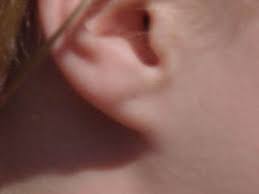
Attached Earlobes
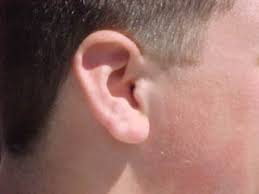
Unattached earlobes
Dimples
No Dimples
Right-handed
Left-Handed
Widow’s Peak
Straight Hairline
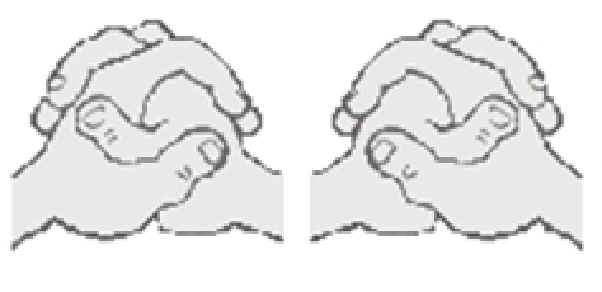
Left Thumb on top when Hands Crossed
Right Thumb on top when Hands Crossed
Hair on mid-digit of hand
No hair on mid-digit of hand
Bent little finger
Straight little finger
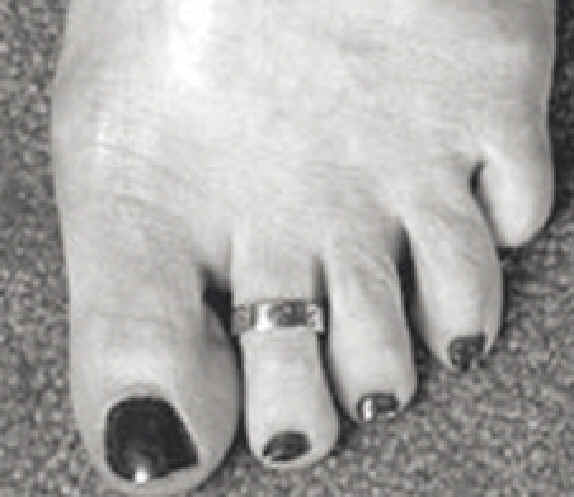
Second toe longer than big toe
Second toe not longer than big toe
Can Taste PTC
Can Not Taste PTC
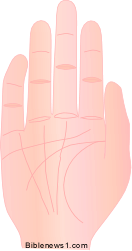
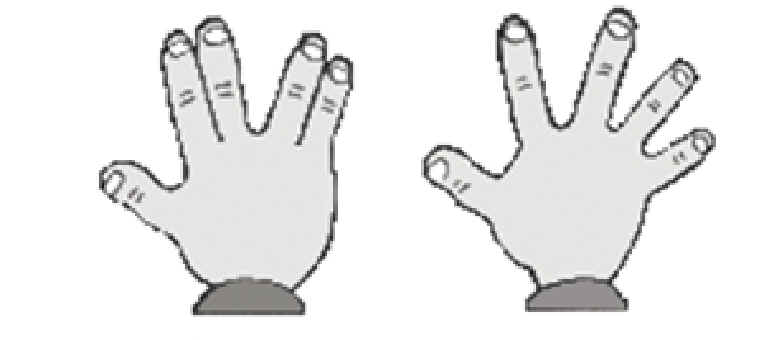
Vulcan (Fingers spread 2 by 2)
None Vulcan
Class Match:


Tongue Roller Non Roller Dimples No Dimples
Attached Earlobes Unattached Earlobes Widow’s Peak Straight Hairline
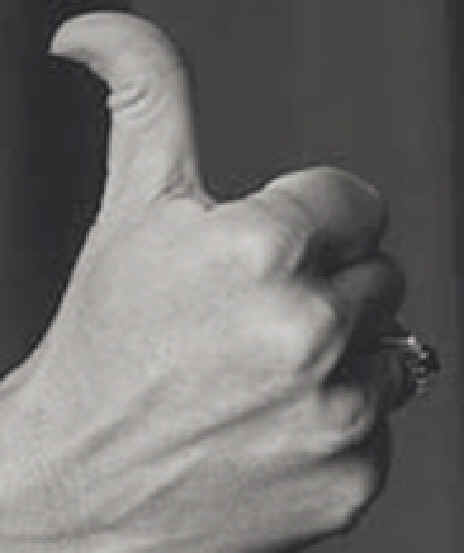
Longer Second Toe Short Second Toe Bent Little finger Hitchhiker’s Thumb
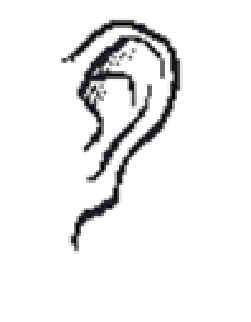
Attached Ear lobes (left)
Unattached ear Lobes (right)
“VULCAN” or No “VULCAN” Dimples Right/Left Thumb on top


Genetics PPT Questions


Mendelian Genetics
PowerPoint Questions
Gregor Mendel

1. Who is responsible for our laws of inheritance?

2. What organism did Mendel study?

3. When was Mendel’s work recognized?

4. When did Mendel perform his experiments & how many plants did he grow?

5. What did Mendel notice about offspring traits?

6. How is Mendel referred to today?

7. In what country did Mendel do his research on peas?

8. Mendel stated that physical traits were inherited as _______________.

9. Today we know that particles are actually what?

Terminology

10. Define these three terms:
a. trait –


b. heredity –

c. genetics –


11. Name & describe two types of genetic crosses.


12. What is used to solve genetic crosses?

13. Sketch a Punnett square & show how they are  used to solve a genetics problems.


14. Use a Punnett square to solve a cross between two parents that both have the genotype Yy.


15. What are alleles & what are the two forms?


16. Explain the difference between dominant & recessive alleles.


17. Using a letter of the alphabet, show how each allele would be represented.


18. What is a genotype and write 3 possible genotypes?


19. What is a phenotype and write possible phenotypes for your genotypes in question 18?


20. Using these alleles, R = red flower and r = yellow flowers, write all possible genotypes & phenotypes.


21. What are homozygous genotypes?


22. Write a homozygous dominant genotype.

23. Write a homozygous recessive genotype.

24. What is meant by a heterozygous genotype?


25. Write a heterozygous genotype.

26. Heterozygous  genotypes are also called _____________.

27. What two things actually determine an organism’s characteristics?

Pea Experiments

28. Give 4 reasons that Mendel used garden peas, Pisum sativum, for his experiments.


29. Name the male and female parts of a flowering plant and explain how pollination occurs.


30. What is the difference between self and cross pollination?


31. Explain how Mendel cross pollinated his pea plants.


32. How did Mendel get pure plants?

33. Name 8 pea plant traits and give the dominant & recessive form of each.


34. How did Mendel’s experimental results compare to the theoretical genotypic ratios? Explain.


35. What does P1 mean?

36. What is the F1 generation?

37. What is the F2 generation?

38. What results from this cross — TT  x  tt?

39. What results do you get from crossing two hybrids (Tt   x  Tt)?


40. Show all your work for solving a P1 monohybrid cross for seed shape.
Trait:
Alleles:

P1 cross:  __________ x __________

Genotype ____________
Phenotype ___________
G. Ratio _____________
P. Ratio _____________


41. The offspring of the above cross are called the _____ generation.

42. Show all your work for solving a F1 monohybrid cross for seed shape.
Trait:
Alleles:

F1 cross:  __________ x __________

Genotype ____________
Phenotype ___________
G. Ratio _____________
P. Ratio _____________

43. Show all your work for solving both F2 monohybrid crosses for seed shape.

Trait:
Alleles:

F2 cross:  ________ x ________  F2 cross:  ________ x ________


Genotype ____________                  Genotype ____________
Phenotype ___________                   Phenotype ___________
G. Ratio _____________                   G. Ratio _____________
P. Ratio _____________                    P. Ratio _____________

Mendel’s Laws

Complete the following question:

44. _________ are responsible for inherited traits.

45. Phenotype is based on _______________.

46. Each trait requires _____ genes, one from each ____________.

47. State the Law of Dominance and give an example.


48. State the Law of Segregation and tell when alleles are “recombined”.


49. State the Law of Independent assortment & tell what type of crosses show this.


50. Using the formula 2n where n = the number of heterozygotes, tell how many gametes will be produced by each of the following allele combinations:
a. RrYy
b. AaBbCCDd
c. MmNnOoPPQQRrssTtQq

51. What are the possible allele combinations in the egg and sperm from the following cross — RrYy x RrYy.


52. Show how to work an F1 dihybrid cross for seed shape & seed color.

Traits:
Alleles:


F1 cross   __________ x __________


GR         Genotypes           PR         Phenotypes


53. Complete this cross or crosses for eye color & curliness of the hair — bbC__ x bbcc.


54. Draw a table summarizing Mendel’s 3 laws.


Incomplete and Co-Dominance

55. Incomplete dominance occurs in __________ and produces a phenotype _______________ the phenotype of the two parents.

56. Show your work solving a cross for flower color in snapdragons when there is incomplete dominance.

Trait:
Alleles:

Cross:  RR x rr


Genotype ____________
Phenotype ___________
G. Ratio _____________
P. Ratio _____________

57. What is codominance & give an example?


58. Write the genotypes for each of these blood types:

type A
type B
type AB
type O

59. Solve this codominance problem: IBIB x IAi.


60. Solve this codominance problem for blood type: ii x IAIB.


Sex-Linked Traits

61. What are sex linked traits?


62. Name the sex chromosomes.

63. Write the genotype for male and for female.

64. Most sex-linked traits are carried on what chromosome?

65. Give an example of a sex-linked trait in fruit flies.

66. Show the results of crossing a red-eyed male (XRY)  with a white-eyed female (XrXr) fruit fly.
RR =
Rr =
rr =
XY =
XX =

Cross:    __________ x __________


Genotype ____________
Phenotype ___________
G. Ratio _____________
P. Ratio _____________

67. What is meant by a female carrier?


68. Name a disease that can be carried in this manner.