Pterosaur Reconstruction Bi


Pterosaur Reconstruction


Introduction:

A common sight during the Cretaceous period was the soaring through the air of a large fur-covered creature called the pterosaur. Pterosaur means flying lizard. Wings of some  pterosaurs were longer than the wings of a small plane. This creature lived on cliffs at the edge of lagoons and would sail from its nest to catch prey.  The bones of one pterosaur, Scaphognathus crassirostris, were discovered in 1826 by the German scientist, August Goldfuss.  The fossilized bones were located in a limestone quarry and were unbroken.  Scaphognathus crassirostris was approximately the size of a large bat with a broad jaw and short tail.

Objective:

Students will reconstruct the skeleton of S. crassirostris and draw conclusions about its method of movement, feeding habits, and other adaptations.

Materials:

Scissors, tape, construction paper, glue, metric ruler, pencil

                     
Fossil Cast of S. crassirostris                                    


Procedure:

  1. Use the drawings of S. crassirostris bones to cut out and reassemble a model of the flying reptile.
  2. Glue the model bones to a sheet of construction paper being sure to center the model and keep all bones on the paper.
  3. Use the metric ruler to measure the complete wingspan of the organism (tip to opposite tip).
  4. Complete the characteristics in data table 1.

Data:

Table 1


Characteristics of S. crassirostris
Wingspan (centimeters)?
Jaw Shape?
Teeth adapted for?
Arms & hands adapted for?
Number of bones in lower arm?
Number of bones making up skull?
Number of fingers?
Finger adaptations?


Questions:

  1. The bones of the lower arm and lower leg are fused (joined together). How might this be an adaptation for flight?
  2. What would be the main function of the long bones of S. crassirostris little finger?
  3. Noting the shape of the teeth and where S. crassirostris lived, what did it probably eat?
  4. Name 3 characteristics that adapted S. crassirostris to flight.
  5. The bones of S. crassirostris were hollow. How was this an adaptation?
  6. The flap of skin that made up the wing of S. crassirostris was very delicate and could tear easily. How could this cause a problem with S. crassirostris competing with other gliding reptiles?


Prelab Effect of Enzymatic Detergents


Prelab: How Good Is Your Enzymatic Detergent?


Day before lab:

Read the lab carefully and gather all needed materials. Mix gelatin in boiling water. Cool slightly and then pour into Pyrex test tubes (4 tubes per lab group).

Answer the following questions:

1. What is the purpose of enzymes?

2. What type of enzymes digest proteins?

3. Where do we get many of the enzymes found in our laundry detergents?

4. What type of “stains” should these enzymes remove from our clothing? Give an example of such a stain.

5. What are the subunits called that make up proteins?

6. What is gelatin?


7. How is gelatin prepared?


8. What is collagen and where is it found?


9. What detergents are being tested in this experiment?

10. Which of these detergents contains enzymes?


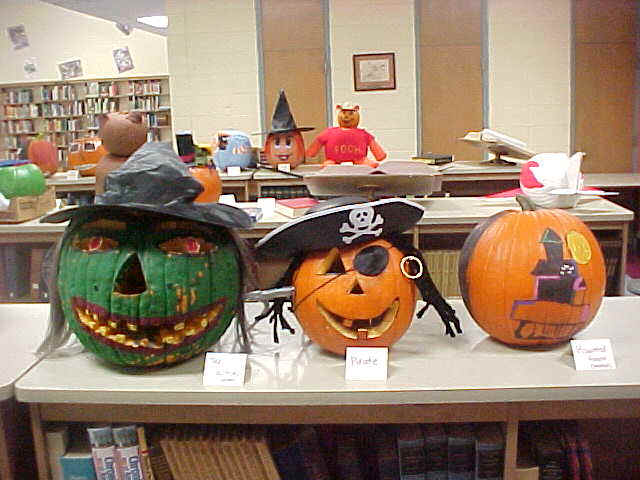
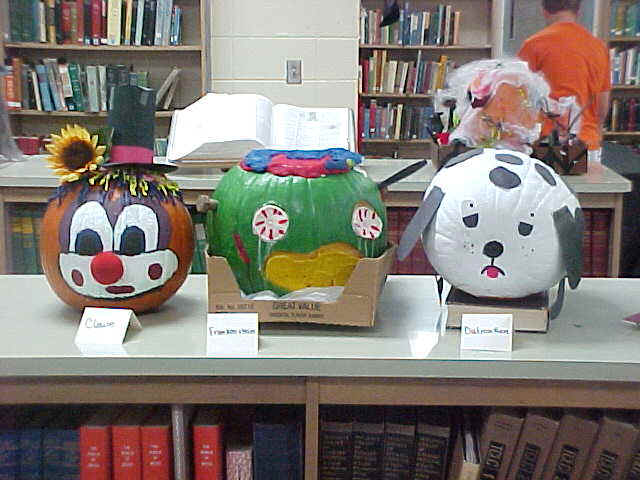
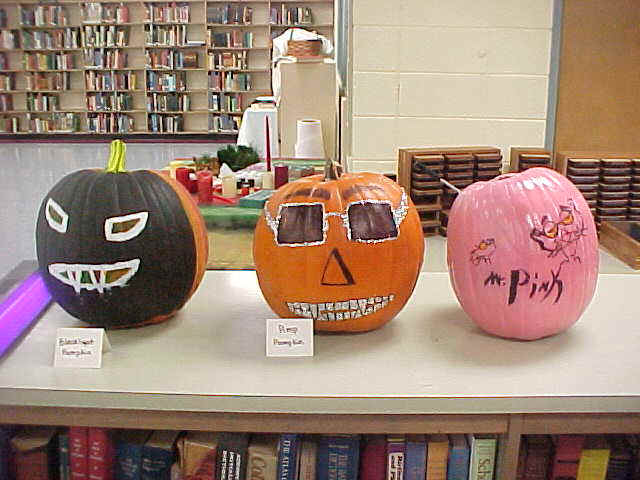
Pumpkin Decorating Contest


Pumpkin Decorating Contest
Sponsored by SHS Biology Club


Rules:
  Any Club, group, or individuals may enter one or more decorated pumpkins
Cost to enter a pumpkin is $3.00 (pay to Ms. Massengale)
Pumpkins may be painted but not cut
Decorated pumpkins must be set up in the library by Monday, October 26

Prizes:
Winning club, group, or individuals will be awarded a cash prize collected from the $3.00 entry fee
  An article with picture will be published in the newspaper & school annual for the winning group

Judging:
   The Biology Club will judge the pumpkins before school on October 27


Prentice Hall Chapter Openers


Prentice Hall Chapter Openers


Chapter 1 – Science of Biology

#1  #2  #3  #4  #5
#6  #7  #8  #9  #10

Chapter 12 – DNA and RNA

#1   #2   #3   #4   #5
#6   #7   #8   #9   #10
#11  #12  #13  #14  #15

Chapter 23 – Roots, Stems, and Leaves

#1  #2  #3  #4  #5
#6  #7  #8  #9  #10

Chapter 2 – Chemistry of Life

#1   #2   #3   #4   #5
#6   #7   #8   #9   #10
#11  #12  #13  #14  #15

Chapter 13 – Genetic Engineering

#1  #2  #3  #4  #5
#6  #7  #8  #9  #10

Chapter 24 – Reproduction of Seed Plants

#1  #2  #3  #4  #5
#6  #7  #8  #9  #10

Chapter 3 – Biosphere

#1  #2  #3  #4  #5
#6  #7  #8  #9  #10

Chapter 14 – Human Genome

#1  #2  #3  #4  #5
#6  #7  #8  #9  #10

Chapter 25 – Plant Responses & Adaptations

#1  #2  #3  #4  #5
#6  #7  #8  #9  #10

Chapter 4 – Ecosystems & Communities

#1  #2  #3  #4  #5
#6  #7  #8  #9  #10

Chapter 15 – Darwin’s Theory of Evolution

#1  #2  #3  #4  #5
#6  #7  #8  #9  #10

Chapter 26 – Sponges and Cnidarians

#1  #2  #3  #4  #5
#6  #7  #8  #9  #10

Chapter 5 – Populations

#1  #2  #3  #4  #5
#6  #7  #8  #9  #10

Chapter 16 – Evolution of populations

#1  #2  #3  #4  #5
#6  #7  #8  #9  #10

Chapter 27 – Worms and Mollusks

#1  #2  #3  #4  #5
#6  #7  #8  #9  #10

Chapter 6 – Humans in the Biosphere

#1  #2  #3  #4  #5
#6  #7  #8  #9  #10

Chapter 17 – History of Life

#1  #2  #3  #4  #5
#6  #7  #8  #9  #10

Chapter 28 – Arthropods and Echinoderms

#1  #2  #3  #4  #5
#6  #7  #8  #9  #10

Chapter 7 – Cell Structure and Function

#1     #2    #3   #4   #5
#6    #7    #8   #9   #10
#11   #12   #13  #14  #15

Chapter 18 – Classification

#1  #2  #3  #4  #5
#6  #7  #8  #9  #10

Chapter 29 – Comparing Invertebrates

#1  #2  #3  #4  #5
#6  #7  #8  #9  #10

Chapter 8 – Photosynthesis

#1  #2  #3  #4  #5
#6  #7  #8  #9  #10

Chapter 19 – Bacteria and Viruses

#1  #2  #3  #4  #5
#6  #7  #8  #9  #10

Chapter 30 – Fish and Amphibians

#1  #2  #3  #4  #5
#6  #7  #8  #9  #10

Chapter 9 – Cellular Respiration

#1  #2  #3  #4  #5
#6  #7  #8  #9  #10

Chapter 20 – Protists

#1  #2  #3  #4  #5
#6  #7  #8  #9  #10

Chapter 31 – Reptiles and Birds

#1  #2  #3  #4  #5
#6  #7  #8  #9  #10

Chapter 10 – Cell Growth and Division

#1  #2  #3  #4  #5
#6  #7  #8  #9  #10
#11  #12  #13

Chapter 21 – Fungi

#1  #2  #3  #4  #5
#6  #7  #8  #9  #10

Chapter 32 – Mammals

#1  #2  #3  #4  #5
#6  #7  #8  #9  #10

Chapter 11 -Introduction to Genetics

#1  #2  #3  #4  #5
#6  #7  #8  #9  #10
Meiosis
#11  #12  #13  #14  #15

Chapter 22 – Plant Diversity

#1  #2  #3  #4  #5
#6  #7  #8  #9  #10

Chapter 33 – Comparing Chordates

#1  #2  #3  #4  #5
#6  #7  #8  #9  #10

Chapter 34 Animal Behavior

#1  #2  #3  #4  #5
#6  #7  #8  #9  #10


Chapter 1 The Science of Life

This presentation contains content that your browser may not be able to show properly. This presentation was optimized for more recent versions of Microsoft Internet Explorer.

If you would like to proceed anyway, click here.