Fetal Pig Dissection and Fetal Pig Anatomy


Fetal Pig Dissection


Fetal Pig Dissection Background:

Mammals are vertebrates having hair on their body and mammary glands to nourish their young. The majority are placental mammals in which the developing young, or fetus, grows inside the female’s uterus while attached to a membrane called the placenta. The placenta is the source of food and oxygen for the fetus, and it also serves to get rid of fetal wastes. The dissection of the fetal pig in the laboratory is important because pigs and humans have the same level of metabolism and have similar organs and systems. Also, fetal pigs are a byproduct of the pork food industry so they aren’t raised for dissection purposes, and they are relatively inexpensive.


Objectives of fetal pig dissection:


  • Identify important external structures of the fetal pig anatomy.
  • Identify major structures associated with a fetal pig’s digestive, respiratory, circulatory, urogenital, & nervous systems.
  • Compare the functions of certain organs in a fetal mammal with those of an adult mammal.

Materials:
preserved fetal pig, dissecting pan, dissecting kit, dissecting pins, string, plastic bag, metric ruler,  paper towels


Pre-lab:
Before observing internal or external structures of the fetal pig, use your dissection manual, textbook, and dissection notebook to answer the pre-lab questions on the fetal pig. You may have to refer to more than one dissection manual to answer all the questions so trade and share with other dissection groups.

Click here for Prelab worksheet


***Wear your lab apron and eye cover at all times. Watch your time and be sure to clean up all equipment and working area each day before leaving.

Day 1 – External Anatomy


  1. Obtain a fetal pig and rinse off the excess preservative by holding it under running water. Lay the pig on its side in the dissecting pan and locate dorsal, ventral,& lateral surfaces. Also locate the anterior and posterior ends.
  2. A fetal pig has not been born yet, but its approximate age since conception can be estimated by measuring its length. Measure your pig’s length from the tip of its snout to the base of its tail and record this on your hand-in. Use the length/age chart on this sheet or the inside cover of your dissection manual to determine the age of your fetal pig & record this.
  3. Examine the pig’s head. Locate the eyelids and the external ears or pinnae. Find the external nostrils.
  4. Study the pig’s appendages and examine the pig’s toes. Count and record the number of toes and the type of hoof the pig has.
  5. Locate the umbilical cord. With scissors, cut across the cord about 1 cm from the body. Examine the 3 openings in the umbilical cord. The largest is the umbilical vein, which carries blood from the placenta to the fetus. The two smaller openings are the umbilical arteries which carry blood from the fetus to the placenta.
  6. Lift the pig’s tail to find the anus. Study the ventral surface of the pig and note the tiny bumps called mammary papillary. These are present in both sexes. In the female these structures connect to the mammary glands.
  7. Determine the sex of your pig by locating the urogenital opening through which liquid wastes and reproductive cells pass. In the male, the opening is on the ventral surface of the pig just posterior to the umbilical cord. In the female, the opening is ventral to the anus. Record the sex of your pig.
  8. Carefully lay the pig on one side in your dissecting pan and cut away the skin from the side of the face and upper neck to expose the masseter muscle that works the jaw, lymph nodes, and salivary glands. Label these on your hand-in.
  9. With scissors, make a 3-cm incision in each corner of the pig’s mouth. Your incision should extend posteriorly through the jaw.
  10. Spread the jaws open and examine the tongue.
  11. Observe the palate on the roof of the mouth. The anterior part of the palate is the hard palate, while the posterior part is the soft palate.
  12. Locate the epiglottis, a cone-shaped structure at the back of the mouth. Above the epiglottis, find the round opening of the nasopharynx. This cavity carries air from the nostrils to the trachea, a large tube in the thoracic which supplies air to the lungs.
  13. Dorsal to the glottis, find the opening to the esophagus. Examine the tongue and note tiny projections called sensory papillae.
  14. Examine the teeth of the pig. Canine teeth are longer for tearing food, while incisor are shorter and used for biting. Pigs are omnivores, eating plants and animals.
  15. Label the drawing of the inside of the pig’s mouth.
  16. Clean up your materials and work area. Wrap the pig in damp paper towels and put it in a zip-lock plastic bag. Obtain a piece of masking tape and label your bag with your names. Return your lab equipment and pig to the supply cart and then thoroughly wash your hands with soap.

Click here for Day 1 Worksheet

Day 2      Part A: The Incision

  1. Be sure to wear your lab apron and eye cover. Obtain your dissecting equipment and pig from the supply cart.
  2. Place the fetal pig ventral side up in the dissecting tray.
  3. Tie a string securely around a front limb. Run the string under the tray, pull it tight, and tie it to the other front limb. Repeat this procedure with the hind limbs to hold the legs apart so you can examine internal structures.
  4. Study the diagram below. The dashed lines numbered 1-5 show the first set of incisions that you will make. To find the exact location for the incision marked 2, press along the thorax with your fingers to find the lower edge of the ribs. This is where you will make incision 2.
  5. With scissors, make the incisions in order, beginning with 1. Be sure to keep the tips of your scissors pointed upward because a deep cut will destroy the organs below. Also, remember to cut away from yourself.
  6. After you have made your incisions through the body wall, you will see the peritoneum, a thin layer of tissue that lines the body cavity. Cut through the peritoneum along the incision lines.
  7. Spread the flaps of the body wall apart. Cut the umbilical vein which extends through the liver.
  8. Once the vein is cut, carefully pull the flap of skin, including the end of the umbilical cord between the hind legs. Your are now able to see the organs of the abdominal cavity.


If time remains continue with part B, the digestive tract. Otherwise, clean up and return your materials and pig as you did on day 1.

Click here for day 2 worksheet

Part B: Digestive System


  1. Be sure you are wearing your lab apron and eye cover.
  2. Locate the diaphragm, a sheet of muscle that separates the abdominal cavity from the thoracic cavity. Find the most obvious structure in the abdominal cavity, the brownish-colored liver. Count the number of lobes.
  3. Find the tube-like esophagus which joins the mouth and the stomach. Food moves down the esophagus by muscular contractions after being softened by saliva in the mouth. Follow the esophagus and locate the soft, sac-like stomach beneath the liver.
  4. With scissors, cut along the outer curve of the stomach. Open the stomach and note the texture of its inner walls. These ridges inside the stomach are called rugae and increase the area for the release of digestive enzymes. The stomach may not be empty because fetal pigs swallow amniotic fluid.
  5. The pig has a digestive system which is classified as monogastric or nonruminant. Humans also have this type of digestive system. They have one stomach (mono=one, gastric=stomach). Locate the entrance to the stomach or esophageal area, the cardiac region which is largest, and the pyloric region where the stomach narrows to join to the small intestine.
  6. At the end of the stomach, there is a sphincter, or ring-shaped muscle to control food leaving the stomach and entering the duodenum. Locate the cardiac sphincter at the junction of the stomach and esophagus, and the pyloric sphincter at the junction of the stomach and small intestine. Fetal pigs receive their nourishment from their mother through the umbilical cord.
  7. Identify the first part of the small intestine, the U-shaped duodenum, which connects to the lower end of the stomach. Pancreatic juice, made by the pancreas, and bile, made by the liver and stored in the gall bladder, are add to food here to continue digestion.
  8. Study the rest of the small intestine. Notice that it is a coiled, narrow tube, held together by tissue called mesentery. The soupy, partly digested food that enters the small intestine from the stomach is called chyme.
  9. Carefully cut through the mesentery and uncoil the small intestine. Note and record its length in centimeters. The mid-section is called the jejunum, while the last section is called the ileum.
  10. With scissors, remove a 3-cm piece of the lower small intestine. Cut it open and rinse it out.
  11. Observe the inner surface of the small intestine. Run your finger along it and note its texture. Using a magnifying glass, examine the villi, the tiny projections that line the small intestine and increase the surface area for absorption.
  12. Follow the small intestine until it reaches the wider, looped large intestine. Cut the mesentery and unwind the large intestine or colon. Measure and record its length.
  13. At the junction of the large and small intestine, locate a blind pouch called the caecum. The caecum has no known function in the pig.
  14. Notice that the large intestine leads into the rectum, a tube that runs posteriorly along the dorsal body wall. The rectum carries wastes to the opening called the anus where they are eliminated.
  15. Locate the thin, white pancreas beneath the stomach and duodenum. Pancreatic juice flows through pancreatic ducts to the duodenum.
  16. Between the lobes of the liver, find the small, greenish-brown gall bladder. Locate the hepatic duct which carries bile from the liver to the gall bladder.
  17. Find the spleen, a long, reddish-brown organ wrapped around the stomach. The spleen filters out old red blood cells and produces new ones for the fetus.
  18. On the diagram on the back of day 2 hand-in, label the pig’s body organs.


Clean up your materials and work area. Wrap the pig in damp paper towels and put it in a zip-lock plastic bag. Return your lab equipment and pig to the supply cart and then thoroughly wash your hands with soap.


Day 3     Respiratory System


  1. Be sure to wear your lab apron and eye cover.
  2. Examine the diaphragm, a sheet of muscle that stretches across the abdominal cavity and separates it from the thoracic cavity where the lungs are located. The diaphragm isn’t used by the fetal pig because gas exchange occurs through the umbilical cord. The diaphragm in adult pigs moves up and down changing air pressure in the chest cavity causing air to move into and out of the lungs.
  3. In order to see the upper part of the respiratory system, you will need to extend cut #1 up under the pig’s throat and make to more lateral incisions in order to fold back the flaps of shin covering the throat.
  4. In the thoracic cavity, carefully separate the pericardium or sac surrounding the heart and the diaphragm from the body wall.
  5. Locate the two, spongy lungs that surround the heart. The tissue that covers and protects the lungs is called pleura. The lungs haven’t been used by the fetus so they have never contained air.
  6. Find the trachea, a large air tube that lies anterior to the lungs. The trachea is easy to identify because of the cartilaginous rings that help keep it form collapsing as the animal inhales and exhales.
  7. Notice that the trachea branches into each lung. These two tubes are called bronchial tubes. Inside the lungs these branch into smaller bronchioles that end with a grape-like cluster of air sacs or alveoli where oxygen and carbon dioxide are exchanged with capillaries.
  8. Lying ventral to the trachea or windpipe, locate the pinkish-brown, V-shaped structure called the thyroid gland. This gland secretes hormones that control metabolism.
  9. At the top, anterior end of the trachea, find the hard, light-colored larynx or voice box. This organ contains the vocal cords that enable the animal to produce sound.
  10. Locate the epiglottis at the top of the trachea. This flap of skin closes over the trachea whenever you swallow. Find the area called the pharynx at the back of the nasal cavity. Air enters an adult pig through the mouth or nose before passing through the pharynx and down the trachea to the lungs.
  11. Label the diagram of the respiratory system on your day 3 hand-in.


Clean up your materials and work area. Wrap the pig in damp paper towels and put it in a zip-lock plastic bag. Return your lab equipment and pig to the supply cart and then thoroughly wash your hands with soap.

Click here for day 3 worksheet


Day 4     Circulatory System


  1. Be sure to wear your lab apron and eye cover.
  2. Locate the heart. It is covered by a thin tissue called the pericardium. Remove this membrane to study the heart.
  3. Pigs, like all mammals, have four-chambered hearts. The right side of the heart pumps blood to the lungs, while the left side of the heart pumps blood to all other parts of the body. Locate the right and left sides of the heart.
  4. Each side of the heart has an upper and a lower chamber. Upper chambers are called atria and receive blood, while lower chambers are called ventricles and pump blood out of the heart. Locate the right and left atria and ventricle.
  5. Notice that the surface of the heart is covered with blood vessels. These are part of the coronary circulation, a set of arteries and veins whose only job is to nourish the heart tissue. Blockage in these vessels causes heart attacks.
  6. Anterior to the heart, locate another large vein that enters the right atrium. This vein, the anterior vena cava, brings blood to the right atrium from the anterior part of the body.
  7. Now lift the heart to view its dorsal surface. Observe the posterior vena cava that carries blood from the posterior part of the body and empties it into the right atrium.
  8. Find the pulmonary artery which leaves the right ventricle. After birth, this vessel carries blood to the lungs. However, in a fetus, a shunt called the ductus arteriosus allows fetal blood to bypass the lungs and go directly to the aorta, the largest artery of the body.
  9. Locate the pulmonary veins that enter the left atrium. After birth, these vessels carry oxygenated blood from the lungs to the heart.
  10. Identify the aorta, a large artery that transports blood from the left ventricle. Many arteries that carry blood throughout the body branch off of the
  11. Remove the heart by severing the blood vessels attached to it.
  12. Hold the dorsal and ventral surfaces of the heart with your thumb and forefinger and rest the ventricles on your dissecting tray. With a scalpel, cut the heart into dorsal and ventral halves. Caution: The scalpel is very sharp. Use it carefully and always cut away from yourself.
  13. Remove any material inside the heart and expose the walls of the atria and the ventricles.
  14. Study the internal features of these chambers and note where vessels leave or enter each chamber. Locate the valves between each atrium and ventricle. These structures prevent blood from flowing backward in the heart.
  15. Label the fetal pig heart diagram on your day 4 hand-in.


Clean up your materials and work area. Wrap the pig in damp paper towels and put it in a zip-lock plastic bag. Return your lab equipment and pig to the supply cart and then thoroughly wash your hands with soap.

Click here for day 4 worksheet

Day 5     Urogenital System


  1. Be sure to wear your lab apron and eye cover.
  2. Remove the digestive organs to study the excretory and reproductive organs that make up the urogenital system.
  3. Locate the large, bean-shaped kidneys lying against the dorsal body wall. Notice that they are covered by the peritoneum. Kidneys filter wastes from blood.
  4. Find the ureters, tubes which extend from the kidneys to the bag-like urinary bladder. The urinary bladder lies between the umbilical arteries and temporarily stores liquid wastes filtered from the blood.
  5. Lift the urinary bladder to find the urethra, the tube which carries urine out of the body. Follow the urethra to the urogenital opening on the outside of the pig’s body.
  6. Make sure that incision #6 extends all the way to the anus but be careful to not cut too deep and damage the internal organs.
  7. Follow the directions below for locating the excretory and reproductive organs in either a male or female pig. When you finish observing the organs in a pig of one sex, exchange specimens with another classmate to view the organs in a pig of the opposite sex.


Male System


  1. In the male pig, locate the two scrotal sacs at the posterior end of the pig. If the pig is in the later stages of development, you will find a testis in each sac. If the pig is in an early stage of development, the oval-shaped testes will be in the abdominal cavity. These testes have not yet descended into the scrotal sacs.
  2. On each testis, find the coiled epididymis. Sperm cells produced in the testis pass through the epididymis and into a tube called the vas deferens. This tube crosses over a ureter and enters the urethra.
  3. Follow the urethra to the penis, a muscular tube lying just below the skin posterior to the umbilical cord. In mammals, the penis is the organ that transfers sperm.
  4. Label the diagram of the male urogenital system on your day 5 hand-in.

Female System 

  1. In the female pig, find the two bean-shaped ovaries at the posterior end of the abdominal cavity. Observe the coiled Fallopian tube attached to each ovary, which carries eggs from the ovary.
  2. Follow the Fallopian tube to the uterus. The uterus is dorsal to the urinary bladder and the urethra.
  3. Trace the uterus to a muscular tube called the vagina. The vagina will appear as a continuation of the uterus. Sperm from the male are deposited into this organ during mating. The vagina and the urethra open into a common area called the urogenital sinus. This cavity opens to the outside at the urogenital opening.
  4. Label the diagram of the female urogenital system on your day 5 hand-in.

When you have completed your study of the urogenital system of both sexes, then clean up your materials and work area. Wrap the pig in damp paper towels and put it in a zip-lock plastic bag. Return your lab equipment and pig to the supply cart and then thoroughly wash your hands with soap.

Click here for day 5 worksheet


Day 6     Nervous System


  1. Be sure to wear your lab apron and eye cover.
  2. With the pig dorsal side down, open both thoracic and abdominal flaps and locate the spinal column.
  3. Select a site along the spine and remove any organs blocking your view of the spine. Using a scalpel, expose the spine and locate any emerging nerves. Trace one as far as you can into the body.
  4. Place the pig dorsal side up in your dissecting tray. In the thoracic region, remove the skin and muscle to expose 10mm of the vertebral column.
  5. Using forceps to grip the spine and scissors to cut, open the vertebral canal by cutting off the vertebral arch. Note the dura mater or outermost covering of the brain & spinal cord.
  6. Make a second cut on the other side of this vertebrae, and fold the spine section upward so you can view the cross-section. Locate the white and gray matter, dorsal and ventral root, central canal, and a dorsal root ganglion.
  7. With the dorsal side of the pig up, remove the skin from the entire skull.
  8. Cut through the skull near the center being careful not to break the meninges or membranes covering and protecting the brain.
  9. After the skull is open, chip away the pieces but do not use the scalpel blade for chipping.
  10. When the brain is completely exposed, locate the 2 large hemispheres called the cerebrum. Fissures indenting the surface of the cerebrum are called sulci (sulcus, singular). Gyri (gyrus, singular) are ridges projecting outward from the surface.
  11. Locate the longitudinal fissure or indention that runs laterally between the right and left cerebral hemispheres. The olfactory lobes that control smell are at the front of the cerebrum. The cerebrum controls thinking, senses, etc.
  12. Posterior to the cerebrum is the cerebellum. Locate the cerebellum and the transverse fissure that separates it from the cerebrum. The cerebellum consists of 2 lateral hemispheres and is involved with the control of muscles and coordination.
  13. Find the fissure between the right and left cerebellum hemispheres called the vermis.
  14. Carefully remove the brain from the skull in order to locate the hind section of the brain known as the medulla oblongata. The medulla connects the brain to the spinal cord and controls all vital functions of the body such as heart beat and breathing.
  15. Label the diagrams of the brain and spinal cord on your day 6 hand-in.

Clean up your materials and work area. Wrap the pig in damp paper towels and put it in a zip-lock plastic bag. Return your lab equipment and pig to the supply cart and then thoroughly wash your hands with soap.

Click here for day 6 worksheet
Click here for Online Test

BACK


Enzyme Catalysis


Enzyme Catalysis

Introduction:
In general, enzymes are proteins produced by living cells, they act as catalysts in biochemical reactions. A catalyst affects the rate of a chemical reaction. One consequence of enzyme activity is that cells can carry out complex chemical activities at relative low temperatures. In an enzyme-catalyzed reaction, the substance to be acted upon ( the substrate = S ) binds reversibly to the active site of the enzyme (E). One result of this temporary union is a reduction in the energy required to activate the reaction of the substrate molecule so that the products (P) of the reaction are formed.

In summary:     E + S —> ES –> E + P

Note that the enzyme is not changed in the reaction and can even be recycled to break down additional substrate molecules. Each enzyme is specific for a particular reaction because its amino acid sequence is unique and causes it top have a unique three-dimensional structure. The active site is the portion of the enzyme that interacts with the substrate, so that any substance that blocks or changes the shape of the active site affects the activity of the enzyme. A description of several ways enzyme action may be affected follows:

1. Salt Concentration. If the salt concentration is close to zero, the charged amino acid side chains of the enzyme molecules will attract to each other. The enzyme will denature and form an inactive precipitate. If, on the other hand, the salt concentration is too high, normal interaction of charged groups will be blocked, new interactions will occur, and again the enzyme will precipitate. An intermediate salt concentration such as that of human blood (0.9% ) or cytoplasm ins the optimum for many enzymes.

2. pH. Amino acid side chains contain groups such as – COOH and NH2 that readily gain or lose H+ ions. As the pH is lowered an enzyme will tend to gain H+ ions, and eventually enough side chains will be affected so the enzyme’s shape is disrupted. Likewise, as the pH is raised, the enzymes will lose H+ ions and eventually lose its active shape. Many of the enzymes function properly in the neutral pH range and are denatured at either an extremely high or low pH. Some enzymes, such as pepsin, which acts in the human stomach where the pH is very low, have a low pH optimum.

3. Temperature. Generally, chemical reactions speed up as the temperature is raised. As the temperature increases, more of the reacting molecules have enough kinetic energy to undergo the reaction. Since enzymes are catalysts for chemical reactions, enzyme reactions also tend to go faster with increase temperature. However, if the temperature of an enzyme-catalyzed reaction is raised still further, a temperature optimum is reached; above this value the kinetic energy of the enzyme and water molecules is so great that the conformation of the enzyme molecules is disrupted. The positive effect of speeding up the reaction is now more than offset by the negative effect of changing the conformation of more and more enzyme molecules. Many proteins are denatured by temperatures around 40-50 degrees C, but some are still active at 70-80 degrees C, and a few even withstand boiling.

4. Activation’s and Inhibitors. Many molecules other than the substrate may interact with an enzyme. If such a molecule increases the rate of the reaction it is an activator, or if it decreases the reaction rate it is an inhibitor. These molecules can regulate how fast the enzymes acts. Any substance that tends to unfold the enzyme, such as an organic solvent or detergent, will act as an inhibitor. Some inhibitors act by reducing the -S-S- bridges that stabilize the enzyme’s structure. Many inhibitors act by reacting with the side chains in or near the active site to change its shape or block it. Many well known poisons such as potassium-cyanide and curare are enzyme inhibitors that interfere with the active site of critical enzymes.

The enzyme used in this lab, catalase, has four polypeptide chains, each composed of more than 500 amino acids. This enzyme is ubiquitous in aerobic organisms. One function of catalase within cells is to prevent the accumulation of toxic levels of hydrogen peroxide formed as a by-product of metabolic processes. Catalase might also take part in some of the many oxidation reactions that occur in the cell.

2H2O ——-> 2 H2O + O2 (gas )

In the absence of catalase, this reaction occurs spontaneously, but very slowly. Catalase speeds up the reaction considerably. In this experiment, a rate for this reaction will be determined. Much can be learned about enzymes by studying the kinetics of enzyme-catalyzed reactions. For example, it is possible to measure the amount of product formed, or the amount of substrate used, from the moment the reactants are brought together until the reaction has stopped. If the amount of product formed is measured at regular intervals and this quantity is plotted on a graph, a curve like the one that follows is obtained.

Figure 2.1 Enzyme Activity

Study the solid line of the graph of this reaction. At time 0 there is no product. As time progresses the production of product increases at a steady rate. After a period of time this rate slows down and at a certain point the reaction rate is very slow.

General Procedure:
In this experiment the disappearance of the substrate, H2O2, is measured as follows:

1. A purified catalase extract is mixed with substrate ( H2O2) in a beaker. The enzyme catalyzes the conversion of H2O to H2O and O2 (gas ).

2. Before all the H2O2 is converted to H2O and O2 , the reaction is stopped by adding sulfuric acid ( H2SO4 ). The sulfuric acid lowers the pH, denatures the enzyme, and thereby stops the enzyme’s catalytic activity.

3. After the reaction is stopped, the amount of substrate (H2O2) remaining in the beaker is measured. To measure this quantity, potassium permanganate is used. Potassium permanganate (KMnO4), in the presence of H2O2 and H2SO4 reacts as follows:

5 H2O2 + 2 KMnO4 + 3 H2SO4 ————–> K2SO4 + 2 MnSO4 + 8 H2O + 5 O2

Note that H2O2 is a reactant for this reaction. Once all the H2O2 has reacted, any more KMnO4 added will be in excess and will not be decomposed. The addition of excess KMnO4 causes the solution to have a permanent pink or brown color. Therefore, the amount of H2O2 remaining is determined by adding KMnO4, until the whole mixture stays a faint pink or brown, permanently. Add no more KMnO4 after this point.

Figure 2.2 The General Procedure for the above exercise and Exercise 2C.
The figure below represents the complete Exercise 2C.

Exercise 2A: Test of Catalase Activity:
1. To observe the reaction to be studied, transfer 10 mL of 1.5% (0.44M) H2O2 into a 50 ml glass beaker and add 1 mL of freshly made catalase solution. The bubbles coming from the reaction mixture are oxygen, which results from the breakdown of H2O2 by catalase. Be sure to keep the freshly made catalase solution on ice at all times.

a. what is the enzyme in this reaction? ____________________________________________________

b. What is the substrate in this reaction? ___________________________________________________

c. What is the product in this reaction? ____________________________________________________

d. How could you show that the gas evolved is oxygen ? _____________________________________

2. To demonstrate the effect of boiling on enzymatic activity, transfer 5 mL of purified catalase extract to a test tube and place it in a boiling water bath for five minutes. Transfer 10 mL of 1.5% H2O2 into a 50 mL glass beaker and add 1 mL of the cooked, boiled catalase solution. How does the reaction compare to the one using the unboiled catalase? Explain the reason for this difference.

_____________________________________________________________________

_____________________________________________________________________

3. To demonstrate the presence of catalase in living tissue, cut 1 cm3 of potato or liver, macerate it, and transfer it into a 50 mL beaker containing 1.5% H2O2 . What do you observe? What do you think would happen if the potato or liver was boiled before being added to the H2O2?

_____________________________________________________________________

_____________________________________________________________________

Exercise 2B: The Baseline Assay:
To determine the amount of H2O2 initially present in a 1.5% solution, one needs to perform all the steps of the procedure without adding catalase to the reaction mixture. This amount is known as the baseline and is an index of the initial concentration of H2O2 un solution. In any series of experiments, a baseline should be established first.

Procedure for Establishing Baseline:
1. Put 10 mL of 1.5% H2O2 into a clean glass beaker.

2. Add 1 mL of H2O ( instead of enzyme solution).

3. Add 10 mL of H2SO4 (1.0 M) Use Extreme care in Handling Acids.

4. Mix well.

5. Remove a 5 mL sample. Place this 5 mL sample in another beaker, and assay for the amount of H2O2 as follows: Place the beaker containing the sample over white paper. Use a burette or 5 mL pipette to add potassium permanganate a drop at a time to the solution until a persistent pink or brown color is obtained. Remember to gently swirl the solution after adding each drop. Record your data below.

Baseline calculations

Final Reading of burette ________ mL

Initial reading of burette ________mL

Baseline (Final -Initial) _________mL KMnO4

Figure 2.4: Proper Reading of a Burette


Exercise 2C: An Enzyme-Catalyzed Rate of H2O2 Decomposition

Refer to figure 2.2 to complete this section and record the data in Table 2.1 below.

Table 2.1

Potassium Permanganate (ml)

Time (Seconds)

10 30 60 120 180 360
A. Baseline
B. Final Reading
C. Initial Reading
D. Amount of KMnO4 consumed (B-C)
E. Amount of H2O2 used (A-D)

Graph the data for enzyme-catalyzed H2O2 decomposition.

Graph Title: ___________________________________________________________________


Graph 2.1

Analysis of Results:
1. Explain the inhibiting effect of sulfuric acid on the function of catalase. Relate this to enzyme structure and chemistry.

____________________________________________________________________

____________________________________________________________________

____________________________________________________________________

2. Predict the effect lowering the temperature would have on the rate of enzyme activity. Explain you prediction.

____________________________________________________________________

____________________________________________________________________

____________________________________________________________________

3. Design a controlled experiment to test the effect of varying pH, temperature, or enzyme concentration.

____________________________________________________________________

____________________________________________________________________

____________________________________________________________________

____________________________________________________________________

____________________________________________________________________

____________________________________________________________________

AP LAB PAGE


Fimbriae Article

Fimbriae, Fibrils, Sex and Fuzzy Coats


The Limitation of Light

One of the frustrating aspects of working with bacteria is that they are so small that it is almost impossible to see anything other than their shape when looking down even the very best of optical microscopes. Even then, their refractive index is so similar to that of water that they have to be stuck to a glass slide, killed and stained before even their shape is revealed. Microscopes which can make use of polarized light (Phase contrast microscopy) can be used to see living bacteria but apart from the added ability of seeing some species happily swimming around they add little to what we can see using conventional staining techniques.

The fact that some species could move quite rapidly intrigued many early microbiologists and eventually some special staining procedures lead to the discovery of thin whip-like appendages which they called flagellae and conferred motility.  This is not to say that light microscopy is not useful. It remains an essential tool in any bacteriology laboratory but it should be recognized that the information obtained, although extremely helpful in routine work, is limited.

Electron Microscopy Reveals More

The invention of the electron microscope revealed much more detail of bacteria. Compared to the fascinating structures uncovered in eukaryotic cells, bacteria, both inside and out, were pretty uninteresting.  It wasn’t until the early 1960s that some interesting surface features of some bacterial species were noticed. This delay was partly due to the electron microscopy techniques in use at that time. The convention at the time was to use ultra-thin sections of tissue, far thinner than sections used for light microscopy. It seemed normal then to prepare bacteria in the same way. Using these techniques, the outer surfaces of bacteria seemed fairly barren but the technique did reveal some of the double membrane-like composition of Gram-negative bacteria.

Shadow-Casting Reveals Still More

Although thin sections of bacteria did not allow flagella to be seen in their entirety it did reveal interesting cross-sections which showed their internal structure. It also enabled detail of flagella attachment to be demonstrated.  It was not until electron microscopes were used to look at whole cells rather than ultra-thin sections that more progress was made. This change required the development of new staining techniques known as shadow-casting where bacterial surfaces were sprayed with electron-dense material such as gold or carbon at an angle. This highlighted the fine surface structures in a way exactly analogous to light falling on a stone surface at an angle reveals more detail than light falling on it at right angles.

Shadows, Flagellae and Fimbriae

Once shadow-casting techniques had been developed the whip-like flagellae were the first to be examined in detail but one researcher in particular noticed the presence of previously undreamed of structures on the surface of some species.  The person who first described these structures which he found on strains of Escherichia coli and Salmonella was Professor James Duguid. He called them fimbriae.

What are Fimbriae?

Fimbriae are thin, hair-like, projections made of protein sub-units. A number of different types have been described (about 7 at the last count, labeled Types I-VII) which can be distinguished by their size (length and diameter) and the type of antigens they carry.  They are characteristic of some Gram-negative bacteria such as Escherichia coli and Salmonella spp and were first described back in the 1960s by JP Duguid who was the Professor of Microbiology at the University of Dundee . Later, it was discovered that these fimbriae would re-grow after they had been broken off e.g. by vigorous shaking and that this re-growth was from pre-formed protein sub-units which were stored inside the cells. Fimbriae originate in the cytoplasm of the cell and project through the cell membrane and the cell wall.


A Controversy
A short while after Duguid published his findings an American called Robert Brinton published much the same stuff and called them pili. What followed was a pretty acrimonious exchange of letters in the scientific press about what they should be called.

It was all pretty good fun but to this day our American cousins, and anybody who doesn’t know any better, call them pili whereas all right-thinking, clear-minded and fair microbiologists refer to them as fimbriae.


So What do Fimbriae Actually do?

Over the years we have learned quite a lot about fimbriae and right from the very early days it was thought that they were involved in helping the bacteria adhere to surfaces. There is now a substantial body of evidence in support of this much of it in relation to pathogenic strains of E coli.

Type I Fimbriae are Pathogenicity Factors

It’s clear these days that Type I fimbriae are involved in bacterial adhesion and the very best example are those carried by pathogenic strains of E.coli. These come in a variety of forms including plain old EnteroPathogenic E.coli (EPEC), EnteroToxigenic E.coli (ETEC), EnteroInvasive E.coli (EIEC) and VeroToxogenic E.coli (VTEC). These E.coli strains use Type I fimbriae to adhere to gut mucosal cells which is the first step in the pathogenic process. Without the fimbriae their capacity to cause disease is greatly diminished or abolished completely.

Type IV fimbriae are particularly interesting. These have also been referred to as “bundle forming pili” because of their ability to aggregate into bundles. These fimbriae are thought to be connected with the ability of EPEC strains to form microcolonies on tissue monolayers and mutants lacking this ability show reduced virulence. Type IV fimbriae have also been shown to be involved in the remarkable phenomenon of bacterial twitching motility which allows bacterial cells to crawl over a surface.

Type VII Fimbriae, Viruses and the Sex Bit

Type VII fimbriae are the conduit for DNA transfer between bacterial mating strains. As it happens they also provide a binding site for certain bacteriophages. The significance of this is a mystery but it does enable Type VII to be seen clearly because when some of the bacteriophage is added to a suspension of cells, the ‘phage coat the Type VII fimbriae.  In the electron microscope picture above right you can clearly see little particles stuck on two of the fimbriae which are much longer than the rest because size does matter, at least to E.coli. In a generous attempt to resolve the fimbriae/pili argument it was proposed that Type VII fimbriae were named the “sex pilus”.


 Sex Pili
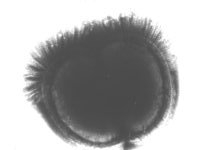
The photograph above was taken using a transmission electron microscope. The Type I fimbriae are the thin projections sticking out from the surface of the cell. Some of the fimbriae have broken off indicating that they are quite brittle.


Surfaces of Streptococci

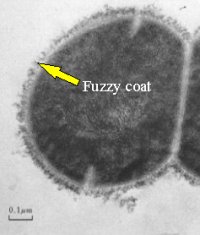
Back in the days before we knew much about fimbriae researchers looking at ultra-thin sections of the serious pathogen Streptococcus pyogenes noticed that the very outside of the cells had a fuzzy appearance. In a fit of imagination it was called “fuzzy coat”.  Later, when they learned about shadow-casting whole cells they applied this technique but it did not help to resolve any particular structures like fimbriae.


S. pyogenes Fuzzy Coat
Even today we have not resolved any definite structure to the S. pyogenes “fuzzy-coat”. We do know, however, that it consists partly of a substance called “M-protein” which is a major pathogenicity factor of this species.


Negative Staining Reveals Surface Fibrils on Some Streptococci

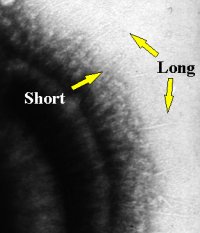
Towards the late 1970s a rather different technique which made use of a special type of stain called a “negative stain” revealed very thin, delicate, hair-like structures on some oral streptococci such as Streptococcus sanguis and Streptococcus salivarius. Take a look at the photograph on the right. This is an electron micrograph of the surface of a Streptococcus salivarius cell and although it may not be terribly clear on this reproduction, the original shots showed two types of these thin hair-like structures, long ones and short ones.  This negative-staining technique could not, by the way, reveal anything hair-like on the surface of Streptococcus pyogenes which had the fuzzy coat.

Fibrils are not Fimbriae

More research using lots of different strains of different species of oral streptococci showed these “hairs” came in all sorts of lengths and some cells carried more than one type. They were very thin and flexible. Although some fimbriae on E.coli can be very thin, “flexible” is not a term normally associated with fimbriae.  To begin with these hairs were called “fibrils” and there is a fair amount of evidence to suggest they are made of protein and some evidence which suggests that some are even made of glycoprotein although glycoproteins are generally considered pretty rare beasts in bacteria. As far as fibril synthesis goes, we don’t know much. Generally speaking they are difficult to remove, probably because they are so flexible, so it’s not possible to say whether they can re-grow like fimbriae.  The analogy was taken a stage further when a role in adhesion was postulated and, in fact, there is fairly good evidence to back this up, at least for the S.salivarius fibrils.

Unfortunately at this point the waters got a bit muddy when some people started referring to the long fibrils as “fimbriae” and the short ones as “fibrils”. Since they are kind of like fimbriae this wasn’t so surprising but what was surprising was that they were never referred to as pili!


Streptococcal Fibrils
Some Oral Streptococci Have Tufts of Fibrils
Some strains of oral streptococci were found to carry tufts of fibrils and looked rather like punk-rockers with Mohican hairstyles. Later these were grouped together into a new species and given the rather elegant name Streptococcus cristae.


Fibril Tufts and Co-aggregation

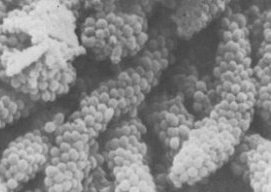
There is evidence that these may also be involved in adhesion, this time to rod-shaped bacteria to make the structures commonly found in mature dental plaque called “corn-cob-configuration”.  When bacteria of the same species stick to each other it’s known as “aggregation”. In this case the bacteria are from different species and it’s known as “CO-aggregation”.


“Corn Cobs” in Dental Plaque 


And finally

You may have guessed by now that I’m a bit skeptical about using the term “fimbriae” to describe the surface structures of these oral streptococci. I prefer to describe them all as fibrils but I’ll probably end up in the minority.  Sooner or later this is all going to be resolved but for the time being it’s probably best to keep the term “fimbriae” reserved for those brittle hair-like, proteinaceous surface projections of Gram-negative rods like Escherichia and Salmonella and call everything else “fibrils”.

Just remember pili are fimbriae and fibrils are different and you won’t go far wrong.


SUMMARY
1. Fimbriae are appendages which have been seen on the surfaces of a range of Gram-negative rods such as E.coli and various species of Salmonella
2. Fimbriae come in 7 different types (I-VII) distinguished by their length and width
3. Fimbriae are thought to be important in adhesion and have been shown to be pathogenicity factors in pathogenic strains of E.coli.
4. Type VII fimbriae allow DNA transfer between mating strains of certain species such as E.coli
5. Fibrils are found on streptococci
6. Fibrils are different from fimbriae, they are thinner and appear to be more flexible
7. Some fibrils have been shown to function in adhesion e.g. in corn-cob-formations found in dental plaque


http://www.ncl.ac.uk/dental/oralbiol/oralenv/tutorials/fimbriae.htm


Enzyme PowerPoint Worksheet

Enzymes
ppt Questions

Enzyme Structure & Function

1. Most enzymes are what type of macromolecule?

2. Most enzymes are ______________ or ______________ structures.

3. Enzymes act as ___________ in reactions.

4. Are enzymes permanently changed in the chemical reactions they are involved in?

5. Will an enzyme work on any substance? Explain.


6. Can enzymes be reused?

7. What ending is found on many enzymes?

8. Give 3 examples of enzymes with this ending.


9. How does an enzyme work?


10. What effect does an enzyme have on activation energy needed to start a reaction?

11. Hydrogen peroxide H2O2 is a common waste product of cells. Enzymes called catalases in cells break this down into harmless ________________.

12. What is meant by the term substrate?


13. What is meant by active site?


14. Sketch and label the enzyme-substrate complex.


15. What is meant by induced fit?


16. What induces an enzyme to change the shape of its active site?

17. List 4 factors that can affect enzyme activity.


18. What is the effect of high temperature on an enzyme (running fever)?


19. What temperature do most enzymes do best at?

20. Most enzymes like a pH near ______________.

21. To denature an enzyme means the enzyme becomes _______________ and can no longer work properly.

22. Name 3 inorganic substances (cofactors) that are often needed for enzymes to work properly.


23. Give an example of an enzyme & its needed inorganic substance.


24. Give one example of an enzyme inhibitor.

25. Explain how competitive inhibitors work.


26. If a competitive inhibitor blocks the active site, the ____________ can’t fit.

27. Explain noncompetitive inhibitors. 


28. Do noncompetitive inhibitors bind to the active site? Explain.


First Semester Review


First Semester Review      


What is the study of life called?
What are the smallest units that can carry on life functions called?
Living things are composed of ______________.
Give an example of a scientific observation.
What is a hypothesis?
What 3 things compose an atom?
Matter is made of ________________.
When atoms gain energy, what happens to electrons?
Do  cells contain a few or thousands of different kinds of enzymes?
__________________ reactions are important in organisms because they allow the passage of energy from one molecule to another.
What is a polar molecule?
Water molecules break up other polar substances. Give an example of such a polar molecule.
What happens to ionic compounds in water?
Which is not a carbohydrate —– glycogen, steroids, cellulose, or sugars?
Amino acids are the monomers for making ________________.
Is ice an example of an organic molecule?
The type & order of the amino acids determines the ___________ of a protein.
Very active cells need more of which organelle?
What organelle is the packaging & distribution center of the cell?
What membrane surrounds the nucleus?
What is the function of mitochondria. Sketch their shape.
Where is chlorophyll found in plants?
Diffusion takes place from ________________ concentration to ___________.
If a cell has a high water content, will it lose or gain water?
Ink dispersing in a beaker is an example of ________________.
Very large molecules enter cells by a process called ________________.
Endocytosis and exocytosis occur in ______________ directions across a cell membrane.
What is photosynthesis?
Where do the dark reactions of photosynthesis take place?
When chlorophyll absorbs light energy ATP is made and what other energy carrying molecule?
When chlorophyll absorbs light energy, what happens to its electrons?
_______________ molecules are responsible for the photosystems.
Electrons that have absorbed energy & moved to a higher energy level enter what chain?
When cells break down food molecules, energy is temporarily stored in what molecule?
When muscles do not get enough oxygen, what acid forms during exercise?
If you are growing bacteria in a culture and lactic acids starts to form, the bacteria are not getting enough of what gas?
The 2 stages of cellular respiration are _____________ & oxidative respiration.
Citric acid forms in which cycle during cellular respiration?
ATP molecules are formed inside what cellular organelle?
The first filial generation is the result of  a __________________ cross.
If a genetic trait appears in every generation is it dominant or recessive?
When Mendel crossed pea plants & looked at 2 different traits (flower color & plant height), did the inheritance of one trait influence the other?
If a heterozygous individual is crossed with a homozygous recessive individual, how many phenotypes will result?
What is the expected genotypic ratio from a homozygous dominant X heterozygous monohybrid cross?
List several reasons for genetic counseling.
If a genetic disorder is found equally in males & females, is it autosomal dominant or recessive?
If both parents carry the gene for cystic fibrous, what is the chance that their child will develop the disease?
If a trait is sex-linked, will it occur more often in males or females?
If a gene is located on the X-chromosome, it is said to be ________________.
BACK