Echinoderm Study Guide B1

Echinoderm Study Guide


Know the answers to the following:


A water vascular system is a trait of?
Clams are the basic food for what echinoderm?
A sea star feeds by extending what?
A sea star’s endoskeleton is made of what type of plates?
What around the mouth of a starfish helps coordinate its movements?
Tube feet  are part of what echinoderm system?
The blastopore becomes the anus in what type of organism?
Are chordates & echinoderms protostomes or deuterostomes?
Echinoderms like the sea urchin have what type of symmetry?
Are echinoderms fast or slow moving organisms?
How do echinoderms move?
Echinoderm larva have what type of symmetry?
What are the muscular sacs that force water through the water vascular system called?
In what phylum are sea squirts or tunicates?
Tunicates have a leathery what?
What animals are in the class Ophiuroidea?
How do basket stars & brittle stars differ?
What is the purpose of spines on a brittle stars arms?
Name an adult echinoderm with bilateral symmetry.
Do humans have a tail at any point during their development?
What was the function of gill slits in early chordates?
What is the flexible tube below the nerve cord in chordates called?
Where are lancelets usually found?

Be able to label the parts of the water vascular system of a starfish.

Ecology

Ecology

All Materials © Cmassengale 

Ecology is the study of interactions between organisms (biotic part) and their nonliving environment (abiotic factors)

Biotic factors includes plants, animals, fungi, & microorganisms. They may be producers, consumers, or decomposers.

Abiotic factors include climate, soil, temperature, water, air, sunlight, humidity, pH, and atmospheric gases.

Habitat is the place a plant or animal lives, while its niche is its total way of life.

Life is organized into levels:

Organism (any single living thing)

¯

            Population (members of the same species living in one place)

 ¯

                    Community (all the populations living in an area)

 ¯

        Ecosystem (community living in a similar habitat such as a forest)

 ¯

Biomes (ecosystems covering wide areas & with similar climates & organisms)

¯

Biosphere ( all the living & nonliving things on earth)

Producers:

Make their own food through photosynthesis or chemosynthesis
Includes plants, algal protists, & some bacteria

Consumers:

Can’t make their own food
May be herbivores (feed only on plants), carnivores (feed only on animals), or omnivores (feed on plants & animals)

Decomposers:

Break down dead plants & animals (detritus)
Recycle nutrients
Called detritivores
Include fungi & bacteria

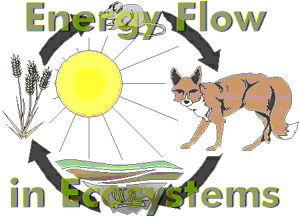
Sunlight is the ultimate energy for all life on earth, but only producers can get their energy directly from the sun.

Energyflowinecosystemimage

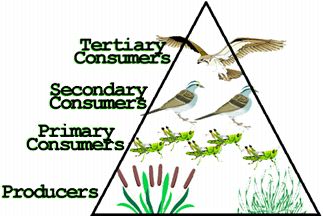
Trophic levels are feeding levels of producers & consumers in an ecosystem:

1st Trophic Level is producers that use sunlight directly
2nd Trophic Level includes herbivores that feed directly on plants
Higher Trophic Levels are carnivores feeding on each other

energypyramid

Food chains & food webs:

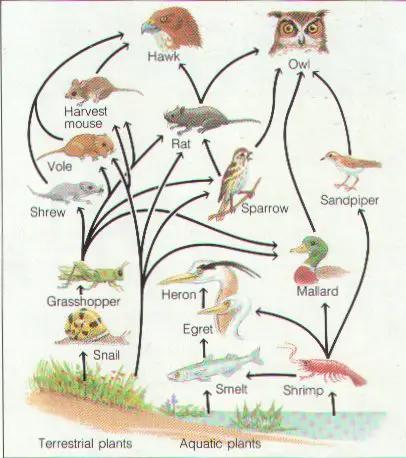
Chains show who eats whom in an ecosystem.
Webs are made up of several food chains.
Always begin with producers absorbing sunlight.
Producers store energy in the chemical bonds of the food they make.
Stored energy is passed to consumers when they eat producers or other consumers.
Some energy is lost at each trophic level as heat when consumers “burn” food during cellular respiration.
Both energy & nutrients must move through an ecosystem.

Three main elements that must move through an ecosystem:

Water
Carbon
Nitrogen

Water or Hydrologic Cycle:

Cells are 70 – 90% water
Water is needed for metabolic processes
Water is most important for terrestrial organisms because of desiccation (drying out)

Steps in the water Cycle:

Evaporation                                         Transpiration
(water loss from lakes, rivers, oceans…)          (water loss from plant leaves)

     ¯                                ¯

Condensation
(water vapor forms clouds)

¯

Precipitation
(water returns to earth as sleet, rain, snow…)

¯

Surface Runoff
(returns water to bodies of water or to groundwater)

Carbon Cycle:

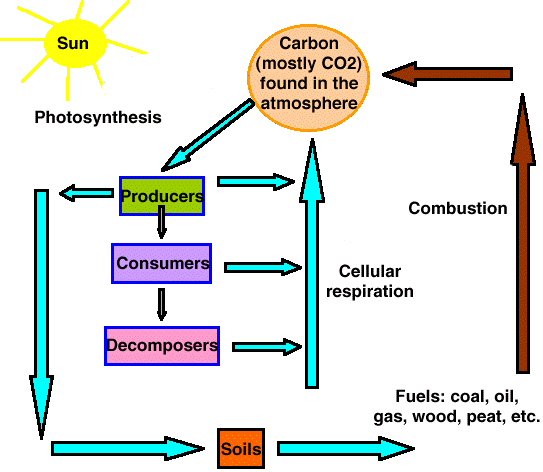
Consists of photosynthesis, cellular respiration, & decomposition
Begins with producers taking carbon dioxide from the air during photosynthesis
Carbon dioxide used in cellular respiration
Decomposing plants and animals return Carbon to the soil

Carbon Cycle Steps:

Plant leaves take carbon dioxide from air

¯

Plants store carbon in carbohydrates or starches
(photosynthesis)

¯

Plants & animals release carbon dioxide back into the air
(cellular respiration)

¯

Decomposers return carbon to environment
(decomposition)

Nitrogen:

Needed by all organisms
Used to make proteins & nucleic acids (DNA & RNA)
Air made up of 80% nitrogen
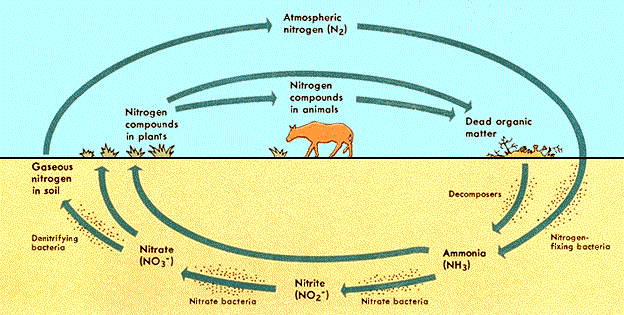
Only Cyanobacteria & Rhizobium bacteria can use nitrogen directly from the air (nitrogen fixation)
Bacteria found in the soil & on the roots of legumes (beans, peas …)

Steps in the Nitrogen Cycle:

Cyanobacteria & Rhizobium take nitrogen from air
(nitrogen fixation)

¯

Convert nitrogen gas into ammonia

¯

Nitrifying bacteria in soil change ammonia into nitrates

¯

Plants can absorb & use nitrates to make proteins

¯

Consumers eat plants & get proteins containing nitrogen

¯

Decomposers break down dead organisms & return nitrogen to air
(called ammonification)

¯

Anaerobic bacteria in soil release nitrogen from nitrates into air
(called denitrification)

Three main types of ecosystems:

Terrestrial (land)
Freshwater (rivers, ponds, lakes …)
Marine (oceans & seas)

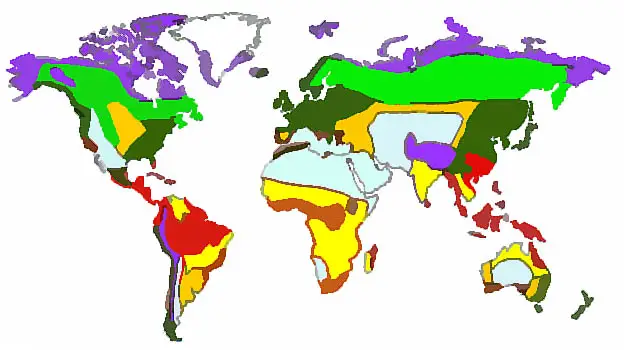
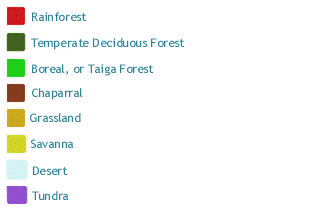
Terrestrial ecosystems are divided into 7 biomes with similar climates & organisms

Seven Terrestrial Biomes:

Tropical Rain Forest (jungle)
Savanna (tropical grasslands)
Deserts
Grasslands
Deciduous Forest
Taiga (coniferous forest)
Tundra

Tundra:

Cold & dark most of the year
Includes the arctic
Permafrost is the top layer of soil that thaws & in which plants grow
No trees, but sedges & grass, mosses, & lichens
Many migratory animals
Lemmings & ptarmigans are year round residents
Approximately 20 cm annual rainfall

Tundra

Taiga:

  • Coniferous forest
  • Extends across northern Eurasia & North America
  • Contains conifers or evergreens (spruce, cedar, fir, pine …)
  • Needle like leaves withstand weight of snow
  • Bear, deer, moose, wolves, mountain lions …
  • Sequoia or redwood (largest conifer) grows here
  • Bristle cone pine oldest living conifer found here

Coniferous Forest

Temperate Deciduous Forest:

  • South of taiga in North America, eastern Asia, & Europe
  • High annual rainfall (75-150 cm)
  • Moderate temperatures
  • Well-defined seasons of about equal length
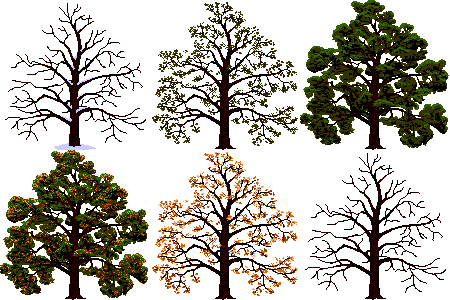
  • Trees loose leaves in winter (deciduous)
  • Show stratification (plant layers):
    1. Canopy – broad leaf deciduous trees forming uppermost layer
    2. Under story – shrubs
    3. Forest Floor – herbaceous plants
  • Songbirds, deer, rabbits, foxes, squirrels, frogs 7 toads, lizards …

Temperate Deciduous Forest

Tropical Rain forest:

  • Near equator
  • Warm climate (20 -25 degrees C)
  • Plentiful rainfall (190 cm/year)
  • Contains the greatest diversity of plants & animals
  • Insects, monkeys & apes, snakes, tropical birds, leopards…
  • Animals & plants brightly colored
  • Poor soil for agriculture

Rainforest

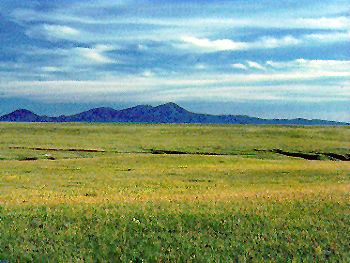
Grasslands:

  • Mostly grasses with a few trees due to less rainfall
  • Moderate climates
  • Good for agricultural crops
  • Grazing & burrowing animals dominate
  • Also called prairies

Grassland

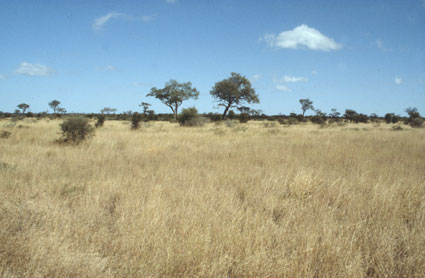
Savanna:

  • Tropical grasslands
  • Warm climate & rainy season
  • Antelope, zebra, lions, wildebeests, hyenas, elephants…
  • Suffer from floods & drought

(26KB)

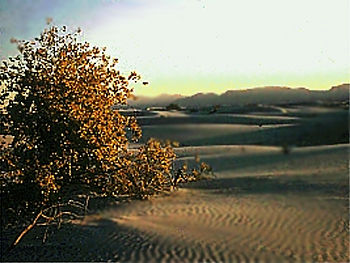
Deserts:

  • Low annual rainfall
  • Subject to strong winds
  • Days usually hot & nights cold
  • Sahara desert is without vegetation
  • Succulents such as cacti & other water storing plants
  • Most animals nocturnal
  • Lizards, snakes, roadrunners, insects, tarantula, hawks, rodents, coyotes…

Desert

Aquatic Biomes:

  • May be freshwater or saltwater
  • Wetlands near oceans have brackish water (mixture of fresh & salt waters)
  • Part of the part water or hydrologic cycle
  • Often polluted by man’s activities

Lakes & Rivers:

  • Freshwater
  • Oligotrophic lakes are nutrient poor (catfish, carp…)
  • Eutrophic lake are nutrient rich (trout, bass…)
  • Deep lakes have layers or strata where different plants & animals live
  • Phototropic organisms in upper layers for light
  • Estuary at mouth of river contains brackish water

Ocean Zones:

  • Intertidal zone
    1. Along shoreline
    2. Wave action
    3. Lots of light so many producers
    4. Starfish, sand dollars…
  • Neritic Zone
    1. Ocean water above continental shelf
    2. Coral reef found here
    3. Surrounds continents & receives light in upper layers
  • Oceanic Zone
    1. Beyond continental shelf
    2. Deepest area (up to 7 miles)
    3. Bottom doesn’t receive light so animals adapted to darkness (many produce their own light, feed on other animals…)
    4. Deepest area called abyss
    5. Upper area gets light & called the photic zone (lots of seaweed here)
    6. Floaters called plankton (microscopic organisms)
    7. Swimmers such as fish called nekton
    8. Bottom dwellers called benthos
BACK


Ecology Study Guide

Ecology Study Guide

List several biotic factors in an ecosystem.
List several abiotic factors in an ecosystem.
What serves as the ultimate energy for all life on earth?
What is transpiration & what cycle is it a part of ?
Why are the Rhizobium bacteria beneficial to plants?
What is nitrogen fixation?
What is denitrification?
Where is the intertidal zone found & list several organisms that would be found there?
Name 3 types of consumers based on their eating habits.
What is detritus & why is it important?
What are trophic levels & give an example?
What is the term for an organism’s total way of life?
How does an animal’s habitat differ from its niche?
Compare & contrast biomes.
Describe estuaries.
How does an oligotrophic lake differ from a eutrophic lake?
What is brackish water & where would it be found?
Where is the neritic zone found & what organisms would be found there?
Where would benthos organisms be found? Give an example of such a dweller.

Describe abiotic & biotic factors for each of these biomes:

Tropical rain forest
Taiga
Tundra
Grassland
Savanna
Desert
Deciduous forest
Intertidal Zone
Neritic Zone
Oceanic Zone
Oligotrophic River
Eutrophic River
Estuary
BACK


Dichotomous Keying


Dichotomous Keying

Introduction to Dichotomous Key Maker:

The identification of biological organisms can be greatly simplified using tools such as dichotomous keys.  A dichotomous key maker is an organized set of couplets of mutually exclusive characteristics of biological organisms.  You simply compare the characteristics of an unknown organism against an appropriate dichotomous key.  These keys will begin with general characteristics and lead to couplets indicating progressively specific characteristics. If the organism falls into one category, you go to the next indicated couplet.  By following the key and making the correct choices, you should be able to identify your specimen to the indicated taxonomic level.

Couplets can be organized in several forms.  The couplets can be presented using numbers (numeric) or using letters (alphabetical).  The couplets can be presented together or grouped by relationships.  There is no apparent uniformity in presentation for dichotomous keys.

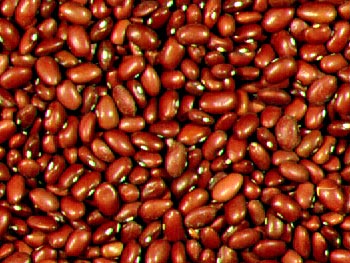
Sample keys to some common beans used in the kitchen:

Numeric key with couplets presented together.  The major advantage of this method of presentation is that both characteristics in a couple can be evaluated and compared very easily.


1a. Bean round Garbanzo bean
1b. Bean elliptical or oblong Go to 2
2a. Bean white White northern
2b. Bean has dark pigments Go to 3
3a. Bean evenly pigmented Go to 4
3b. Bean pigmentation mottled Pinto bean
4a. Bean black Black bean
4b. Bean reddish-brown Kidney bean


Alphabetical key with couplets grouped by relationship.  This key uses the same couplet choices as the key above.  The choices within the first and succeeding couplets are separated to preserve the relationships between the characteristics.


A. Bean elliptical or oblong Go to B
   B.  Bean has dark pigments Go to C
            C.  Bean color is solid Go to D
            C.  Bean color is mottled Pinto bean
                     D.  Bean is black Black bean
                     D.  Bean is reddish-brown Kidney bean
   B.  Bean is white White northern
A. Bean is round Garbanzo bean


Rules for Using Dichotomous Keys: 

When you follow a dichotomous key, your task becomes simpler if you adhere to a few simple rules of thumb:

  1. Read both choices in a couplet carefully.  Although the first description may seem to fit your sample, the second may apply even better.
  2. Keep notes telling what sequence of identification steps you took.  This will allow you to double-check your work later and indicate sources of mistakes, if they have been made.
  3. If you are unsure of which choice to make in a couplet, follow both forks (one at a time).  After working through a couple of more couplets, it may become apparent that one fork does not fit your sample at all.
  4. Work with more than one sample if at all possible.  This will allow you to tell whether the one you are looking at is typical or atypical.  This is especially true when working with plants – examine more than one leaf, branch, cone, seed, flower,…etc.
  5. When you have keyed out an organism, do not take your effort as the final result.  Double check your identification scheme, using your notes.  Find a type specimen (if available) and compare your unknown to the type specimen.  If a type specimen is unavailable, find a good description of the indicated taxonomic group and see if your unknown reflects this description.
  6. When reading a couplet, make sure you understand all of the terms used.  The best keys will have a glossary of technical terms used in the key.  If a glossary is unavailable, find a good reference work for the field (textbook, biological dictionary,…etc.) to help you understand the term.
  7. When a measurement is indicated, make sure that you take the measurement using a calibrated scale.  Do not “eyeball” it or take a guess.

Exercise 1:

Using a container of beans, use one of the dichotomous keys above to identify the beans.  Glue the beans to the card provided and label them with their common name. Indicate what steps you followed to arrive at your answer.  Turn the card in to your instructor.  Compare your answers to the instructor’s descriptions and type specimen.

Exercise 2:

Obtain samples of the snack chips provided.  Develop a dichotomous key to identify the snacks.  In your notebook, keep track of the characteristics you used to differentiate between the different snack families.  What are the values of the characteristic for each snack food?

Exercise 3:

Use the dichotomous key to conifers provided below to identify conifers.

A Key to Selected North American Native and Introduced Conifers


01a Leaves needle-like Go to 02
01b Leaves flattened and scale-like Go to 27
02a Leaves are in clusters Go to 03
02b Leaves are borne singly Go to 15
03a Two to five leaves in a cluster Go to 04  Genus Pinus
03b More than five leaves in a cluster Go to 14
04a Leaves mostly 5 in a cluster White Pine (Pinus strobus)
04b Leaves 2 or 3 in a cluster Go to 05
05a Leaves mostly 3 in a cluster Go to 06
05b Leaves mostly 2 in a cluster Go to 08
06a Leaves twisted, less than 5 inches long Pitch Pine (Pinus rigida)
06b Leaves straight, more than 5 inches long Go to 07
07a Leaves 5-10 inches long, cones very thorny Loblolly pine (Pinus taeda)
07b Leaves mostly over 10 inches long, cones unthorned Longleaf pine (Pinus palustris)
08a Leaves mostly longer than 3 inches Go to 09
08b Leaves mostly shorter than 3 inches Go to 11
09a Leaves rigid, bark grayish Black pine (Pinus nigra)
09b Leaves narrower than 1.6mm; bark reddish brown or brown Go to 10
10a Cones thornless, twigs brown Norway pine (Pinus resinosa)
10b Cones thorny, twigs whitish Shortleaf pine (Pinus echinata)
11a Leaves mostly wider than 1.5 mm Go to 12
11b Leaves mostly narrower than 1.5 mm Go to 13
12a Leaves mostly longer than 35 mm Mugho pine (Pinus mugo)
12b Leaves mostly shorter than 35 mm Jack pine (Pinus banksiana)
13a

Twigs whitened

Virginia pine (Pinus virginiana)
13b Twigs not whitened Scotch pine (Pinus sylvestris)
14a Leaves deciduous, clusters of 20-40 Larch (Larix sp.)
14b Leaves persistent, stiff, and four sided True cedar (Cedrus sp.)
15a Needles short and sharp Giant Sequioa  (Sequioadendron giganteum)
15b Needles longer than 12 mm Go to 16
16a Tiny pegs on twigs Go to 17
16b No pegs on twigs Go to 22
17a Pegs square, needles sharp Go to 18 Genus Picea
17b Pegs round, needles flat and blunt Hemlock (Tsuga sp.)
18a Leaves dark green or yellow green Go to 19
18b Leaves blue-green Go to 20
19a Branchlets droop Norway spruce (Picea abies)
19b Branchlets do not droop Red spruce (Picea rubens)
20a Leaves at right angles to stems Blue spruce (Picea pungens)
20b

Leaves point forward

Go to 21
21a Leaves about 12 mm long, seed cones 15-32 mm in length, crown narrow and pointed Black spruce (Picea mariana)
21b Leaves about 19 mm long, seed cones 50 mm in length, spire-like crown

White spruce (Picea glauca)

22a Buds large and pointed Douglas fir (Pseudotsuga sp.)
22b Buds small and rounded Go to 23
23a Terminal buds round and clustered True fir (Abies sp.)
23b Terminal buds not clustered Go to 24
24a Needles white underneath Go to 25
24b Needles green underneath Go to 26  Genus Taxus
25a Needles pointed

Redwood (Sequoia sempervirens)

25b Needles blunt Hemlock (Tsuga sp.)
26a Leaves 18 mm long or less with inconspicuous midrib American Yew (Taxus canadensis)
26b Leaves 25 mm long or more with conspicuous midrib Japanese Yew (Taxus cuspidata)
27a All leaves short and sharp Giant Sequioa  (Sequioadendron giganteum)
27b Some leaves not sharp Go to 28
28a Cones round Go to 29
28b Cones not round Go to 31
29a Cones soft and leathery Juniper (Juniperus sp.)
29b Cones woody Go to 30
30a Cones under 12 mm in diameter False cypress  (Chamaecyparis)
30b Cones over 12 mm in diameter Cypress (Cuppressus)
31a Cones resemble rosebuds White cedar or arbor vitae (Thuja)
31b Cones resemble duck bills Incense cedar (Calocedrus)


Conifers to Identify:

1. Name: 2. Name:

3. Name: 4. Name:

5. Name: 6. Name:


7. Name: 8. Name:


9. Name: 10. Name:


11. Name: 12. Name:


13. Name: 14. Name:


15. Name: 16. Name:

Photos Copyright Nearctica.com

Click here for correct answers to conifer key


Ecology Worksheet Bi


Ecology


Chapter 19 Ecology


1. What is ecology?

2.. What is the most significant environmental change that is taking place today?

3. What is the sixth mass extinction?

4. What is the ozone layer, what does it do for earth, & what is happening to this layer & why?

5. Explain the green house effect.

6. List in order the ecological levels of organization.

7. What is the biosphere, tell where it extends, & tell why it is so important?

8. Define ecosystems & give an example.

9. What is a community?

10. What is a population?

11. What is the simplest ecological level of organization?

12. Use figure 19-6 on page 364 & explain how Lyme disease affects organisms in an ecosystem.

13. What are biotic factors & list them?

14. What are abiotic factors & list them?

15. Are abiotic factors constant? Explain by giving an example.

16.Organisms are able to survive within a _____________ range of environmental conditions.

17. Graphing the range of conditions an organism can survive is called a __________________ Curve.

18.When organisms adjust their tolerance to abiotic factors, the process is called ___________.

19. Explain how dormancy & migration help organisms escape unsuitable environmental conditions.

20. Define niche

Chapter 20 Populations

21. What is meant by population size?

22. What is meant by population density?

23. Name the 4 processes that determine whether a population will grow, shrink, or remain the same size.

24. What are immigration & emigration & how do they affect population size?

25. What are limiting factors & give some examples?

26. What affect does inbreeding have on small populations?

Chapter 21 Community Ecology

27. Interactions among species are called ____________.

28. List the 5 types of symbioses.

29. Define predator & prey & give an example.

30. What is mimicry & give an example?

31. Define these terms — parasitism, parasite, host, ectoparasites, & endoparasites.

32. When niches overlap, _________________________ results so more than one species are using the limited resources.

33. What are mutualism & commensalism?

34. Define succession.

35. Name & describe the 2 types of succession.

36. What are pioneer species & why are they important?

37. What is a climax community?

Chapter 22 Ecosystems

38. What are producers & what is another name they may be called?

39. What is biomass, why is it important, how does it accumulate, & what is its rate of accumulation called?

40. What is gross primary productivity?

41. All heterotrophs would be ______________________.

42. Define & give an example of each of these consumers — herbivore, carnivore, omnivore, detritivores, & decomposer.

43. Whenever one organism eats another, ________________ is transferred.

44. What are trophic levels?

45. All _______________ belong to the first trophic level, _______________ belong to the
Second trophic level, and the _______________ of herbivores belong to the third trophic level.

46. How many trophic levels do most ecosystems contain?

47. What is a food chain & what always begins the chain?

48. Write an example of a food chain.

49. What is a food web?

50. Draw a diagram of a food web that has at least 4 food chains.

51. Approximately __________ percent of the total energy consumed at one trophic level is incorporated into the organisms in the next level.

52. In terms of energy passage, why will there be many more producers than herbivores and fewer large carnivores than small carnivores?

53. What are biogeochemical cycles, why are they important, & name three?

54. Draw & explain the water cycle. Be sure to color your diagram!

55. List & define the 3 important processes in the water cycle.

56. What is groundwater?

57. What 2 processes form the basis for the carbon cycle?

58. Draw & explain the carbon cycle. Be sure to color your diagram!

59. What purpose do decomposers have in the carbon cycle?

60. Why do organisms need nitrogen?

61. Draw & explain the nitrogen cycle. Be sure to color your diagram!

62. Organisms such as ________________ convert _________________ gas into compounds
Called __________________ during the process known as________________________.

63. Bodies of dead organisms contain mainly in _________________ & _________________.

64. Wastes such as __________________ & _______________ also contain nitrogen that must be recycled.

65. ________________ recycle nitrogen from dead organisms & wastes by changing it into
______________________. The process is called ________________________.

66. Explain nitrification & denitrification.

67. Plants can absorb ____________________ from the soil, but animals obtain nitrogen from
their ___________________.

68. Define biome.

69. List the 7 major biomes.

70. Why don’t mountains belong to any one biome?

71. What is a tundra, where are they found, & tell organisms that would be found tree?

72. What is permafrost & how does it control plant life in the tundra?

73. What are taigas, where would they be found, & what type of vegetation dominates this area?

74. Plants & animals in the taiga must be adapted for long __________________, short
_________________, & ________________________ soil.

75. List some typical animals of the taiga.

76. What characterizes a temperate deciduous forest?

77. Deciduous forests have 4 pronounced ____________________ with _________________
summers, _______________________ winters, and__________________________ than the
taiga.

78. Grasses dominate what biome?

79. Why aren’t there more trees on grassland?

80. What are grasslands called in each of these areas —– North America, Asia, South America, & southern Africa?

81. Describe the soil of grasslands. Because of the soil condition, how is much of the grassland used?

82.What type of animals would be found on grassland?

83. What periodically occurs across grasslands & why doesn’t it kill the grasses?

84. Approximately how much rainfall do deserts receive each year?

85. Are deserts always hot? Explain.

86. What adaptation must desert vegetation make to survive?

87. What types of adaptations must desert animals make to conserve water?

88. What are savannas & where are the best known savannas found?

89. Describe temperature & rainfall on savannas?

90. Name some herbivores & carnivores found on a savanna.

91. Describe the rainy season on a savanna & tell what special problem this poses for the animals & plants there?

92. What are tropical rain forests & where are they located?

93. Rain forests have stable, year-round ______________________ & abundant ____________.

94. Plants in the rainforest must constantly compete for what?

95. Explain the canopy & epiphytes in a rainforest.

96. Describe the plant & animal life in a rainforest.

97. Tropical rainforests are more commonly called _____________________.

98.Oceans cover what percent of the earth’s surface?

99. Draw, label, & color the zones found in the ocean (see figure 22-16). Define each term labeled on your drawing.

100. What are intertidal organisms exposed to & name some intertidal organisms.

101. Which zone in the ocean is the most productive & why?

102. What small organisms are found in the neritic zone & why are they important?

103. In tropical areas, what forms in the neritic zone & why are they important?

104. Which ocean zone has fewer species & why?

105. Where does most of the earth’s photosynthesis take place?

106. Animals in the aphotic zone feed on what?

107. Organisms living deep in the ocean must cope with what 2 problems? Give some examples of deep ocean animals & explain how they adapt to their environmental problems.

108. What are volcanic vents, when were they discovered, & describe the organisms found there?

109. What are estuaries & what special problem do estuary organisms face?

110. What characterizes freshwater zones & give several examples?

111. Name & describe the 2 categories into which ecologists divide lakes 7 ponds?

112. Define a river & describe organisms found there?

Chapter 23 Environmental Science

113. Where do upwellings occur & how are they helpful?

114. Describe the event known as El Nino & tell its effect.

115. Describe chlorofluorocarbons effect on the ozone layer & tell why we should be concerned?

116. Define biodiversity.

117. Define conservation biology & use migratory birds to explain an example of this new discipline?

118. Sometimes species are reintroduced into areas. Use the Gray wolf & describe its reintroduction in the United States.

119. Where are the Everglades located & what is being done to restore them?

BACK