AP Lecture Guide 05B – Macromolecules


AP Biology: CHAPTER 5B

MACROMOLECULES


1. What is the characteristic common to lipids? _______________________________________

___________________________________________________________________________

2. Lipids are synthesized by the chemical reaction ____________________________________

and broken down by the reaction ________________________________________________

3. What makes fats hydrophobic? _________________________________________________

___________________________________________________________________________

___________________________________________________________________________

4. State at least two differences between saturated and unsaturated fats.

a. _________________________________________________________________________

___________________________________________________________________________

b. _________________________________________________________________________

___________________________________________________________________________

5. How do phospholipids interact in an aqueous solution?

___________________________________________________________________________

___________________________________________________________________________

6. Make a diagram of phospholipid interactions that form membranes.


7. Sketch the common building block of steroids.


8. List several functions of proteins.

___________________________________________________________________________

___________________________________________________________________________

___________________________________________________________________________

9. What are the three properties used to classify amino acids?

___________________________________________________________________________

___________________________________________________________________________

___________________________________________________________________________

10. Sketch two amino acids side-by-side, on one of them label the functional groups, then show how the two can be joined together.


11. What determines the primary structure of a protein? _________________________________

___________________________________________________________________________

12. Describe the four levels of protein structure:

a. Primary _________________________________________________________________

___________________________________________________________________________

b. Secondary ______________________________________________________________

___________________________________________________________________________

c. Tertiary _________________________________________________________________

___________________________________________________________________________

d. Quaternary ______________________________________________________________

___________________________________________________________________________

13. What happens to a protein during denaturation? ____________________________________

___________________________________________________________________________

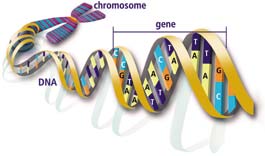
14. What are the building blocks of nucleic acids? ______________________________________

15. Briefly describe two functions of DNA in the cell.

a. ________________________________________________________________________

___________________________________________________________________________

b. ________________________________________________________________________

___________________________________________________________________________


AP Lecture Guide 22 – Descent with Modification


AP Biology: CHAPTER 22- DESCENT WITH MODIFICATION


1. Identify the three significant historical themes that set the stage for Darwinian evolutionary

theory.

__________________________________________________________________________

__________________________________________________________________________

2. What were the two major points made in The Origin of Species?

__________________________________________________________________________

__________________________________________________________________________

3. What were the conventional paradigms in the 1800’s when Darwin developed his theories?

__________________________________________________________________________

__________________________________________________________________________

4. What was the contribution of Carolus Linnaeus to the evolutionary theories?

__________________________________________________________________________

__________________________________________________________________________

5. How did the study of fossils help Darwin shape his theories?

__________________________________________________________________________

__________________________________________________________________________

6. How did geological gradualism and uniformitarianism influence Darwin?

__________________________________________________________________________

__________________________________________________________________________

7. Identify the two principles of Lamarck’s theory of evolution.

__________________________________________________________________________

__________________________________________________________________________

8. How did the observations during his voyage on the Beagle influence Darwin’s theories?

__________________________________________________________________________

__________________________________________________________________________

9. Why were the Galápagos Islands so important to Darwin’s observations?

__________________________________________________________________________

__________________________________________________________________________

10. What are the elements for the formation of new species?

__________________________________________________________________________

__________________________________________________________________________

11. What is the driving force behind the evolution of the 14 species of finches on the

Galapagos?

__________________________________________________________________________

__________________________________________________________________________

12. What was Wallace’s role in the Theory of Natural Selection?

__________________________________________________________________________

__________________________________________________________________________

13. What were the main points of The Origin of Species?

__________________________________________________________________________

__________________________________________________________________________

14. Define Descent with Modification.

__________________________________________________________________________

__________________________________________________________________________

15. How does the “tree analogy” represent the evolutionary relationships of creatures?

__________________________________________________________________________

__________________________________________________________________________

16. Summarize the observations and inferences recognized as the backbone of evolution by

natural selection.

__________________________________________________________________________

__________________________________________________________________________

__________________________________________________________________________

17. Observations:

a. ______________________________________________________________________

b. ______________________________________________________________________

c. ______________________________________________________________________

d. ______________________________________________________________________

e. ______________________________________________________________________

18. Inferences:

a. ______________________________________________________________________

b. ______________________________________________________________________

c. ______________________________________________________________________

19. How did Darwin’s experience with artificial selection influence his theories of evolution?

__________________________________________________________________________

__________________________________________________________________________

20. For each of the following, indicate how it is used as evidence of evolution by natural

selection.

a. Paleontology ____________________________________________________________

__________________________________________________________________________

b. Biogeography ___________________________________________________________

__________________________________________________________________________

c. Resistance to insecticides _________________________________________________

__________________________________________________________________________

d. Drug Resistance _________________________________________________________

__________________________________________________________________________

e. Homology ______________________________________________________________

__________________________________________________________________________

f. Homologous structures ___________________________________________________

__________________________________________________________________________

g. Vestigial organs _________________________________________________________

__________________________________________________________________________

h. Embryology ____________________________________________________________

__________________________________________________________________________

i. Biochemical similarity _____________________________________________________

__________________________________________________________________________


AP Lecture Guide 06 – Metabolism & Enzymes


AP Biology: Chapter 6 


METABOLISM & ENZYMES


1. Define the following terms:

a. Catabolic pathway ________________________________________________________

b. Anabolic pathway _________________________________________________________

c. Kinetic energy ____________________________________________________________

d. Potential energy __________________________________________________________

2. The First Law of Thermodynamics is the principle of… _______________________________

___________________________________________________________________________

___________________________________________________________________________

3. The Second Law of Thermodynamics involves changes in… __________________________

___________________________________________________________________________

___________________________________________________________________________

4. What is meant by a change in free energy? ________________________________________

___________________________________________________________________________

5. Compare reactions that are…

a. Exergonic _______________________________________________________________

________________________________________________________________________

b. Endergonic ______________________________________________________________

________________________________________________________________________

6. Sketch the ATP cycle:


7. How does ATP “couple reactions”? ______________________________________________

___________________________________________________________________________

___________________________________________________________________________

8. Sketch the profile of an exergonic reaction.


9. How do enzymes affect the energy profile? ________________________________________

___________________________________________________________________________

10. Define activation energy. ______________________________________________________

___________________________________________________________________________

11. Why are enzymes said to be specific? ____________________________________________

___________________________________________________________________________

___________________________________________________________________________

12. List factors that influence the rate of enzyme reactions. ______________________________

___________________________________________________________________________

___________________________________________________________________________

13. Label the diagram of the catalytic enzyme cycle.

14. How do competitive and noncompetitive inhibitors differ in their enzyme interactions?

___________________________________________________________________________

___________________________________________________________________________

15. What happens during allosteric regulation? ________________________________________

___________________________________________________________________________

___________________________________________________________________________

16. Describe feedback inhibition. ___________________________________________________

___________________________________________________________________________

___________________________________________________________________________

17. Define enzyme cooperativity. ___________________________________________________

___________________________________________________________________________

___________________________________________________________________________

AP Lecture Guide 23 – The Evolution of Populations


AP Biology: CHAPTER 23- THE EVOLUTION OF POPULATIONS


1. How does the “modern synthesis” theory of evolution differ from Darwin’s Theory of Natural

Selection?

__________________________________________________________________________

__________________________________________________________________________

2. Population genetics puts a mathematical approach to the study of microevolution. Define

each of the terms commonly used in population genetics.

a. population: _____________________________________________________________

b. gene pool: ______________________________________________________________

c. gene frequency: _________________________________________________________

3. What are the gene frequencies for the red and white flowers?

a. p = ____________________________________________________________________

b. q = ____________________________________________________________________

4. List the five condition that must be met by a populations to insure stability (no evolution).

a. ______________________________________________________________________

b. ______________________________________________________________________

c. ______________________________________________________________________

d. ______________________________________________________________________

e. ______________________________________________________________________

5. Assuming Hardy-Weinberg distribution of genes in a population, write the equation that

describes genotype frequencies.

__________________________________________________________________________

6. Define the following:

a. p2 = ___________________________________________________________________

b. 2pq = __________________________________________________________________

c. q2 = ___________________________________________________________________

7. Work out these practice problems. Find both the gene and genotype frequencies:

a. In Drosophilia, the allele for normal length wings is dominant over the allele for vestigial

wings. In a population of 1,000 individuals, 160 show the recessive phenotype.

b. The allele for the hair pattern called “widow’s peak” is dominant over the allele for no

“widow’s peak.” In a population of 1,000 individuals, 360 show the dominant phenotype.

8. What is the H-W assumption that is broken when genetic drift occurs? Explain

__________________________________________________________________________

__________________________________________________________________________

9. How does genetic drift apply to each of the following? Give an example of each.

a. Founders effect: _________________________________________________________

__________________________________________________________________________

__________________________________________________________________________

b. Bottleneck effect _________________________________________________________

__________________________________________________________________________

10. How do each of the following break H-W assumptions?

a. natural selection: ________________________________________________________

__________________________________________________________________________

b. gene flow: ______________________________________________________________

__________________________________________________________________________

c. mutation: _______________________________________________________________

__________________________________________________________________________

d. selective mating: _________________________________________________________

__________________________________________________________________________

11. Why is genetic variation important to evolution?

__________________________________________________________________________

__________________________________________________________________________

12. How can populations vary along a geographic axis compared to isolated populations?

__________________________________________________________________________

__________________________________________________________________________

13. What is the role of mutations to forming variation?

__________________________________________________________________________

__________________________________________________________________________

14. What factors of sexual reproduction lead to variations within a population?

__________________________________________________________________________

__________________________________________________________________________

15. How does diploidy preserve variation?

__________________________________________________________________________

__________________________________________________________________________

16. What is “balanced polymorphism?”

__________________________________________________________________________

__________________________________________________________________________

17. How can parasites contribute to balanced polymorphism?

__________________________________________________________________________

__________________________________________________________________________

18. In a biological sense, what is fitness?

__________________________________________________________________________

__________________________________________________________________________

19. Label the following graphs of variation in color with the type of selection.


20. What is the effect of sexual selection?

__________________________________________________________________________

__________________________________________________________________________

21. For each of the following, give an example or describe what is meant by the statement.

a. Natural selection cannot fashion perfect organisms: _____________________________

__________________________________________________________________________

b. Evolution is limited by historical constraints: ___________________________________

__________________________________________________________________________

c. Adaptations are often compromises: _________________________________________

__________________________________________________________________________

d. Not all evolution is adaptive: _______________________________________________

__________________________________________________________________________

e. Selection can only edit existing variations: ____________________________________

__________________________________________________________________________


AP Lecture Guide 07 – The Cell


AP Biology: CHAPTER 7

THE CELL


1. The tool that lead to the understanding that cells are the basic unit of life was the…

___________________________________________________________________________

2. The smallest structures visible with the light microscope are the ….

___________________________________________________________________________

3. What is the advantage of the electron microscope?

___________________________________________________________________________

___________________________________________________________________________

___________________________________________________________________________

4. How do biologists isolate cell components?

___________________________________________________________________________

___________________________________________________________________________

___________________________________________________________________________

5. What are four things all cells have in common?

a. _________________________________________________________________________

b. _________________________________________________________________________

c. _________________________________________________________________________

d. _________________________________________________________________________


4. Golgi bodies and lysosomes

___________________________________________________________________________

___________________________________________________________________________

___________________________________________________________________________

___________________________________________________________________________

5. Nucleus and endoplasmic reticulum

___________________________________________________________________________

___________________________________________________________________________

___________________________________________________________________________

___________________________________________________________________________

6. Endoplasmic reticulum and Golgi bodies and vesicles

___________________________________________________________________________

___________________________________________________________________________

___________________________________________________________________________

___________________________________________________________________________

7. Endoplasmic reticulum and cell membrane

___________________________________________________________________________

___________________________________________________________________________

___________________________________________________________________________

___________________________________________________________________________