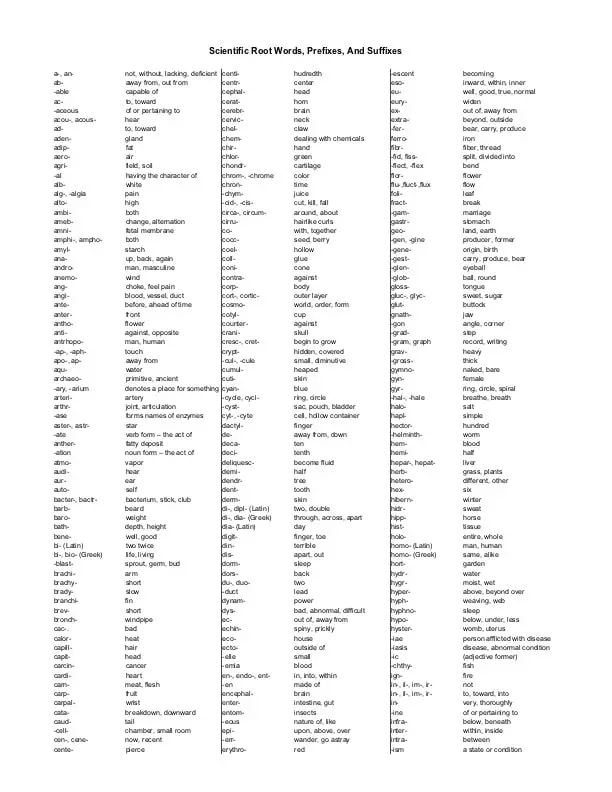
Click to download Scientific Root Words, Prefixes & Suffixes
First Nine Weeks – September 17
Second Nine Weeks – November 19
Fourth Nine Weeks – April 29
Spring Break:
March 20 – 28
Parent-Teacher Conferences:
Fall – October 27
Spring – February 9
Teacher Information:
Conference 6th Period
Time 1:20 – 2:10
If you’re studying for a science test, one of the best ways to help remember the material is by setting to music! That’s right; cell raps can help you remember the names of the organelles located in each cell, as well as their functions.
We’ve rounded up our top seven picks for cell raps that we think you’re going to love.
5 out of 5 stars
As YouTuber CrappyTeacher (Emily Crapnell) explains in her cell rap video, she created this video to help her sixth-grade science students learn the different parts of a cell. At over 5.7 million views, it seems that this cell rap has caught on with more than just Crapnell’s students! We can’t blame people for watching it; it’s catching and makes science–dare we say it?–fun!
“Today’s the day,” the rap begins; “let’s talk about the building blocks of life–cells that make us.”
The cell rap chorus covers some of the most vital parts of cellular biology. It explains that cells are made of organelles, and mentions cytoplasm, the nucleus (“controllin’ everything”), the membrane, the vacuole (“we can float around for hours”), and chloroplasts by name.
The next chorus explains that there are two different types of cells–animal and plant cells, while the final three stanzas are devoted to explaining in more details with each part of the cell does. “The cell membrane is the border patrol,” raps CrappyTeacher, and then later, “The mitochondria’s something every cell needs, breaking down the food and releasin’ energy.”
Over second thousand people have taken the time to comment on this cell rap. Many mention how they heard it years ago and still remember it, speaking to the catchy lyrics and the arresting beat. While designed for sixth-graders, the content is sophisticated enough that even college students report finding it helpful!
We also feel like it’s one of the best mixes of catchy lyrics and useful information, managing to find a good balance between repetition and new information. Plus, it provides a great video with very helpful images which will further solidify the information in your mind. For these reasons, we’ve given it five stars!
The rap can be viewed here or may be purchased.
5 out of 5 stars
The Cell Song, created and sung by Glenn Wolkenfeld, isn’t a cell rap–but it is a fantastic way to use the power of song to help commit the parts of a cell to memory! And with over two million views, we’re not the only people who think so.
The song is a folksy, bluesy tune where the singer asks what happens when he goes into a cell. “Who drives this bus,” sings Wolkenfeld, and then he “found myself talking to the boss, the nucleus.”
Wolkenfeld does two things in this song; he gets deeper into the molecular biology involved in the parts of a cell, and he offers a karaoke version.
Unlike some of the other cell raps available, The Cell Song explains that chromosomes stores genetic information, the ribosomes make proteins, and the lysosome use enzymes to dissolve, and centrioles organize chromosomes into spindles.
Wolkenfeld also uses The Cell Song to explain how rigid cell walls allow plants to grow extremely tall, and the purpose of green in the plant cell. “I went into a plant cell, ‘why’s it so green?’” sings the artist. “‘Cause I make food from sunlight,’” answers a green chloroplast.
The video is filled with helpful drawings and diagrams to further illustrate each concept. Wolkenfeld, as we mentioned already, also offers a karaoke version, which is the same version, but instead of Wolkenfeld singing, the lyrics are on the screen.
The Cell Song, like Cells Cells by CrappyTeacher, also gets five stars thanks to its ability to combine great video content with helpful, relevant information about cells.
You can find The Cell Song here, and the karaoke version here.
5 out of 5 stars
The Parts of a Cell Song is a cell rap created by an organization called Jam Campus. It’s one of many Jam Campus creations; in fact, the YouTube channel creates educational videos on everything history to science to mathematics.
With over 54,000 views, The Parts of a Cell Song is catchy and well-loved. What we especially love, in addition to the self-made music, is the high quality illustrated video! Any time you can marry great visual images with catchy lyrics, you increase the likelihood of you remembering the information.
The Parts of a Cell Song gets right down to business, stating in its first line, “here’s what each cell contains, outer layer is the cell membrane.” The lyrics point out where cells get their energy (mitochondria), and what ribosomes do (help with protein synthesis).
We also appreciate this lyric, which helps to sum up the parts of a cell, something most cell raps don’t do:
Cell membrane, mitochondria, lysosomes and the ribosomesCytoplasm, nucleus, E.R. and Golgi body, and the nucleolus
We especially appreciate how accurate the presented information is here (many cell raps mistakenly identify ribosomes as making proteins; however, they simply help in the assembly of polypeptides, chains of amino acids, which are the building blocks of protein), which is a big part of why this song gets five out of five stars.
4 out of 5 stars
Mr. Simons and his fifth grade have teamed up to create another great cell rap, available on YouTube. This cell rap has approximately 468,000 views, and we understand why–out of all the cell raps we’re sharing today, this one is probably the most likely to get stuck in your head!
Every song has to decide how to balance repetition with new information; as you’ll see later, some of the cell rap songs we’ve rounded up choose to focus on including as much data as possible. This rap, however, from Jake Simons, focuses on repetition.
In fact, we feel it focuses a little too much on repetition (we downgraded it to four stars), but it’s still a great rap that will help cement many of the things you’re learning about cell biology into your memory.
This five-minute rap features the cytoplasm, the nucleus, the membrane, the vacuoles, and the mitochondria of the cell. Here’s an example of a lyric:
“Just like us, the cell has energy. The mitochondria takes the food and puts it where it needs to be.”
Here’s another line from the cell rap, this one memorably explaining how the cell membrane works:
“There’s a thing called a membrane that holds it all in place so none of us will ever complain.”
Is this the cell rap to turn to if you need to memorize complicated material? Probably not; but it is a great option for younger students or people who need just the basic parts of a cell!
4 out of 5 stars
The Cell Song was written and recorded by Dr. Keith Smolinski as part of a doctoral study to research how music can help students learn complex science concepts. In addition to The Cell Song, which features the parts of a cell, there are another nine songs sold in an album called Biorhythms: The Music of Life Science.
Songs in Biorhythms cover everything from cellular division, to the digestive tract, to the ecosystem. The song we’re featuring, The Cell Song, isn’t a cell rap, but it is well-performed, catchy, and interesting to listen to!
While the accompanying video doesn’t include images (that’s why it only has four stars and not five), it does utilize the lyrics on screen. In just two minutes and nineteen seconds, Dr. Smolinski manages to cover everything from the nucleus to the cell membranes.
In The Cell Song, listeners learn that the nucleus contains the genetic code, the mitochondria are the power plants of the cell, and the vacuoles store food and water. We also learn that the ribosomes make proteins, the Golgi bodies pack and ship the proteins, and the endoplasmic reticulum carries them.
Plus, the song teaches that lysosomes are janitors, cytoplasm is gel-like, and cell membranes help regulate what comes in and out of the cell.
In the notes section of this video, Dr. Smolinski also explains that additional teacher’s resources are available on his website, including a Teacher’s Guide for The Cell Song. All of Dr. Smolinski’s resources are based on the National and State of Connecticut Science Standards, so you can be sure you’re getting accurate and helpful information.
4 out of 5 stars
ParrMr, a YouTube creator, has garnered over one hundred thousand subscribers thanks to her (or his!) ability to put science lyrics to popular songs. If you cringe over cells raps or want music you’re already familiar with, you can find videos on everything from Pangaea to the atmosphere to the planets.
ParrMr’s songs are set to hits like Forget You by Cee Lo Green, Toothbrush by D’NCE, and Jealous by Nick Jonas. The one we’re featuring here, with four out of five stars, is Organelles Song, set to Counting Stars by OneRepublic.
The music is easy to remember if you’re already familiar with the song–our one complaint, however, is that the lyrics have very little repetition. This has the upside of packing a ton of information into the four-plus minute song, but if you’re trying to make sure the material sticks, this might be a downside.
“Look inside a cell,” sings ParrMr, who created this song for his or her sixth-grade students, “and you will see…organelles have jobs, yeah, organelles have…jobs.”
The next lines focus on how plant cell walls and cell membranes protect the line like a fence, letting the right things in and out. ParrMr covers vacuoles, lysosomes, the nucleus, chromatin, DNA, and ribosomes.
The final stanza explains proteins and their relationships to the endoplasmic reticulum, Golgi bodies, and cytoplasm. Mitochondria and chloroplasts are also mentioned.
Organelles Song by ParrMr has racked up over 700,000 views, and for a good reason–we give this cells video four out of five stars!
3 out of 5 stars
Another much-loved option (four hundred thousand views!) by ParrMr, also for a sixth-grade classroom, this is another song about cells set to hit music. This one, called Cells Song, is set to Sail by AWOLNATION.
In it, ParrMr sings about cell membranes, cytoplasm, organelles, mitochondria, endoplasmic reticulum, ribosomes, and Golgi bodies.
“Cells cells cells cells cells,” he sings, before starting another chorus about vacuoles, the nucleus, and lysosomes.
Here is the final stanza:
Capturing Sun’s energyChloroplasts in plants and treesAnd cell walls giving box-like shape, rigid
If you’re a fan of pop or dance music or are simply looking for a non-rap alternative to cell raps, this is a great option. It’s short on useful information, but what is included is presented appealingly, and will be likely to stick!
Thanks to these seven awesome cell raps, we have a feeling you’re going to ace your next quiz or test. We’d say good luck, but we don’t think you’ll need it!
Biology is a massive subject, and if you’re trying to study for a test, remembering all those facts, strange Latin names, and confusing concepts can seem impossible. The smartest students, however, have found clever ways to increase the amount of information they remember. One of the best ways is using a biology poem to help remember the difficult material.
A bio poem is a mnemonic device or a simple poem that includes the facts, names, or concepts you’re trying to remember. The idea is that your brain retains the information better that way, and when it comes down to test day, you’ll be able to call forth the learned material by reciting the poem.
Below, we’ve listed seven bio poems that will help you perform better on your next exam. Plus, keep reading for the ultimate guide on remembering difficult things and studying for big exams.

You can see below that we’ve rated the poems we’ve included in this roundup; since we’ve scoured available bio poems, we’ve been able to bring you only the best and most helpful.
1
5 out of 5 stars
A mnemonic device is a great way to help our brains remember complicated groups of information–especially when the data has to go in a specific order. The Dear King Philip device has been used for generations to help students remember the order of taxa in biology.
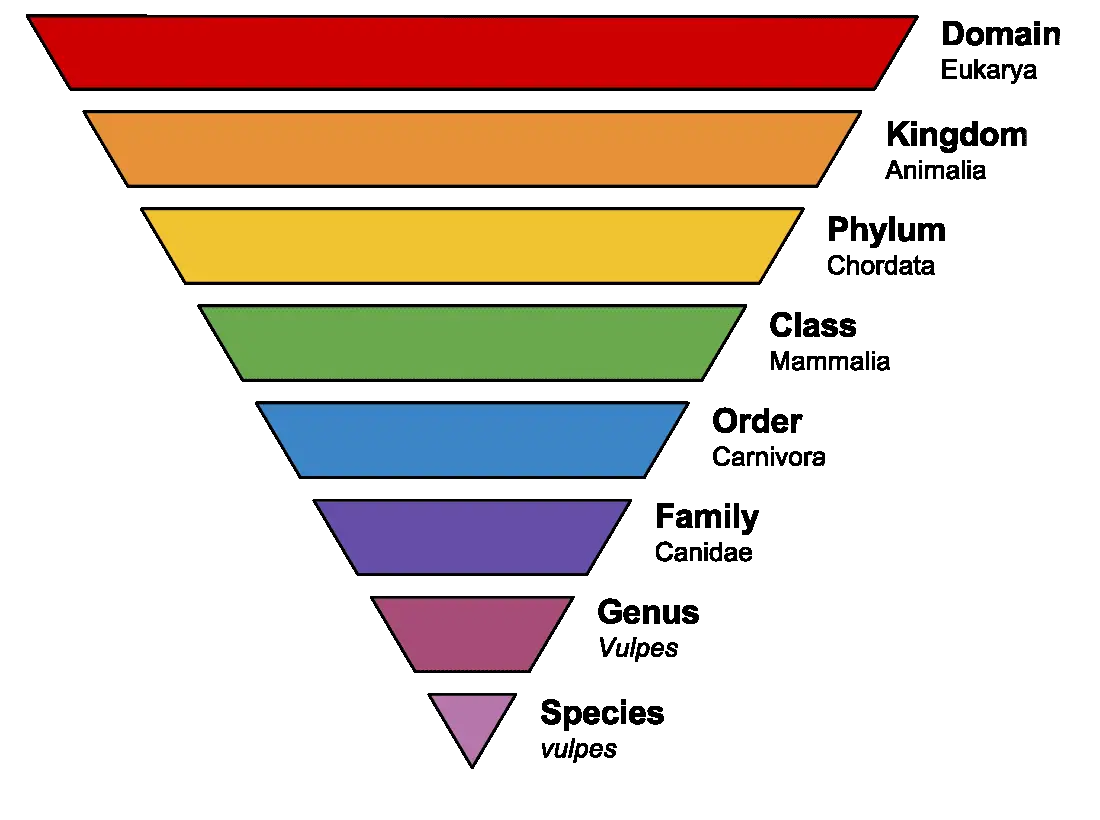
The order is as follows: Domain, Kingdom, Phylum, Class, Order, Family, Genus, Species.
Each of the mnemonic’s first words matches the words of the taxa, in order: Dear King Philip Came Over For Good Spaghetti.
It sounds ridiculous and hilarious, but that’s exactly why it works so well; because it involves our emotional response (laughter and hilarity), we’re more likely to remember it! Other variations include the following:
The following two classic biology mnemonics don’t include the letter D, so if your biology professor doesn’t ask for you to remember Domain, these will work better for you:
You can also make up your own.
With or without the Domain, a taxon is a group of organisms. Taxonomists use these groups to organize what we know about animals. African elephants, for example, form the genus Loxodonta. While scientists largely agree on where African elephants belong, they often disagree about other classifications, a fact that isn’t widely known!
2
5 out of 5 stars
Mnemonics can help us remember extremely simple things (the difference between dessert and desert, for example, is the extra s, which gives you a clue about its meaning. Don’t you want to eat more dessert?) but they can also help you outline more complicated concepts.
Biology teaches us that seven processes define living things, and once again we turn to a mnemonic to help us remember that process: MRS GREN.
The letters stand for the following:
Movement is a vital process for living things as it allows them to find or better position themselves to attract or produce food.
Respiration is the process through which living things convert energy from carbohydrates and fats. Most of the organisms we’re familiar with use oxygen to break down (this produces a by-product know as carbon dioxide), but some organisms utilize nitrates, iron, or other material to break the sugars down.
Sensitivity is connected to movement and, in fact, is what triggers movement for many organisms. An organism is a living organism if it can react to changes in its environment. A plant, for example, will move its leaves towards the sun or towards a grow light.
Just like sensitivity and movement are connected in this bio poem, so growth and respiration are connected. In fact, it is respiration that allows for growth!
The excess energy organisms create when they break down sugars during respiration can be used in the production of new cells–whether that’s a larger shell (as in the case of a snail) or a new leaf (as in the case of a plant). Special note: for growth to be considered, it must be irreversible.
Reproduction is the fifth of the living processes that define whether or not something is alive. It can range from the ultra-simple division of cells to the conception of new human life!
We’ve already referenced one by-product that occurs during normal function in a living cell–carbon dioxide. Carbon dioxide is excreted and is an example of the sixth living process: excretion. A living simple creates waste as it functions normally, and this waste must be excreted.
Nutrition is the taking in of food. That food can vary wildly and can be anything from water in the soil to other organisms. Regardless, nutrition is a vital part of the living process.
3
5 out of 5 stars
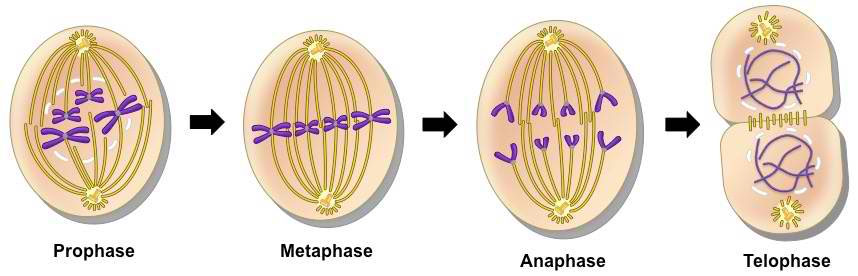
Another great bio poem that lends itself to helping us remembering the phases of mitosis is this one: I Passed My Anatomy Test. The letters (I, P, M, A, and T), stand for the following phases:
If your professor requires you to learn about cytokinesis, as well (this phase begins during anaphase or telophase), you can add the word “calmly” onto your bio poem so that it reads: I Passed My Anatomy Test Calmly.
Other possible devices for the phases of mitosis include the following:
Which device should you select? Choose the one that makes you laugh, smile, or that sticks in your head readily. The easier it is for you to remember, the better!
4
5 out of 5 stars
There are four stages of embryonic development:
The first letters of each of these stages correspond to the following mnemonic: Zikes! Martin is a Big Giant Nerd! (Note that “is” and “a” aren’t counted!)
5
5 out of 5 stars
A common question that likes to pop up on biology tests is about the taxonomy of humans, and these clever devices help us remember the right order.
First, here’s the taxonomy: Animalia, Chordata, Mammalia, Primate, Hominidae, Homo sapien.
Now, here’s the mnemonic: All Cool Men Prefer Having Heavy Sideburns.
6
5 out of 5 stars
If you’re confident the kingdoms of life will show up on your biology exam soon, here’s a great bio poem to help you remember the five kingdoms: Biology People Find Plants Attractive.
It will help you remember these five kingdoms:
7
5 out of 5 stars
Another hilarious mnemonic device–Zombies Are Brown and Dirty–is one of several that can help you recall the major fungal classes!
The classes are:
In addition to Zombies Are Brown and Dirty, you can use:

Memory is a fascinating process and understanding how it works can help you better study for your next exam–with or without a bio poem!
The first step in remembering is called encoding. Encoding is the process through which something external–an interaction with another person, a biology concept, or the route to a new place, for example–is converted into a construct. A construct is stored inside the brain and if it’s laid down correctly, can be played later, like a movie.
Encoding begins when we pay attention to something, and our interest in the subject matters hugely, as does emotion. This is why, for example, it’s so easy to remember the lyrics from a favorite song. Music can evoke emotion, and because we like the genre, we’re paying close attention.
However, you probably have trouble remembering the name on the nametag of the person who checked out your groceries this morning–because you weren’t very interested and because no emotions were called for.
This is why poetry is so helpful. By translating obtuse concepts into funny, interesting rhymes (even if you don’t think the rhyme is interesting; the new combination of words that rhyme is read as unusual and worth paying attention to by your brain) help you recall complex or boring material at a later time.
Using bio poems, however, isn’t the only way to remember complicated information. There is a whole host of available memory devices that can improve your ability to retain and recall reams of data. Here are just a few:
“Loci” means “places” in Latin and the method of loci is often called the memory journey or the memory palace in today’s world. This memory device has been around since the time of the ancient Romans and Greeks (Cicero, for example, wrote about it in his De Oratore). It’s used today by champion memorizers and sometimes even shows up in pop culture (in the hit television show Sherlock, for example).
To use the method of loci, visualize the physical layout of a place that’s familiar to you–your bedroom, for example. Then, assign a concept or term to the different objects in your bedroom. Here is an example of how you might assign parts of a cell:
You can assign more than just the name to each place in your bedroom; you can also assign the function of each part of the cell.
This way, when you get to a test question that asks you to name the parts of a cell and their functions, you can mentally “walk” through your room, and each object in your room will help trigger your recall so you can answer the test question.
Chunking is a method of memory recall best explained by two popular examples: telephone numbers and social security numbers.
Telephone numbers have as many as eleven numbers, and social security numbers have nine; a string of eleven numbers or nine numbers would be difficult to memorize, but by organizing the strings into smaller chunks of numbers, they’re accessible to even small children!
This is a great device to use when you’re dealing with long strings of information because you’ll be able to focus on smaller groups instead of larger pieces of data, which have the added issue of being overwhelming!
Thanks to the seven bio poems and two memory devices we shared above, you’re all set for your best exam yet. Good luck!
Meta: Whether you’re relatively new to significant figures or are just looking for a refresher, you’ve come to the right place. Read on to learn more!
Significant figures are a vital concept when you’re working in any field that requires precision; chemistry, for example. And while it feels like a complex subject, it’s fairly simple and straightforward. In this article, we’re answering your questions about significant figures and prepping you for significant figures worksheets with lots of examples.
We can all agree that there’s nothing worse than complicated mathematics concepts that don’t seem to have anything to do with real life. Fortunately, that’s not the case with significant figures! The primary purpose for this somewhat abstract concept is precision.
The numbers we use in everyday life, as it turns, are not that precise. When you’re working in specialized fields, however, the precision of the data is everything. Significant figures help you communicate how precisely you’ve measured and help to ensure mistakes are made with the data.

Here’s an example: let’s say you’re building a tower. As you might imagine, precision matters hugely. You don’t want to get to the top of the tower only to realize your tower is taller–or shorter!–than you thought. Let’s say, then, that the steel manufacturer has measured its vertical beams to the nearest centimeter and is sending you three beams that are each 20.5 meters tall.
This measurement is precise to the centimeter, but the number doesn’t tell you anything about millimeters. This is a problem because the glass you’re cutting to cover the building in is measured to the nearest millimeter; in fact, the glass company is sending the glass to you in 15.75-meter sheets.
You know that your steel beams will stand end to end and that your finished tower will be (20.5*3) meters tall, or 61.5 meters tall. Three glass sheets will be 47.25 meters tall; too short. Four glass sheets will be 63 meters tall; too tall. You’ll need to lay three sheets of glass and cut the fourth to size. Now you need to figure out how much you should cut down that fourth sheet of glass.
Here’s the problem: your steel is measured to the centimeter, but the glass cutter cuts to the millimeter. Each steel beam is 20.5 meters, which means it’s twenty meters and five centimeters; but how many millimeters is it?
We don’t know. It could be three millimeters (20.53 meters), or it could be seven millimeters (20.57 meters). Let’s say it’s the latter, and your three steel beams each have an extra seven millimeters that you don’t know about because they’ve only been measured to the nearest centimeter.
You think you’ve only got 61.5 meters of a tower (because 20.5*3 = 61.5) but you have 61.71 meters (because 20.57*3 = 61.71). That’s a difference of .21 meters, or a whopping two centimeters and one millimeter! If you cut your glass to 61.5 meters, you’ll get to the top of the tower to install it–only to realize you’re missing two centimeters and a millimeter of glass.
Oops!
This is an oversimplified example, but it helps to illustrate how important precision is–and now you know how significant figures work, even if you don’t know the concept by that name yet. That’s for the next section!
The first thing you should remember is that significance doesn’t indicate whether a number is computed or not; it simply indicates the precision of measurement. We’ll explain; let’s start with the basic ground rules about significant figures, and then we’ll practice with some examples you might see on a significant figures worksheet:
Before we get into the mechanics of multiplying, dividing, adding, and subtracting with significant figures, you’ll first need to know how to round up significant figures. For example, if you have a number (let’s say 54.896) that has five significant figures, and you need to round it up to three significant figures, how do you do that?
Here’s how:
Here’s another example using 0.01234500:
If you want to round it to three significant figures, the answer would be 0.0123 (leading zeros are not significant; 4 is less than five, so 4 and all subsequent numbers are removed).
Special note: rounding significant figures is different than rounding decimals. For example, if you wanted to round our example number to three decimal places, the answer would be .012, which is a different number altogether from a precision standpoint.
When you begin working seriously with multiplying and dividing, you’ll notice how quickly things can move from precise to imprecise. For example, let’s go back to our tower example and say we want to measure the area of our glass sheets. They are 15.75 meters tall and 2.5 meters wide.
A simple calculation (15.75*2.5=39.375) tells us the area is 39.375, but if you’re thinking, “wait! That measurement is more precise than what we measured!” you’d be right. To keep our quotients and products as precise as our initial measurements, we need to round up (or down).
The general rule is that the significant figures in the answer cannot be more than the smallest amount of significant figures used in the equation. In our glass sheets example, the two numbers we multiplied are 15.75 (which has four significant figures) and 2.5 (which has two significant figures). The smallest number of significant figures in either of these factors is two, so our answer can’t have more than two significant figures.
Our answer (39.375) has five significant figures, with 9 being the second significant figure. The number to the right of 9 is 3, which is less than 5, so we simply discard 3 and everything to its right. Our answer, then, is 40. (9 rolls to the 0 and the 3 becomes a 4; also note the use of the decimal!).
Adding and subtracting numbers with different amounts of significant digits is very similar to multiplying and dividing, except that the rounding up (or down) happens before the calculation.
Back to our tower example, let’s say you had one steel beam that was 20.5 meters and one that was 20.45 meters, you are dealing with two different levels of precision. The first beam has three significant figures and is less precise than the second beam, which has four significant figures.
If you add them together as is, it’s just messy. So, you need to round up the more precise number so that it matches the least precise number. That is, you would round up 20.45 to 20.5 and add both numbers (20.5 + 20.5 = 41.0; note that the answer is also precise to three significant figures).
Hopefully, significant figures are no longer mystifying, and you’re ready to tackle your significant figures worksheet; good luck!