IMMUNODEFICIENCY NOTES

Immunodeficiency is the failure of the immune system to protect against disease or malignancy. Primary Immunodeficiency is caused by genetic or developmental defects in the immune system. These defects are present at birth but may show up later on in life. Secondary or acquired immunodeficiency is the loss of immune function as a result of exposure to disease agents, environmental factors, immunosuppression, or aging.

SECONDARY (ACQUIRED) IMMUNODEFICIENCIES

Immunodeficiencies associated with infections

Bacterial, viral, protozoan, helminthic and fungal infections may lead to B cell, T cell, PMN and macrophage deficiencies. Most prominent among these is acquired immunodeficiency syndrome (AIDS). Secondary immunodeficiencies are also seen in malignancies.

Immunologic abnormalities in the AIDS

All acquired immunodeficiencies have been outdone by AIDS that is caused by Human Immunodeficiency Virus (HIV)-1. This virus was first discovered in 1981 and the patients exhibited fungal infections with opportunistic organisms such as Pneumocystis carinii and in other cases, with a skin tumor known as Kaposi’s sarcoma. There are two major types of HIV: HIV-1 and 2, the former being the strain frequently found in North America. HIV is spread through sexual intercourse, infected blood and body fluids as well as from mother to
offspring. HIV, which was discovered in 1983, is a retrovirus with RNA that is reverse transcribed to DNA by reverse transciptase (RT) following entry into the cell. The DNA is integrated into the cell genome as a provirus that is replicated along with the cell. HIV-1 does not replicate in most other animals but infects chimpanzees although it does not induce AIDS in them. Severe combined immunodeficient mice (SCID) reconstituted with human lymphocytes can be infected with HIV-1. The HIV-1 virion consists of a viral envelope made
up of the outer lipid bilayer of the host cell in which are embedded glycoproteins composed of the transmembrane gp41 along with the associated gp120. The gp120 binds the CD4 expressed on host cells. Within the viral envelope is the viral core or nucleocapsid consisting of a layer of matrix protein composed of p17 and an inner capsid made up of p24. The viral genome consists of two single stranded RNA molecules associated with two RT molecules as
well as other enzymes including a protease and an integrase.

Replication cycle and targets of therapy

The virus attaches to the CD4 molecule on Th cells, monocytes and dendritic cells through the gp120 of HIV. For HIV infection, a co-receptor is required. The co-receptor is a chemokine receptor such as CXCR4 or CCR5. CCR5, expressed predominantly on macrophages, and CXCR4 on CD4+ T cells serve as coreceptors for HIV infection. After the fusion of HIV envelope and the host membrane, the nucleocapsid enters the cell. The RT synthesizes viral DNA which is transported to the nucleus where it integrates with the cell
DNA in the form of a provirus. The provirus can remain latent till the cell is activated when the provirus also undergoes transcription. Virions, consisting of the transcribed viral RNA and proteins, are produced. These bud out of the host cell membrane from where they acquire the envelope. Thus, therapeutic agents have been developed that target viral entry and fusion, as well as serve as RT, protease and integrates inhibitors. Highly active anti-retroviral therapy
is a cocktail of 3 or more such agents.

Immunological Changes

The virus replicates rapidly and within about two weeks the patient may develop fever. The viral load in the blood increases significantly and peaks in two months, after which there is a sudden decline because of the latent virus found in germinal centers of the lymph nodes. CTL develop very early whereas antibodies can be detected between 3 – 8 weeks. The CTL killing of
of Th cells around 4 – 8 weeks leads to a decrease in CD4+ T cells. When the CD4+ T cell count decreases below 200 per cubic mm, full blown AIDS develops.

Immunotherapy

There are several barriers to development of an effective HIV vaccine.

 Attenuated vaccine may induce the disease
 CD4+ T cells may be destroyed by the vaccine
 Antigenic variation of HIV
 Low immunogenicity of the virus by downregulation of MHC molecules
 Lack of animal models
 Lack of in vitro tests

The following reagents have been considered in developing vaccines:

 Immunization with deletion mutants to reduce pathogenicity
 Vaccination with recombinant proteins
 Gene encoding proteins introduced into virus vectors may be used for
vaccination
 Chemokines that compete for the co-receptors
 IL-2 to boost the Th cells.

Immunodeficiencies associated with aging

These include a progressive decrease in thymic cortex, hypo-cellularity of and reduction in the size of thymus, a decrease in suppressor cell function and hence an increase in auto-reactivity, a decrease in CD4 cells functions. By contrast B cells functions may be somewhat elevated.

Immunodeficiencies associated with malignancies and other diseases

B cell deficiencies have been noted in multiple myeloma, Waldenstrom’s macroglobulinemia, chronic lymphocytic leukemia and well differentiated lymphomas. Hodgkin’s disease and advanced solid tumors are associated with impaired T-cell functions. Most chemotherapeutic agents used for treatment of malignancies are also immunosuppressive.

Other conditions in which secondary immunodeficiencies occur are sickle cell anemia, diabetes mellitus, protein calorie malnutrition, burns, alcoholic cirrhosis, rheumatoid arthritis, renal malfunction, etc.

PRIMARY IMMUNODEFICIENCIES

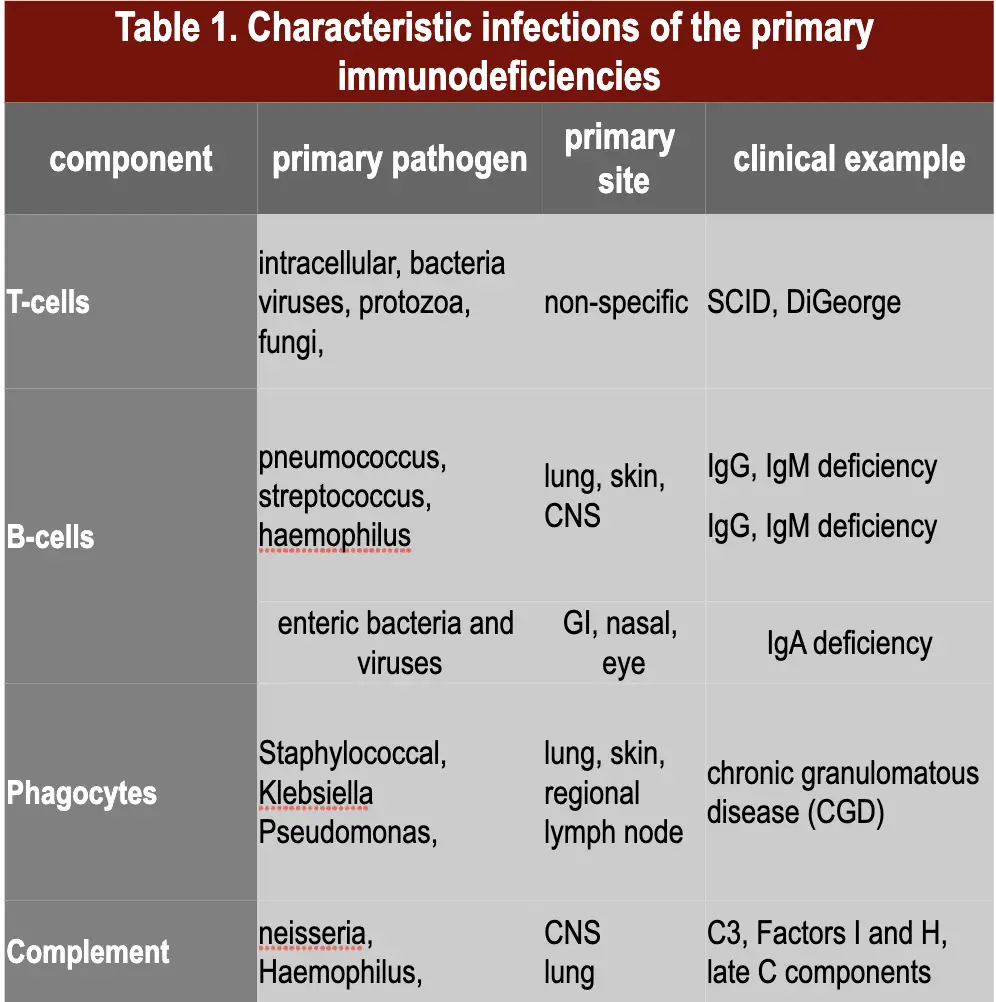
Primary immunodeficiencies are inherited defects of the immune system (figure 1). These defects may be in the specific or non-specific immune mechanisms. They are classified on the basis of the site of lesion in the developmental or differentiation pathway of the immune system. Individuals with immunodeficiencies are susceptible to a variety of infections and the
type of infection depends on the nature of immunodeficiency (Table 1).

SPECIFIC IMMUNE SYSTEM

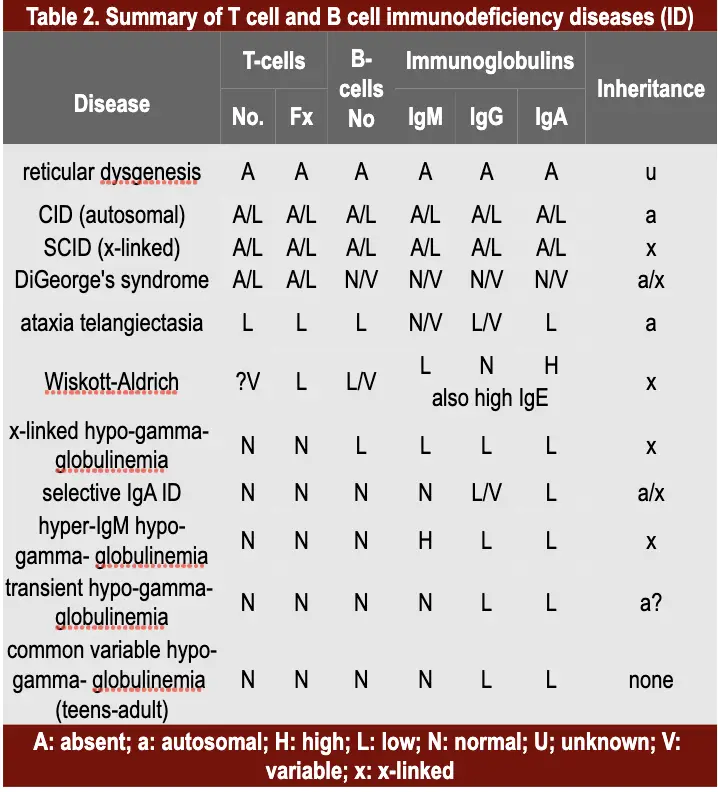
There are a variety of immunodeficiencies which result from defects in stem cell differentiation and may involve T-cells, B-cells, and/or immunoglobulins of different classes and subclasses (Table 2).

A defect in the early hematopoiesis which involves stem cells results in reticular dysgenesis that leads to general immune defects and subsequent susceptibility to infections. This condition is often fatal but very rare.

Lymphoid lineage immunodeficiency

If the lymphoid progenitor cells are defective, then both the T and B cell lineages are affected and result in the severe combined immunodeficiency (SCID). Infants suffer from recurrent infections especially by opportunistic micro-organisms (bacterial, viral, mycotic and protozoan infections).

In about 50% of SCID patients, the immunodeficiency is x-linked whereas in the other half the deficiency is autosomal. Both are characterized by an absence of T cell and B cell immunity and absence (or very low numbers) of circulating T and B lymphocytes. Thymic shadows are absent on X-rays.

The x-linked severe SCID is due to a defect in the gamma-chain of IL-2 also shared by IL-4,-7, -11 and 15, all of which are involved in lymphocyte proliferation and/or differentiation. The autosomal SCIDs arise primarily from defects in adenosine deaminase (ADA) or purine nucleoside phosphorylase (PNP) genes which results is accumulation of dATP or dGTP, respectively, and cause toxicity to lymphoid stem cells. Other genetic defects leading to
SCID include those for RAG1, RAG2 and IL-7-alpha. If suspected of SCID, the patient must not receive live vaccine, as it will result in progressing disease.

Diagnosis is based on enumeration of T and B cells and immunoglobulin measurement. Severe combined immunodeficiency can be treated with a bone marrow transplant (see MHC and transplantation). Recently, autosomal SCID patients with ADA deficiency have been treated with a retroviral vector transfected with the gene with some success.

SCID includes several disorders


Patients having both T and B cell deficiency lack recombinase activating genes (RAG1 and 2) that are responsible for the T cell receptor and Ig gene rearrangements. These patients are athymic and are diagnosed by examining the T cell receptor (TCR) gene rearrangement. Defects in B cells are not observed in early infant life because of passive antibodies obtained from the mother. NK cells are normal.

In some SCID patients, T cells may be present but functionally defective because of deficiency in signaling mediated by the CD3 chain that is associated with the TCR.

Interleukin-2 receptor common gamma chain (IL-2Rγc) may be lacking in patients there by preventing signaling by IL-2, 4, 7, 9 and 15. These patients are T and NK cell deficient.

Adenosine deaminase (ADA) is responsible for converting adenosine to inosine. ADA deficiency leads to accumulation of adenosine which interferes with DNA synthesis. The patients have defects in T, B and NK cells.
Disorders of T cells

DiGeorge’s Syndrome (Deletion 22 Syndrome)

This the most clearly defined T-cell immunodeficiency and is also known as congenital thymic aplasia/hypoplasia, or immunodeficiency with hypoparathyroidism. The syndrome is associated with hypoparathyroidism, congenital heart disease, low set notched ears and fish shaped mouth. These defects results from abnormal development of the fetus during the 6th to 10th week of gestation when parathyroid, thymus, lips, ears and aortic arch are being formed. No genetic predisposition is clear and not all DiGeorge syndrome babies have thymic aplasia. A thymic graft taken from an early fetus (13 – 14 weeks of gestation) can be used for treatment. Older grafts may result in GVH reaction. In severely immunodeficient DiGeorge patients, live vaccines may cause progressive infections.

DiGeorge syndrome is autosomal dominant (figure 2) and is caused by a deletion in chromosome 22 (figure 3). The deletions are of variable size but size does not correlate with severity of disease. In about 6% of cases, the chromosome 22 micro-deletion is inherited but most cases result from de novo deletion which may be caused by environmental factors.

T cell deficiencies with variable degrees of B cell deficiency

Ataxia-telangiectasia

Ataxia-telangiectasia is a deficiency of T cells associated with a lack of coordination of movement (ataxis) and dilation of small blood vessels of the facial area (telangiectasis). T- cells and their functions are reduced to various degrees. B cell numbers and IgM concentrations are normal to low. IgG is often reduced and IgA is considerably reduced (in 70% of the cases). There is a high incidence of malignancy, particularly leukemias, in these patients. The defects arise from a breakage in chromosome 14 at the site of TCR and Ig heavy
chain genes.

Wiskott-Aldrich syndrome

This syndrome is associated with normal T cell numbers with reduced functions, which get progressively worse. IgM concentrations are reduced but IgG levels are normal. Both IgA and IgE levels are elevated. Boys with this syndrome develop severe eczema, petechia (due to platelet defect and thrombocytopenia). They respond poorly to polysaccharide antigens and
are prone to pyogenic infection. Wiskott-Aldrich syndrome is an X-linked disorder (figure 4) due to defect in a cytoskeletal glycoprotein, CD43.

MHC deficiency (Bare leukocyte syndrome)

A number of cases of immunodeficiency have been described in which there is a defect in the MHC class II transactivator (CIITA) protein gene, which results in a lack of class-II MHC molecule on their APC. Since the positive selection of CD4 cells in the thymus depends on the presence of these MHC molecules, these patients have fewer CD4 cells and are infection prone. There are also individuals who have a defect in their transport associated protein (TAP) gene and hence do not express the class-I MHC molecules and consequently are deficient in CD8+ T cells.

Disorders of B lymphocytes

There are a number of diseases in which T cell numbers and functions are normal: B cell numbers may be low or normal but immunoglobulin levels are low. These are briefly summarized below.

X-linked infantile hypogammaglobulinemia

X-linked hypogammaglobulinemia, also referred to as Bruton’s hypoglobulinemia or agammaglobulinemia, is the most severe hypogammaglobulinemia in which B cell numbers and all immunoglobulin levels are very low. The patients have failure of B-cell maturation associated with a defective B cell tyrosine kinase (btk) gene. Diagnosis is based on
enumeration of B cells and immunoglobulin measurement.

Transient hypogammaglobulinemia

Children, at birth, have IgG levels comparable to that of the mother. Because the half life of IgG is about 30 days, its level gradually declines, but by three months of age normal infants begin to synthesize their own IgG. In some infants, however, IgG synthesis may not begin until they are 2 to 3 years old. This delay has been attributed to poor T cell help. This results in a transient deficiency of IgG which can be treated with gamma-globulin.

Common variable hypogammaglobulinemia (Late onset hypogammaglobulinemia)

These individuals have acquired deficiencies of IgG and IgA in the 2nd or 3rd decade of their life and are susceptible to a variety of pyogenic bacteria and intestinal protozoa. They should be treated with specially prepared gamma-globulin for intravenous use.

IgA deficiency

IgA deficiency is the commonest of all immunodeficiencies (1/700 of all Caucasians). About 20% of individuals with IgA deficiency also have low IgG. IgA-deficient patients are very susceptible to gastrointestinal, eye and nasopharyngeal infections. Patients with IgA deficiency have a high incidence of autoimmune diseases (particularly immune complex type) and lymphoid malignancies. Anti-IgA antibodies (IgG) are detected in 30 to 40 percent
of patients who should not be treated with γ-globulins. Laboratory diagnosis is based on IgA measurement.

Selective IgG deficiency

Deficiencies of different IgG subclasses have been found. These patients are susceptible to pyogenic infections.

Hyper-IgM immunodeficiency

Individuals with this type of immunodeficiency have low IgA and IgG concentrations with abnormally high levels of IgM. These patients cannot make a switch from IgM to other classes which is attributed to a defect in CD40L on their CD4 cells. They are very susceptible to pyogenic infection and should be treated with intravenous gamma-globulins.

NON-SPECIFIC IMMUNE SYSTEM

Primary immunodeficiencies of the non-specific immune system include defects in phagocytic and NK cells and the complement system.

Defects of the phagocytic system

Defects of phagocytic cells (numbers and/or functions) can lead to increased susceptibility to a variety of infections.

Cyclicneutropenia

This is marked by low numbers of circulating neutrophil approximately every three weeks. The neutropenia lasts about a week during which the patients are susceptible to infection. The defect appears to be due to poor regulation of neutrophil production.

Chronic granulomatous disease(CGD)

CGD is characterized by marked lymphadenopathy, hepato- splenomegaly and chronic draining lymph nodes. Leukocytes have poor intracellular killing (figure 5) and low respiratory burst. In majority of these patients, the deficiency is due to a defect in NADPH oxidase (cytochrome b558 : gp91phox, or rarely gp22phox) or other cofactor proteins (gp47phox, gp67phox) that participate in phagocytic respiratory burst. These patients can be diagnosed on the basis or poor Nitroblue tetrazolium (NBT) reduction which is a measure of respiratory burst. Interferon-gamma therapy has been successful.

Leukocyte Adhesion Deficiency

In this disease, leukocytes lack the complement receptor CR3 due to a defect in
CD11 or CD18 peptides and consequently they cannot respond to C3b opsonin.
Alternatively there may a defect in integrin molecules, LFA-1 or mac-1 arising
from defective CD11a or CD11b peptides, respectively. These molecules are involved in diapedesis and hence defective neutrophils cannot respond effectively to chemotactic signals.

Chediak-Higashi syndrome

Chediak-Higashi syndrome is marked by reduced (slower rate) intracellular killing and chemotactic movement accompanied by inability of phagosome and lysosome fusion and proteinase deficiency. Giant lysosomes (intracellular granules) are often seen (figure 6). The respiratory burst is normal. Accompanying NK cell defects and platelet and neurological disorders are noted.

DISORDERS OF COMPLEMENT SYSTEM

Complement abnormalities also lead to increased susceptibility to infections. There are genetic deficiencies of various components of complement system, which lead to increased infections. The most serious among these is the C3 deficiency which may arise from low C3 synthesis or deficiency in factor I or factor H.
Is It True That The Brain Works At Only 10%?

Brain Capacity

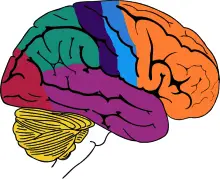
Nowadays, it’s common to hear that the human brain only functions at about 10% of its potential. Even some well-known motion pictures are founded on this assertion. Let’s investigate whether this is fiction and, if so, where it originated. 

Can every one of us suddenly become ten times smarter? A very popular question among students and people who want to find a way to do difficult tasks in an easier way. But if in your student years you can hire people to write papers and do other tasks, then in adult life you need to find all the solutions yourself.

Beginning in the early 20th century claims that the human brain only functions at 10% of its potential initially started to appear in a variety of commercial, non-scientific books on self-improvement, psychics, and similar topics. These materials suggested that over 90% of the brain’s real potential was untapped and concealed. The same sources also claimed to have techniques that would reportedly make achieving superpowers simple, quick, and effortless.

Right now, it is very clear that it was a simple game based on human weakness and the desire for quick success. Naturally, none of the approaches for disclosing more powers ever had a result (otherwise this method would be used today widely and everywhere). Due to the utter irregularity of all these works, their concepts were rapidly forgotten. However, there has always been a demand for such literature, and it still exists today.

The writers of these publications and journalists nevertheless made an effort to make their unsupported claims appear scientific and used William James, a well-known psychologist at the time, to support their claims. He only mentioned that it might be the case that we weren’t operating to our greatest potential. He didn’t do any calculations when doing this. This insufficient utilization of the brain is not caused by the fact that some of its potentials is unavailable or buried, but rather by human indolence and a lack of drive. The scientist definitely meant this.

After Dale Carnegie’s book “How to win friends and influence people” was published, the notion that the human brain only functions at 10% of its capacity became especially well-known. The foreword to this book was written by journalist Lowell Thomas, who not only completely mistranslated and misinterpreted James’s words, but also made up the precise percentage.

But where did this delusion come from? Let’s figure it out:

First, it was only at the turn of the 20th century that researchers learned that the human brain is made up of glial cells, which at first appearance appear to be completely worthless. It is now well recognized that these cells serve as intricate routers and facilitate communication among the brain’s neurons, proving that they are in fact not at all useless. In addition, it has been found that a person’s intelligence increases with the number of these cells in their brain.

Secondly, it was later discovered by scientists that different parts of the brain are active at different times, i.e., the entire brain does not function simultaneously. By the way, epilepsy is a condition in which the entire brain, or all of its components, works simultaneously. Epilepsy is known to occur, but it is unlikely to result in superpowers.

However, as soon as journalists learned about these scientific breakthroughs, they instantly manipulated the information to make it appear sensational. The assumption that the brain only uses a small portion of its potential has not yet been supported by a single true scientific investigation.

In actuality, it is not at all a scientific question to ask, “How much of my brain’s capability is working?”. Simple logic, not biology, has the answer to this problem. For scientists to even attempt to find the solution, it is too straightforward and obvious. And here’s the response:

When a person is under the most strain mentally, the brain of that person uses 100% of its current capacity.

However, if a person is sitting still, their brain is obviously not functioning to its maximum potential (although, as we know, the work of the brain never completely stops, it always controls the work of all organs, monitors many indicators and factors and is in constant readiness).

This is not to say that the brain cannot be developed; on the contrary, it can and should be done. It is even possible to develop the brain vigorously and repeatedly, but you will need to put in a lot of effort to do so. In this scenario, your brain will be able to fully express all of its powers at any one time.

Let’s add a couple more thoughts on this topic. The brain actually consumes up to 20% of the energy that is available to people, although weighing on average only 2% of the body. This percentage increases further if there is an energy shortage since the brain then uses all of the other organs’ available energy. Therefore, if the brain were not operating at its full potential, nature would naturally eliminate the allegedly “excess” 90% of it during the course of evolution, therefore reducing the need for such precious energy.

The Idea Of Neuroplasticity.

The truth is that when a part of the human brain is injured, the other parts of the brain attempt to take up those activities. The opposite is also true; if a part of the brain is suddenly left with no work to do (for instance, if a person loses their sight and the part of the brain that processed these signals is no longer busy), then this part of the brain steps in to perform the duties and helps the rest of the brain.

The brain is able and prepared to perform at 100% because it always seeks to fill itself up to the maximum and avoid remaining inactive.

However, 65% of people worldwide still hold the false belief that the human brain is incomplete. Yet why? It is extremely easy. The notion that every person has enormous potential that can be unlocked by “flipping some secret switch” is loved by the majority of people.

And a number of charlatans are working to spread this illusion by promising individuals a quick and simple disclosure of amazing superpowers in order to continue making money off of selling books and other products or misleading them in other ways. People genuinely want to think that if you read the recipe, you would become great and wealthy without having to work hard.

And we’ll say it again: training the brain is both doable and important. By doing so, you may improve your cognitive abilities, which you will be able to employ to the fullest extent possible at any given time. But that’s the only way to achieve it, and it takes a lot of time, effort, and energy.

A Step-By-Step Guide on Writing a Biology Research Paper

For many students, writing a biology research paper can seem like a daunting task. They want to come up with the best possible report, but they don’t realize that planning the entire writing process can improve the quality of their work and save them time while writing. In this article, you’ll learn how to find a good topic, outline your paper, use statistical tests, and avoid using hedge words.

Finding a good topic

The first step in writing a well-constructed biology research paper is choosing a topic. There are a variety of topics to choose from within the biological field. Choose one that interests you and captures your attention. A compelling topic motivates you to work hard and produce a high-quality paper.

While choosing a topic, keep in mind that biology research is time-consuming and requires extensive research. For this reason, choosing a topic that piques the interest of the reader is crucial. In addition to this, you should choose a topic that is appropriate for the type of biology paper you need to write. After all, you do not want to bore the reader with an inane paper.

A good biology research paper topic should be well-supported by solid scientific evidence. Select a topic only after thorough research, and be sure to include steps and references from reliable sources. A biological research paper topic can be an interesting journey into the world of nature. You could choose to research the effects of stress on the human body or investigate the biological mechanisms of the human reproductive system.

Outlining your paper

The first step in drafting a biological research paper is to create an outline. This is meant to be a roadmap that helps you understand and visualize the subject. An outline can help you avoid common writing mistakes and shape your paper into a serious piece of work. The next step is to gather information about the subject that will support your main idea.

Once you have a topic, you can start writing your outline. Outlines should include at least one idea, a brief introduction, and a conclusion. The introduction, ideas, and conclusion should be numbered in the order you plan to present your information. The main ideas are generally a collection of facts and figures. For example, in a literature review, these points might be chapters from a book, a series of dates from history, or the methods and results of a scientific paper.

When writing a biological research paper, you should use scholarly sources. While there is a lot of misinformation on the internet, it’s best to stick to academic essay writing service to get the most accurate information. Most libraries allow you to select a peer-review filter that will restrict your search results to academic journals. It’s also helpful to be familiar with the differences between scholarly and popular sources.

Using statistical tests

Using statistical tests when writing a biological paper requires that you make certain assumptions about the results you are describing. The most common statistical tests are parametric tests that are based on assumptions about conditions or parameters. About 22% of the papers in our review reported violations of these assumptions, and such violations can lead to inappropriate or invalid conclusions.

Statistical tests are important in biological research because they allow researchers to determine if their data is statistically significant or not. The power of these tests depends on the size of the dataset. Larger datasets produce more significant results. The power of these tests also depends on the assumption of independence between measurements. This is important because the results can be different if there are duplications or different levels of replications.

Hypothesis tests are useful in evaluating experimental data. They identify differences and patterns in data. They are useful tools for structuring biological research.

Avoiding hedge words

Hedge words are phrases or words used to express uncertainty in a scientific paper. They can help writers avoid making inaccurate claims while still being respectful of the reader’s opinion. However, writers must be careful to avoid using too many hedges. 

Listed below are a few guidelines to help you avoid these words:

  • Hedge words shift the burden of responsibility from the writer to the reader. 
  • Hedge words can be a sign of uncertainty or overstatement. They can also be used to limit the scope of an assertion. They also convey an opinion or hypothesis. When choosing a hedging strategy, be careful not to use words such as “no data” or “unreliable.” These words can convey a degree of uncertainty and imply that the findings cannot be confirmed.

The use of hedge words is common in academic writing. However, they hurt your audience. It is a linguistic strategy that writers use as a way to reassure readers. The goal is to guide readers and make them feel comfortable with the idea that the author does not know all the answers.

Choosing a format

Biological research papers have different formats, and you should choose one that suits the nature of your paper. It should be based on credible and peer-reviewed sources. The best sources to use for biology papers are books, specialized journals, and databases. Avoid personal blogs, social networks, and internet discussions, as these are not suitable for a research paper.

Biology research papers focus on a specific issue and present different arguments in support of a thesis. Traditionally, they are based on peer-reviewed sources, but you can also conduct your independent research and present unique findings. Biology is a complex field of study. The subject matter varies, from the basic structure of living things to the functions of different organs. It also explores the process of evolution and the life span of different species.

Formatting your bibliography

When writing a biological research paper, the format of your bibliography is crucial. It should follow a standardized citation style such as the “Author, Date” scientific style. The format should be arranged alphabetically by author, and you should use numbered references to indicate key sources.

Reference lists must be comprehensive and contain enough information to enable readers to find the sources themselves. Although the format is not as important as completeness, it can help readers quickly identify the authors and sources. Bibliographies are usually reverse-indented to make them easier to find.

In-text citations should include the author’s last name, preferred name, and the page number. Usually, authors do not separate their surname and year of publication. In addition, you should also include the location, which is usually the publisher’s office.

If a work has more than four authors, you should list up to ten in the reference list. The first author’s surname should be used, followed by “et al.” Likewise, you should list more than ten authors in the reference list.

When writing a biological research paper, it is important to ensure that your bibliography is formatted properly. When you write the title, you should use boldface and uppercase letters. The title should also be focused, not too long or too short. It should take one or two lines and all text should be double-spaced. You should also type the author’s name after the title. Don’t forget to indicate the location of your research as well as the date you submitted the paper.

How to Learn Biology in a Fun Way

Biology is a vast area of study and a good way to get students interested through an introduction to the subject. A good introduction to the topic should include the basics and include activities that encourage exploration. For example, let students try magnifying cells, bacteria, and other things using microscopes. Introduce the student to the field of biology with easy activities and fun questions. Include topics such as botany, anatomy, physiology, and zoology.

Biology is a practical science and learning about biological systems through experiments in a lab will help students understand concepts and retain information. Students will remember a lesson that takes place in a lab setting much longer than in a textbook. They’ll be more interested in biology, and the material will stick with them more.

One of the best ways to remember what you’ve learned is to apply it to other people. This will help you to move information from your short-term memory to your long-term memory. Another great way to get biology concepts stuck in your brain is to teach them to other people. This method allows you to review what you’ve learned with your classmate.

Introducing Experiments into the Curriculum

Biology experiments are a great way to help students learn the fundamentals of biology. This type of course also allows students to apply their learning to other subjects. By incorporating experiments into the biology curriculum, students can learn more about different organisms and their behavior. Students who enjoy science and want to learn more about it should consider incorporating experiments into their courses.

Throughout the curriculum, students will learn about principles governing ecosystems, communities, and populations. If student have a college task to write about biology and don’t have enough time, they can request a help from coursework writer and get well written essay. They will also learn about the structure and function of nucleic acids and how these can affect our lives. They will also learn about the functions of the human genome and how genes are passed from generation to generation.

Undergraduate students studying biology should be exposed to more physical sciences and mathematics. Currently, undergraduate students are not taught these fundamentals. They need a strong background in these subjects to be able to understand contemporary biology. Most universities offer courses in all areas of the physical sciences, and these courses may be able to help students master the basic concepts they need to understand contemporary biology.

Use a Variety of Instructional Materials

Biology is an exciting subject to teach, and it can appeal to students of all ages. However, if you want your students to retain information, you must use innovative teaching methods. Dry lectures and reading textbooks will not spark much interest in students. The best way to engage students in this subject is to combine various materials. Incorporating hands-on learning opportunities is essential for biology students, and this approach will boost retention.

One of the helpful resource for biology educators is the iBiology Scientific Teaching Series. This collection of educational videos and tutorials is an excellent source for undergraduate biology instructors. These resources also emphasize evidence-based pedagogy and active learning. In addition to the iBiology Scientific Teaching Series, you can also utilize CourseSource, an open-access journal of peer-reviewed teaching resources. These resources are organized around course units in biology and aligned with the learning objectives set by professional societies.

Explain to Students what Biology is for

Biology isn’t the easiest subject to teach, but there are some creative ways to make it fun for students. For example, you can read a book about the life of a bacterium or explain the role of chromosomes. You can also discuss how organisms use energy and matter to survive. Afterward, you can discuss how DNA codes and chromosomes can affect the characteristics of offspring. In addition, you can talk about how genetic counseling and biotechnology can help humans.

One way to explain to students what biology is is to show them a diagram of DNA and how it works. DNA is a molecule made up of two strands that coil and twist to form a double helix. Each strand contains hundreds of thousands or millions of base pairs. In eukaryotic cells, DNA coils around proteins called histones to form a nucleosome.

Another great way to motivate students to engage with biology is to use stories. Stories are memorable and easy to understand, so students are more likely to remember them. Another effective way to make biology fun is to use 3D lab simulations like Labster, which follow a storyline.

One great way to explain to students what biology is for is to highlight its relevance to everyday life. In this way, students can relate biology to their everyday lives, which can influence their career choices. 

Discuss what You’ve already Learned

Whether you’re taking a biology course in college or just want to earn credits to get into medical school, you can learn how to earn biology in a fun way. Instead of boring lectures and tests, try to make the course more engaging by using a variety of creative teaching techniques. For example, consider using stories to introduce topics. Not only are they easy to remember, but they are also fun! One way to use stories in biology courses is through Labster simulations, which follow a storyline.

Explaining what you’ve learned to a classmate will help you recall concepts better, which will help you retain the information in your long-term memory. Also, remember that biology is full of specialized vocabulary. To learn this vocabulary, you can discuss it with a classmate and use it in sentences.

Conclusion

Getting the right feedback can help you improve your work. It’s important to get feedback from your peers and instructors. This way, you can learn from their strengths and weaknesses. Then, you can improve your conclusions. Use the “So what?” Game to help you refine your conclusion.

A good thesis conclusion should be memorable. It could include a call-to-action, a recommendation, or a note about future research. It should also refer back to the introduction, and use some keywords from the introduction. This will help your reader feel that they have learned something from your essay and are ready to take action.

The Market of Biology Teachers, Should I Study this Specialty?

If you’ve always wanted to become a science teacher, studying science in college is one of the most rewarding experiences. Science and Biology tutors play an important role in developing leaders in the fields of science and technology by fueling students’ curiosity and encouraging them to explore a wide range of interesting topics. Science teachers can get relevant certifications that will allow them to teach in elementary school, high school, and institutions of higher learning.

At higher learning levels, classes usually focus on specific subjects such as earth science, biology, physics, chemistry, animal science, and earth science. Teaching science effectively requires practical experiments and investigations to help students learn various scientific concepts. You can teach using field trips, multimedia materials, and other non-conventional teaching methods. A teacher must implement the best curricula and foster a learning environment that encourages learner participation.

Teaching Stages

Science education normally starts with an intro to basic concepts. Elementary tutors can help students grasp concepts on grading college papers quickly and easily by instilling an appreciation for teacher comments for students’ writing and student contract for grades and creating practical learning opportunities where students use their five senses to observe, analyze and discover. Middle school is an important time for nurturing learners’ interests. Therefore, science teachers need to nurture the interest of learners. Science teachers should read argumentative essays on minimum wage to get well compensated and create an engaging learning environment where learners are free to explore. Free essays examples and earth science are important classroom topics at this learning level since students are introduced to the lab setting during both individual and group experiences.

Tutors in higher learning institutions use instructional and investigational teaching methods to introduce complex scientific concepts in class including the usage of scientific labs. A science lab is an ideal place to investigate topics in biology, chemistry, and physics. Students need to understand lab safety rules and how to use equipment to grasp new concepts. Teachers should use lesson plans to help students understand complex systems, come up with new ideas, and solve problems with scientific methods. Here is a simple guide that will help you understand how to become a science teacher and what to expect in your career.

The job description of a science teacher

Science teachers are an important part of Science, Technology, Engineering, Math, and Computer Science. These disciplines are usually grouped in the education sector. Over the years, a lot of emphases has been placed on teaching these subjects because they play an important role in developing leaders in our modern world.

A science teacher guides to help a student explore and understand key concepts in science such as reading research essays examples, gathering evidence to support ideas and solving problems. Science teachers are responsible for coming up with lesson plans, presenting demonstrations, and giving assignments. They identify learners who are struggling to grasp various concepts and help them achieve their goals. They also need to communicate with the school administration and parents regularly about students’ progress.

Job requirements and tasks

Science teachers are required to prepare lesson plans based on school policies and grade levels. This includes preparing outlines, class assignments, homework, special projects, and tests. Tutors need to maintain student records on grades, class attendance, and conduct according to school and state policies. They also need to evaluate student performance regularly.

You need to have excellent verbal and written skills to communicate with students, school admin, and parents. You have to be detail-oriented, have good instructional skills, and solve problems effectively. You should also be actively involved in extracurricular activities such as athletics, football, and school clubs. Having a bachelor’s or master’s degree in science and a tutoring certificate is essential if you want to teach in public schools. To teach in higher learning institutions, you need to have a doctoral degree.

Becoming a science teacher

To become a science tutor in a public learning institution, you need to have a teaching license or certificate from your country or state together with an endorsement to teach this subject. Tutors in middle and high school usually major in the subjects they want to teach such as chemistry or biology. On the other hand, teachers at the elementary level teach a wide range of subjects. For private schools, you might not require a certification since the qualifications vary. To become a secondary school teacher in a public school, you need to:

* Have a degree in the subject you want to teach and complete all the required preparations
* Complete your teaching internship in the grade level you want to teach
* Take the required tests to get state approval
* Apply for a teaching license
* Apply for teaching jobs being advertised to science teachers

If you already have a college degree but lack other requirements, don’t fret. Getting certifications from your state is easy as long as you follow the rules.

Salary and outlook of the job

The Bureau of Labor Statistics shows that science teachers at the elementary level earn an average salary of $57,980 while middle and high school teachers earn $58,600 and $60,320 respectively.

A 3 to 4 percent job growth is expected for all the groups. Science teachers who have a master’s degree earn an average salary of $82,550. The job growth prospects are at 11 percent. There are a lot of career advancement opportunities for science teachers who focus on developing and improving their skills regularly.

Getting a teaching job

To land your dream job, you’ll need to write and submit a professional resume that lists your education, job history, teaching experience, and accomplishments. Having affiliations with professional organizations that focus on science education can increase your chances of landing the job.

Start your job search by visiting school websites and other places that are dedicated to posting teaching jobs exclusively. Ensure that you have all the credentials to avoid wasting time and energy.

Conclusion

Trained science teachers have a lot of amazing job opportunities in the market. To increase your chances of landing a job and getting promotions, you need to develop and improve your skills regularly and network frequently. Getting the facts right and using the right procedures will help you achieve your
career goals quickly.