AP Unit 4 Genetics Study Guide


                          Unit IV   Genetics Study Guide     

  • Be able to determine the probability of getting a number by rolling a pair of dice.
  • Be able to work monohybrid crosses for complete and incomplete dominance and show genotypes, phenotypes, and ratios.
  • Be able to work dihybrid crosses and determine genotypes, phenotypes, and ratios.
  • Be able to explain and give examples of codominance, epitasis, polygenic inheritance, sex-linked inheritance….
  • Be able to work a problem on colorblindness.
  • Be able to list and explain Mendel’s laws of heredity.
  • Be able to discuss Morgan, Sutton, and Sturtevant’s contributions to the understanding of chromosomal inheritance.
  • Be able to define linkage and explain how it interferes with independent assortment.
  • Be able to predict the probability of a genotype occurring for a cross involving 4 traits. (Rule of Multiplication)
  • Be able to name and describe a genetic defect caused by nondisjunction of sex chromosomes.
BACK


AP Sample Lab 12 Dissolved Oxygen


Dissolved Oxygen and Primary Aquatic Productivity
Laboratory 12


Introduction


Dissolved oxygen levels are an extremely important factor in determining the quality of an aquatic environment. Dissolved oxygen is necessary for the metabolic processes of almost every organism.

Terrestrial environments hold over 95% more oxygen than aquatic environments. Oxygen levels in aquatic environments are very vulnerable to even the slightest change. Oxygen must be constantly be replenished from the atmosphere and from photosynthesis. There are several factors that effect the dissolved oxygen levels in aquatic environments.

Temperature is inversely proportional to the amount of dissolved oxygen in water. As temperature rises, dissolved oxygen levels decrease.

Wind allows oxygen to be mixed into the water at the surface. Windless nights can cause lethal oxygen depletions in aquatic environments.

Turbulence also increases the mixture of oxygen and water at the surface. This turbulence is caused by obstacles, such as rocks, fallen logs, and water falls, and can cause extreme variations in oxygen levels throughout the course of a stream.

The Trophic State is the amount of nutrients in the water. There are two classifications: oligotrophic and eutrophic. Oligotrophic lakes are oxygen rich, but generally nutrient poor. They are clearer and deeper than eutrophic lakes and are younger. Oxygen levels are constant. Eutrophic lakes are more shallow and nutrient rich. The oxygen levels constantly fluctuate from high to low.

Primary production is the energy accumulated by plants since it is the first and basic form of energy storage. The flow of energy through a community begins with photosynthesis. All of the sun’s energy that is used is termed gross primary production. The energy remaining after respiration and stored as organic matter is the net primary production, or growth. The equation for photosynthesis is as follows:

12H2O + 6CO2 → C6H12O6 + 6O2 + 6H2O

There are two ways to measure primary production, the oxygen method and the carbon dioxide method. The oxygen method uses a dark and light bottle to compare the amount of oxygen produced in photosynthesis and used in respiration. Respiration rate is determined by subtracting the dark bottle from the initial bottle. The carbon dioxide method places a transparent plastic bag over one sample and a dark plastic bag over the other. Each bottle is set up so that air is drawn through the enclosure and passes over carbon dioxide-absorbent material. The amount of carbon under the dark bag is respiration, while the amount of carbon under the transparent bag is the amount of photosynthesis minus the amount of respiration.

There are three main gases dissolved in aquatic environments: nitrogen, oxygen, and carbon dioxide. Most gases obey Henry’s law, which says that at a constant temperature, the amount of gas absorbed by a given volume of liquid is proportional to the pressure in the atmosphere that the gas exerts.

c = K ×p

                                                             c = Concentration of the gas that is absorbed

K = Solubility factor

                     p = Partial pressure of the gas


Altitude may affect the p value of the equation. Higher altitudes decrease the solubility of gases in water. Temperature also has an affect, as temperature rises, solubility decreases. Salinity, the occurrence of various minerals in solution, also lowers the solubility of gases in water.

The method used to determine the amount of dissolved oxygen in the water is the Winkler titrametric method. It involves a series of chemical reactions which ends with a quantity of free iodine equal to the amount of oxygen in the sample. The iodine is then titrated with thiosulfate to find this quantity.


Hypothesis

The temperature and amount of light an aquatic environment receives greatly affects the dissolved oxygen levels, along with the amount of primary aquatic productivity.


Materials


Measurement of Dissolved Oxygen

This part of the lab required a sample bottle of water from a natural source, a BOD bottle, thermometer, mangonous sulfate, alkaline iodide, thiosulfate, a 2-mL pipette, sulfuric acid, a 20-mL sample cup, a white piece of paper, starch solution, and a nomograph.

Measurement of Primary Productivity

Part B required a sample bottle of water from a natural source, 7 BOD bottles, aluminum foil, 17 cloth screens, rubber bands, a light, thermometer, concavity slides, light microscope, mangonous sulfate, alkaline iodide, thiosulfate, a 2-mL pipette, sulfuric acid, a 20-mL sample cup, a white piece of paper, starch solution, and a nomograph.

Productivity Simulation

This section required pencil, paper, calculator, and graph paper.


Methods


Measurement of Dissolved Oxygen

The sample bottle was filled completely so that there were no air bubbles in the bottle. The sample bottle was left in the refrigerator until it reached 5° C. A BOD bottle was filled with the sample water until it contained no air bubbles.

Eight drops of mangonous sulfate were added to the bottle. Next, eight drops of alkaline iodide was added and the precipitate manganous hydroxide was formed. The bottle was inverted several times and then allowed to settle until the precipitate was below the shoulders of the bottle. While the solution was settling, a 2mL pipette was filled with thiosulfate. A scoop of sulfuric acid was added, and the bottle was inverted until all of the precipitate dissolved. The sample turned a clear yellow.

20mL of the sample were poured into the sample cup. The cup was placed on a white sheet of paper so that the color changes could be observed. 8 drops of starch solution were added to the sample, making it turn purple. The sample was then titrated with the thiosulfate. One drop of the titrant was added at a time until the color changed to a pale yellow color.

A nomograph was used to determine the percent saturation of dissolved oxygen in the sample.

Measurement of Primary Productivity

A second sample bottle was filled from a natural source making sure there were no air bubbles. Seven BOD bottles were filled completely with the sample with no air bubbles. The first bottle was labeled #1-Initial. The second bottle served as the dark bottle and was labeled #2-Dark. The other five bottles were labeled according to the light intensity: #3-100%, #4-65%, #5-25%, #6-10%, and #7-2%.

Bottle #2 was wrapped completely in aluminum foil so that it received no light. The other five bottles were wrapped in screens to produce the desired light intensity. Bottle #3 had no screens, bottle #4 had 1 screen, bottle #5 had 3 screens, bottle #6 had 5 screens, and bottle #7 had 8 screens. The screens were held in place with rubber bands. Bottles #2-7 were placed under a light source and left overnight.

Bottle #1 was fixed by following the Winkler method. Eight drops of mangonous sulfate were added to the bottle. Next, eight drops of alkaline iodide was added and the precipitate manganous hydroxide was formed. The bottle was inverted several times and then allowed to settle until the precipitate was below the shoulders of the bottle. A scoop of sulfuric acid was added, and the bottle was inverted until all of the precipitate dissolved. The sample turned a clear yellow. It was left at room temperature until the other samples were processed.

A wet mount was observed under a light source, so that the different organisms present could be identified.

The next day, bottles #2-7 were fixed by following the same method used on Bottle #1. The dissolved oxygen levels were determined in each of the seven bottles by titrating. 20mL of the sample were poured into the sample cup. The cup was placed on a white sheet of paper so that the color changes could be observed. 8 drops of starch solution were added to the sample, making it turn purple. The sample was then titrated with the thiosulfate. One drop of the titrant was added at a time until the color changed to a pale yellow color.

Productivity Simulation

The respiration data from Part B was converted to carbon productivity. The data was graphed with comparison to water depths.


Results


A. Measurement of Dissolved Oxygen


Table 1

Dissolved Oxygen Concentration


Temperature


Dissolved Oxygen (mg/l)


% Dissolved Oxygen


5° C

2.0 mg/l 16%
 

21.5° C

1.28 mg/l 19%


How does temperature affect the solubility of oxygen in water?


As temperature goes up the solubility of oxygen in water goes down. They are inversely proportional.


How does salinity affect the solubility of oxygen in water?


The occurrence of various minerals in solution lowers the solubility of oxygen in water.


Would you expect to find a higher dissolved oxygen content in a body of water in winter or summer?


Oxygen levels would be higher in the winter because the solubility of oxygen in water is higher at lower temperatures.


List and discuss three factors that could influence the dissolved oxygen concentration of a body of water.


Temperature-As temperature goes up solubility goes down.

Pressure- As pressure decreases solubility decreases. Pressure is directly affected by altitude

Salinity-The occurrence of various minerals in solution lowers the solubility of oxygen in water.


Do you think it would be wise to stock a pond with game fish if it had a dissolved oxygen content of 3ppm? Why or why not?


It would not be wise to stock a pond with an oxygen level of 3ppm with game fish because their optimal levels range from 8 to 15ppm. A concentration of dissolved oxygen less than 4ppm is stressful to most forms of aquatic life.

B. Measurement of Primary Productivity


Respiration Rate = 4.6 ml O2/l


Table 3

Gross and Net Productivity/ Respiration Rate


Percent Light


Dissolved Oxygen


Gross Productivity


Net Productivity


Gross Productivity (mg C/m3)


Initial

9.2 ml O2/l NA NA NA
 

Dark

4.6 ml O2/l NA NA NA
 

100%

6.4 ml O2/l 1.8 ml O2/l -2.8 ml O2/hr 0.965 mg C/m3
 

65%

3.8 ml O2/l -0.8 ml O2/l -5.4 ml O2/hr -0.429 mg C/m3
 

25%

4.5 ml O2/l -0.1 ml O2/l -4.7 ml O2/hr -0.054 mg C/m3
 

10%

3.7 ml O2/l -0.9 ml O2/l -5.5 ml O2/hr -0.482 mg C/m3
 

2%

4.0 ml O2/l -0.6 ml O2/l -5.2 ml O2/hr -0.322 mg C/m3


Were any of the samples light limited? Why?


Each sample was given a certain amount of light by the use of aluminum foil and screen. Bottle #2 received no light, because it was covered with aluminum foil. Bottles #3-7 had varying numbers of screen ranging from 100% to 2% light intensity.

Productivity Simulation


Based on your analysis, which lake is more productive?


Lake 2 would be more productive because there is more oxygen available in the lower layers than in Lake 1.


What is used as the basis for measuring primary productivity?


Primary productivity is measured by the amount of dissolved oxygen available in the water. This shows the amount of oxygen produced by photosynthesis and the amount used by respiration.


Error Analysis


The Part A experiment was affected mainly by human error and inexperience with the Winkler method. The sample may have been over exposed to the air or the temperature may have changed before the fixing procedure was finished.

The original Part B experiment performed was unsuccessful. There were substantially more decomposing bacteria than photosynthetic organisms in the water sample use. The initial dissolved oxygen level was only 0.84 causing the other samples to have little or no oxygen. The amount of oxygen was so low that it was unable to form the free iodine and could not be titrated. This left no quantifiable data to use in graphs and tables.


Discussion and Conclusion


Temperature is inversely proportional to the solubility of gases in water. As temperature rose the dissolved oxygen levels should have decreased. This was qualified in the data obtained from this experiment, as the 5° C water sample measured 2.0 mg/l and the 21.5° C sample measured 1.28 mg/l. The percent saturation showed that even though the 5° C sample contained more oxygen it was still less saturated than the 21.5° C sample.

Part B of the lab was used to measure dissolved oxygen concentration, gross and net productivity, and respiration rate of the water samples. It also demonstrated the effect of light and nutrients on photosynthesis. In aquatic environments oxygen production and oxygen usage must be balanced to prevent anoxia. In the original experiment this balance was interrupted by the limiting of light by screens and aluminum foil. The amount of respiration in all of the bottles exceeded the amount of photosynthesis occurring. This was due to the types of organisms present in the sample, which was mainly decomposing bacteria and protozoan. The experiment was correct in its methods however the data received was not quantifiable. This absence of sufficient oxygen in the water samples is an indicator of poor water quality, which may require further investigation. Excess pollution or dumping of wastes into the water sample is a suspected cause of the poor water quality.

The data used in this report shows that as more light was limited, there was less dissolved oxygen present in the water. This is caused because photosynthesis cannot occur without sufficient light.

BACK


AP Lecture Guide 14 – Mendel and The Gene Idea

AP Biology: CHAPTER 14

 MENDEL AND THE GENE IDEA

1. How does the “blending hypothesis” differ from the “particulate hypothesis” for the

transmission of traits?

__________________________________________________________________________

__________________________________________________________________________

2. List a few of the advantages of Mendel’s choice of the garden pea as a model organism.

__________________________________________________________________________

__________________________________________________________________________

__________________________________________________________________________

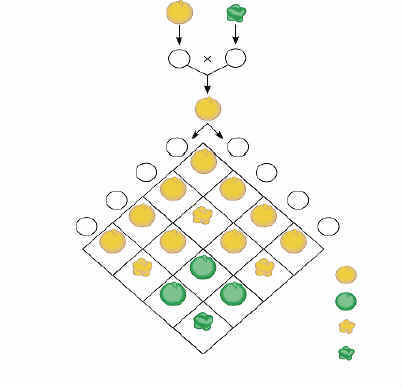
3. Use the diagram to label the generations: P, F1, F2, pure, hybrid, and make notes of Mendel’s observations.

5. Using the diagram in Question 3, describe how the Law of Segregation applies to the F1 and to the F2 generations.

__________________________________________________________________________

__________________________________________________________________________

6. When does the segregation of alleles occur? _____________________________________

7. What is the difference between an allele and a gene?

a. allele __________________________________________________________________

__________________________________________________________________________

b. gene __________________________________________________________________

__________________________________________________________________________

8. Briefly define the following terms:

a. homozygous ____________________________________________________________

b. heterozygous ___________________________________________________________

c. phenotype ______________________________________________________________

d. genotype _______________________________________________________________

9. What is the purpose of a test cross? ____________________________________________

__________________________________________________________________________

__________________________________________________________________________

10. When two traits are on different (non-homologous) chromosomes, how are they inherited?

__________________________________________________________________________

__________________________________________________________________________

a. Indicate the phenotypic ratios that result in the F2 from the F1 cross (dihybrid cross)

11. Use the rules of probability to determine the expected ratio of offspring showing two recessive traits in the trihybrid cross (PpYyRr X Ppyyrr).


12. Describe and give an example of incomplete dominance. ___________________________

__________________________________________________________________________

__________________________________________________________________________

13. How does codominance compare to incomplete dominance? ________________________

__________________________________________________________________________

__________________________________________________________________________

14. How is blood type an example of multiple alleles? _________________________________

__________________________________________________________________________

__________________________________________________________________________

15. Define and give an example of pleiotropy. _______________________________________

__________________________________________________________________________

16. Define and give an example of epistasis. ________________________________________

__________________________________________________________________________

17. What is observed when traits are polygenic? _____________________________________

__________________________________________________________________________

18. The expression of phenotypes is often a result of both… ____________________________

__________________________________________________________________________

19. Briefly describe each of the following genetic disorders:

a. Cystic fibrosis ___________________________________________________________

__________________________________________________________________________

b. Tay-Sachs _____________________________________________________________

__________________________________________________________________________

c. Sickle cell anemia _______________________________________________________

__________________________________________________________________________

d. Achondroplasia __________________________________________________________

__________________________________________________________________________

e. Huntington’s disease _____________________________________________________

__________________________________________________________________________

20. How can a parent learn the risks of having a child with a genetic disorder?

__________________________________________________________________________

AP Lecture Guide 20 – DNA Technology

AP Biology: Chapter 20

DNA TECHNOLOGY

1. Define biotechnology.

__________________________________________________________________________

__________________________________________________________________________

2. What is meant by “recombinant DNA technology?”

__________________________________________________________________________

__________________________________________________________________________

3. List some of the organisms we have been modifying for many hundreds of years.

__________________________________________________________________________

__________________________________________________________________________

4. Why are bacteria ideal workhorses for biotechnology?

__________________________________________________________________________

__________________________________________________________________________

5. What are other organisms used in biotechnology?

__________________________________________________________________________

__________________________________________________________________________

6. How does gene cloning differ from human cloning?

__________________________________________________________________________

__________________________________________________________________________

__________________________________________________________________________

7. Why is DNA cloning considered an important technology?

__________________________________________________________________________

__________________________________________________________________________

8. What are plasmids?

__________________________________________________________________________

__________________________________________________________________________

9. What is the function of restriction enzymes in bacteria?

__________________________________________________________________________

__________________________________________________________________________

10. How do bacteria protect their DNA from the effects of the restriction enzymes?

__________________________________________________________________________

__________________________________________________________________________

11. How do biologists make use of restriction enzymes?

__________________________________________________________________________

__________________________________________________________________________

12. What is a genomic library?

__________________________________________________________________________

__________________________________________________________________________

13. How is cDNA different from typical eukaryote DNA?

__________________________________________________________________________

__________________________________________________________________________

14. Describe the steps involved in cloning a gene.


15. How can transformed bacteria that carry genes of interest be identified and isolated from the majority of non-transformed bacteria?

__________________________________________________________________________

__________________________________________________________________________

__________________________________________________________________________

16. What can be accomplished with Nucleic Acid Hybridization?

__________________________________________________________________________

__________________________________________________________________________

__________________________________________________________________________

17. What is the purpose of the Polymerase Chain Reaction?

__________________________________________________________________________

__________________________________________________________________________

18. List some advantages & uses of the PCR technique.

__________________________________________________________________________

__________________________________________________________________________

__________________________________________________________________________

19. How are DNA fragments of different sizes separated?

__________________________________________________________________________

__________________________________________________________________________

20. What is a RFLP? How are they made?

__________________________________________________________________________

__________________________________________________________________________

__________________________________________________________________________

__________________________________________________________________________

21. What does the technique of Southern Blotting accomplish?

__________________________________________________________________________

__________________________________________________________________________

22. What are some other techniques that build on the Southern Blotting technique?

__________________________________________________________________________

__________________________________________________________________________

23. What was the goal of the Human Genome Project?

__________________________________________________________________________

__________________________________________________________________________

__________________________________________________________________________

24. List some of the most important things we learned by completing the Human Genome Project.

__________________________________________________________________________

__________________________________________________________________________

25. What is the Sanger Sequencing Method used for?

__________________________________________________________________________

__________________________________________________________________________

26. How does the shot-gun approach differ from the whole-genome sequencing?

__________________________________________________________________________

__________________________________________________________________________

__________________________________________________________________________

27. In the future, DNA chips may be used for regular diagnostics. What do the florescent spots indicate when the chip is read?

__________________________________________________________________________

__________________________________________________________________________

28. How can DNA technology be used to diagnose a carrier of a genetic disorder?

__________________________________________________________________________

__________________________________________________________________________

29. What is the goal of gene therapy?

__________________________________________________________________________

__________________________________________________________________________

30. How has forensics made use of DNA technology? Give a specific example.

__________________________________________________________________________

__________________________________________________________________________

__________________________________________________________________________

31. What is currently used by the FBI to do a DNA fingerprint in a criminal investigation?

__________________________________________________________________________

__________________________________________________________________________

__________________________________________________________________________

32. What technique has been used to modify agricultural plants?

__________________________________________________________________________

__________________________________________________________________________

33. List a few of the traits that have been engineered into agricultural plants? Could any of these

pose an environmental threat?

__________________________________________________________________________

__________________________________________________________________________

__________________________________________________________________________

AP Lecture Guide 22 – Descent with Modification


AP Biology: CHAPTER 22- DESCENT WITH MODIFICATION


1. Identify the three significant historical themes that set the stage for Darwinian evolutionary

theory.

__________________________________________________________________________

__________________________________________________________________________

2. What were the two major points made in The Origin of Species?

__________________________________________________________________________

__________________________________________________________________________

3. What were the conventional paradigms in the 1800’s when Darwin developed his theories?

__________________________________________________________________________

__________________________________________________________________________

4. What was the contribution of Carolus Linnaeus to the evolutionary theories?

__________________________________________________________________________

__________________________________________________________________________

5. How did the study of fossils help Darwin shape his theories?

__________________________________________________________________________

__________________________________________________________________________

6. How did geological gradualism and uniformitarianism influence Darwin?

__________________________________________________________________________

__________________________________________________________________________

7. Identify the two principles of Lamarck’s theory of evolution.

__________________________________________________________________________

__________________________________________________________________________

8. How did the observations during his voyage on the Beagle influence Darwin’s theories?

__________________________________________________________________________

__________________________________________________________________________

9. Why were the Galápagos Islands so important to Darwin’s observations?

__________________________________________________________________________

__________________________________________________________________________

10. What are the elements for the formation of new species?

__________________________________________________________________________

__________________________________________________________________________

11. What is the driving force behind the evolution of the 14 species of finches on the

Galapagos?

__________________________________________________________________________

__________________________________________________________________________

12. What was Wallace’s role in the Theory of Natural Selection?

__________________________________________________________________________

__________________________________________________________________________

13. What were the main points of The Origin of Species?

__________________________________________________________________________

__________________________________________________________________________

14. Define Descent with Modification.

__________________________________________________________________________

__________________________________________________________________________

15. How does the “tree analogy” represent the evolutionary relationships of creatures?

__________________________________________________________________________

__________________________________________________________________________

16. Summarize the observations and inferences recognized as the backbone of evolution by

natural selection.

__________________________________________________________________________

__________________________________________________________________________

__________________________________________________________________________

17. Observations:

a. ______________________________________________________________________

b. ______________________________________________________________________

c. ______________________________________________________________________

d. ______________________________________________________________________

e. ______________________________________________________________________

18. Inferences:

a. ______________________________________________________________________

b. ______________________________________________________________________

c. ______________________________________________________________________

19. How did Darwin’s experience with artificial selection influence his theories of evolution?

__________________________________________________________________________

__________________________________________________________________________

20. For each of the following, indicate how it is used as evidence of evolution by natural

selection.

a. Paleontology ____________________________________________________________

__________________________________________________________________________

b. Biogeography ___________________________________________________________

__________________________________________________________________________

c. Resistance to insecticides _________________________________________________

__________________________________________________________________________

d. Drug Resistance _________________________________________________________

__________________________________________________________________________

e. Homology ______________________________________________________________

__________________________________________________________________________

f. Homologous structures ___________________________________________________

__________________________________________________________________________

g. Vestigial organs _________________________________________________________

__________________________________________________________________________

h. Embryology ____________________________________________________________

__________________________________________________________________________

i. Biochemical similarity _____________________________________________________

__________________________________________________________________________