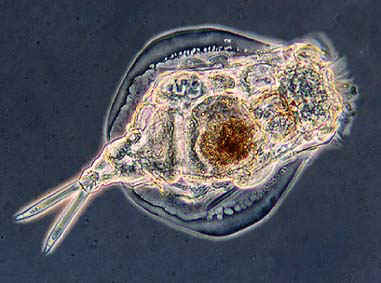
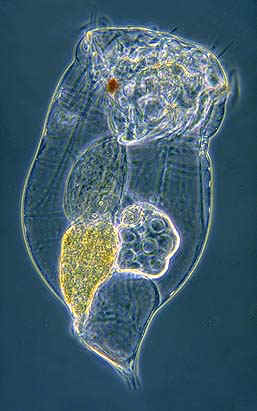
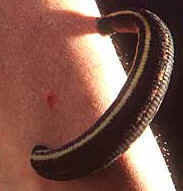
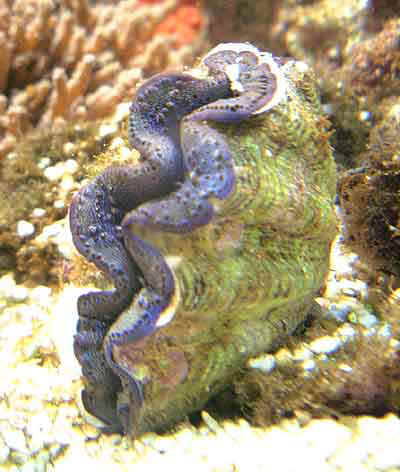
About 97% of all animals are invertebrates. Invertebrates are animals which do not have a backbone. There are nine phyla of invertebrates: Porifera, Cnidaria, Platyhelminthes, Nematoda, Rotifera, Mollusca, Annelida, Arthropoda, & Echinodermata.
1. The first habitat for plants on earth was _____________.
2. Which algal group is most related to early land plants?
3. What is this group of algae called?
4. List 5 similarities between algae and terrestrial plants.
a.
b.
c.
d.
e.
5. List 5 helpful adaptations aquatic plants have by being surrounded by water.
a.
b.
c.
d.
e.
6.Complete the following table explaining how terrestrial plants solved the move onto land.
Plant Adaptations to land
Problems:
Solutions:
Need Minerals
Gravity
Increase in Height to get Light
Adaptations for drier environment
Reproduction
How Are Plants All Alike
7. All plants are ____________________.
8. Plants can make their own food by a process called ____________________.
9. Since plants make their own food they are called _________________.
10. Plants contain what type of chlorophyll?
11. Where is chlorophyll found in plants?
12. What surrounds the outside of all plant cells and what is it composed of?
13. How do plants store their reserve food?
14. The life cycle of plants is known as __________________ of _________________.
15. The dominant stage of the plant is the diploid (2n) ________________ stage.
16. The eggs and sperm are produced during the haploid (1n) ________________ stage.
17. The gametophyte stage produces a multicellular plant ______________ that is protected inside an ____________ ___________.
18. The sporophyte stage produces _____________ by _____________.
19. Haploid spores undergo ______________ to produce the _______________ stage.
20. The gametophyte stage makes _____________ called the _________ and ___________.
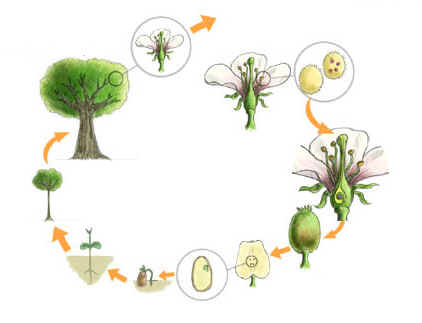
21. Label the diagram of alternation of generation. Include the sporophyte and gametophyte generations, the chromosome number (2n or 1n), and where mitosis and meiosis occur.
Plant Divisions
22. Plants are divided into __________ groups based on the presence or absence of an ___________ _____________ ___________ for carrying water and dissolved _____________.
23. What is the transport system for water and minerals called?
24. ______________ plants lack vascular tissue and are called _______________.
25. In what type of environment must nonvascular plants live?
26. Give an example of a bryophyte.
27. Nonvascular plants can’t grow as tall as vascular plants. Explain why.
28. The cells of nonvascular plants must be in _________ contact with water because water moves by _______________ from cell to cell.
29. How does the sperm get to the egg in nonvascular plants?
30. Name 3 divisions of nonvascular plants and give and organism found in each division.
a.
b.
c.
31.Vascular plants are also called _______________.
32. What are the 2 subdivisions of vascular plants?
33. Name 4 divisions of seedless vascular plants and give an example of a plant in each group.
a.
b.
c.
d.
34. Name the 2 groups of seed-bearing vascular plants.
35. Gymnosperms have ____________ seeds found inside cones.
36. Angiosperms have ___________ to attract ____________ so seeds can be produced.
37. Name the division known as conifers and tell several plants in this group/
38. Name 2 other divisions of gymnosperms and tell a plant in each group.
Refer to the ' + 'illustration above. Reproduction ensures the ongoing success of both species.
'; answerText[0] = '
T
'; numberText[1] = '2.'; questionText[1] = '
Refer to the ' + 'illustration above. The sand dollar and paramecium both show organization.
'; answerText[1] = '
T
'; numberText[2] = '3.'; questionText[2] = '
Scientists have not discovered any new species on Earth in more than 20 ' + 'years.
'; answerText[2] = '
F
'; numberText[3] = '4.'; questionText[3] = '
Publication of the results of scientific investigations enables other scientists to ' + 'verify these results.
'; answerText[3] = '
T
'; numberText[4] = '5.'; questionText[4] = '
Resolution is a microscope’s power to increase an object’s apparent ' + 'size.
'; answerText[4] = '
F
'; numberText[5] = '6.'; questionText[5] = '
Biology is the study of
a.
minerals.
c.
the weather.
b.
life.
d.
energy.
'; answerText[5] = '
B
'; numberText[6] = '7.'; questionText[6] = '
Homeostasis means
a.
a change over long periods of time.
c.
rapid change.
b.
keeping things the same.
d.
the same thing as evolution.
'; answerText[6] = '
B
'; numberText[7] = '8.'; questionText[7] = '
Which of the ' + 'following is a means by which heterotrophs can obtain energy?
a.
using water, carbon dioxide, and energy from the sun to produce ' + 'sugars
b.
using water and ' + 'carbon dioxide to produce energy-rich compounds
c.
consuming autotrophs
d.
consuming simple chemicals from the environment and using them to ' + 'assemble complex chemicals and structures needed by the organism
'; answerText[7] = '
D
'; numberText[8] = '9.'; questionText[8] = '
Which of the ' + 'following is not necessarily a distinct property of living things?
a.
homeostasis
c.
complexity
b.
metabolism
d.
reproduction
'; answerText[8] = '
C
'; numberText[9] = '10.'; questionText[9] = '
All organisms ' + 'are composed of
a.
diatoms.
c.
cells.
b.
cellulose.
d.
None of the ' + 'above
'; answerText[9] = '
C
'; numberText[10] = '11.'; questionText[10] = '
Which example ' + 'of scientific methodology is incorrect?
a.
Observation—A number of people in Zaire dying of a disease ' + 'outbreak
b.
Measurement—A record of the number of people with symptoms of the disease and the ' + 'number of people who had died from the disease
c.
Analysis of data—Comparison of the effects of mixing monkey cells ' + 'with virus-containing blood in test tubes and the effects of mixing of liquid from these test tubes ' + 'with fresh monkey cells
d.
Inference making—Identification of the Ebola virus as the cause of ' + 'the disease by taking electron micrographs of substances found in the blood of persons affected with ' + 'the disease
'; answerText[10] = '
D
'; numberText[11] = '12.'; questionText[11] = '
Scientific hypotheses are most often tested by the process of
a.
communicating.
c.
experimenting.
b.
inferring.
d.
analyzing data.
'; answerText[11] = '
C
'; numberText[12] = '13.'; questionText[12] = '
A hypothesis ' + 'is
a.
a definite answer to a given problem.
b.
a testable possible explanation of an ' + 'observation.
c.
a proven statement.
d.
a concluding statement.
'; answerText[12] = '
B
'; numberText[13] = '14.'; questionText[13] = '
A hypothesis ' + 'that does not explain an observation
a.
is known as an inaccurate forecast.
c.
is rejected.
b.
often predicts a different observation.
d.
None of the above
'; answerText[13] = '
C
'; numberText[14] = '15.'; questionText[14] = '
A scientific ' + 'theory
a.
is absolutely certain.
b.
is unchangeable.
c.
may be revised as new evidence is presented.
d.
is a controlled experiment.
'; answerText[14] = '
C
'; numberText[15] = '16.'; questionText[15] = '
observation : hypothesis ::
a.
theory : observation
c.
certainty : investigation
b.
guess : hypothesis
d.
theory : control
'; answerText[15] = '
C
(leads to ' + 'a(n))
'; numberText[16] = '17.'; questionText[16] = '
Which of the ' + 'following components of a scientific investigation would benefit from communication between ' + 'scientists?
a.
observing
c.
analyzing data
b.
measuring
d.
All of the ' + 'above
'; answerText[16] = '
D
'; numberText[17] = '18.'; questionText[17] = '
Most typically, ' + 'the order in which the steps of the scientific method are applied is
"); document.writeln(""); document.writeln(""); document.close(); return(false); } function GetResponse(answerIndex, answer) { var listIndex; var responseText; if (listMap.charAt(answerIndex) == "1") { listIndex = answer.selectedIndex; responseText = answer.options[listIndex].text; } else responseText = answer.value; return(responseText); } function ScoreAnswer(answerIndex, responseText) { var listIndex; var answerText; answerText = ansMap[answerIndex]; if (qtypeMap.charAt(answerIndex) == "4") return(NumericCompare(responseText, answerText)); else if (qtypeMap.charAt(answerIndex) == "5") return(MultiCompare(responseText, answerText)); else if (responseText.toUpperCase() == answerText.toUpperCase()) return(true); else return(false); } function BuildPrefixText(answerIndex, responseText, isCorrect) { var text; var listIndex; text = "
" if (isCorrect) text += "" else text += "" if (listMap.charAt(answerIndex) == "1") { if (responseText.length == 0) responseText = " "; text += " " + responseText + " "; } text += "
" return(text); } function StripSpaces(s) { var len; var i; len = s.length; for (i=len - 1; i >= 0 && s.charAt(i) == " "; --i) len = i; if (len == 0) s = ""; else if (len != s.length) s = s.substring(0, len); return(s); } function TranslateHtmlString(text) { var newText; var replaceString; var position; var length; var breakPos; var skipExtra; var i; newText = ""; position = 0; length = text.length; while (position < length) { skipExtra = 0; breakPos = -1; for (i=position; i < length && breakPos < 0; ++i) { switch(text.charAt(i)) { case '>': replaceString = ">"; breakPos = i; break; case '<': replaceString = "<"; breakPos = i; break; case '&': replaceString = "&"; breakPos = i; break; case 'r': if ((i + 1) < length && text.charAt(i + 1) == 'n') skipExtra = 1; replaceString = " "; breakPos = i; break; case 'n': replaceString = " "; breakPos = i; break; case ' ': if ((i + 1 < length) && text.charAt(i + 1) == ' ') { replaceString = " "; breakPos = i; } break; } } if (breakPos < 0) { newText += text.substring(position, length); position = length; } else { if (breakPos > position) newText += text.substring(position, breakPos); newText += replaceString; position = breakPos + 1 + skipExtra; } } return(newText); } function FixMCNotes(notesText, studentText) { var displayText; var searchText; var upperNotes; var charCode; var startIndex; var endIndex; displayText = ""; if (studentText.length > 0 && notesText.length > 0) { upperNotes = notesText.toUpperCase(); studentText = studentText.toUpperCase(); charCode = studentText.charCodeAt(0); searchText = "/" + String.fromCharCode(charCode) + "/"; startIndex = upperNotes.indexOf(searchText); if (startIndex >= 0) { startIndex += searchText.length; searchText = "/" + String.fromCharCode(charCode + 1) + "/"; endIndex = upperNotes.indexOf(searchText, startIndex); if (endIndex < startIndex) endIndex = notesText.length; displayText = notesText.substring(startIndex, endIndex); } else if (notesText.charAt(0) != "/") displayText = notesText; } return(displayText); } function NumericCompare(s1, s2) { var s1Sign; var s2Sign; var tempString; var decimalCount; var decimalPos; var numToDelete; var len; var ch; var i; s1.toUpperCase(); s2.toUpperCase(); if (s1 == s2) return(true); else { s1Sign = 1; s2Sign = 1; tempString = ""; for (i=0; i < s1.length; ++i) { ch = s1.charAt(i); if (ch == "-" && tempString.length == 0) s1Sign = -1; else if ((ch >= "0" && ch <= "9") || ch == ".") tempString += ch; } s1 = tempString; decimalCount = 0; decimalPos = -1; for (i=0; i < s1.length; ++i) { if (s1.charAt(i) == '.') { ++decimalCount; if (decimalPos < 0) decimalPos = i; } } if (decimalCount == 1 && decimalPos >= 0) { len = s1.length; for (i=len - 1; i >= decimalPos; --i) { if (i == decimalPos || s1.charAt(i) == '0') len = i; else break; } if (len < s1.length) s1 = s1.substring(0, len); if (s1.length == 0) s1 = "0"; } numToDelete = 0; for (i=0; i < s1.length; ++i) { if (s1.charAt(i) == "0") ++numToDelete; else break; } if (numToDelete > 0) { if (numToDelete == s1.length) --numToDelete; if (numToDelete > 0) s1 = s1.substring(numToDelete); } ///////////////////////////////////////////// tempString = ""; for (i=0; i < s2.length; ++i) { ch = s2.charAt(i); if (ch == "-" && tempString.length == 0) s2Sign = -1; else if ((ch >= "0" && ch <= "9") || ch == ".") tempString += ch; } s2 = tempString; decimalCount = 0; decimalPos = -1; for (i=0; i < s2.length; ++i) { if (s2.charAt(i) == '.') { ++decimalCount; if (decimalPos < 0) decimalPos = i; } } if (decimalCount == 1 && decimalPos >= 0) { len = s2.length; for (i=len - 1; i >= decimalPos; --i) { if (i == decimalPos || s2.charAt(i) == '0') len = i; else break; } if (len < s2.length) s2 = s2.substring(0, len); if (s2.length == 0) s2 = "0"; } numToDelete = 0; for (i=0; i < s2.length; ++i) { if (s2.charAt(i) == "0") ++numToDelete; else break; } if (numToDelete > 0) { if (numToDelete == s2.length) --numToDelete; if (numToDelete > 0) s2 = s2.substring(numToDelete); } if (s1Sign == s2Sign && s1 == s2) return(true); } return(false); } function MultiCompare(responseText, answerText) { var startIndex; var endIndex; var partialText; responseText = responseText.toUpperCase(); answerText = answerText.toUpperCase(); startIndex = 0; do { endIndex = answerText.indexOf("r", startIndex); if (endIndex < 0) partialText = answerText.substring(startIndex); else partialText = answerText.substring(startIndex, endIndex); if (responseText == partialText) return(true); startIndex = endIndex + 1; } while (endIndex > 0); return(false); } function FixMTF(f) { var text; var letter; var theList; var listIndex; var number; var i; for (i=0; i < f.length; ++i) { if (f.elements[i].name.indexOf("MTF:") == 0) { number = parseInt(f.elements[i].name.substring(4), 10); theList = f["MTF-" + number + "-1"]; if (theList) { listIndex = theList.selectedIndex; letter = theList.options[listIndex].text; } else letter = ""; text = StripSpaces(f["MTF-" + number + "-2"].value); if (text == "") f.elements[i].value = letter; else f.elements[i].value = letter + "," + text; } } } function AllowReset() { return(window.confirm("Do you want to clear all of your answers?")); } // -->
Name:
Introduction Quiz
True/False
Indicate whether the sentence or statement is true or false.
1.
Refer to the illustration above. Reproduction ensures the ongoing success of both species.
2.
Refer to the illustration above. The sand dollar and paramecium both show organization.
3.
Scientists have not discovered any new species on Earth in more than 20 years.
4.
Publication of the results of scientific investigations enables other scientists to verify these results.
5.
Resolution is a microscope’s power to increase an object’s apparent size.
Multiple Choice
Identify the letter of the choice that best completes the statement or answers the question.
6.
Biology is the study of
a.
minerals.
c.
the weather.
b.
life.
d.
energy.
7.
Homeostasis means
a.
a change over long periods of time.
c.
rapid change.
b.
keeping things the same.
d.
the same thing as evolution.
8.
Which of the following is a means by which heterotrophs can obtain energy?
a.
using water, carbon dioxide, and energy from the sun to produce sugars
b.
using water and carbon dioxide to produce energy-rich compounds
c.
consuming autotrophs
d.
consuming simple chemicals from the environment and using them to assemble complex chemicals and structures needed by the organism
9.
Which of the following is not necessarily a distinct property of living things?
a.
homeostasis
c.
complexity
b.
metabolism
d.
reproduction
10.
All organisms are composed of
a.
diatoms.
c.
cells.
b.
cellulose.
d.
None of the above
11.
Which example of scientific methodology is incorrect?
a.
Observation—A number of people in Zaire dying of a disease outbreak
b.
Measurement—A record of the number of people with symptoms of the disease and the number of people who had died from the disease
c.
Analysis of data—Comparison of the effects of mixing monkey cells with virus-containing blood in test tubes and the effects of mixing of liquid from these test tubes with fresh monkey cells
d.
Inference making—Identification of the Ebola virus as the cause of the disease by taking electron micrographs of substances found in the blood of persons affected with the disease
12.
Scientific hypotheses are most often tested by the process of
a.
communicating.
c.
experimenting.
b.
inferring.
d.
analyzing data.
13.
A hypothesis is
a.
a definite answer to a given problem.
b.
a testable possible explanation of an observation.
c.
a proven statement.
d.
a concluding statement.
14.
A hypothesis that does not explain an observation
a.
is known as an inaccurate forecast.
c.
is rejected.
b.
often predicts a different observation.
d.
None of the above
15.
A scientific theory
a.
is absolutely certain.
b.
is unchangeable.
c.
may be revised as new evidence is presented.
d.
is a controlled experiment.
16.
observation : hypothesis ::
a.
theory : observation
c.
certainty : investigation
b.
guess : hypothesis
d.
theory : control
17.
Which of the following components of a scientific investigation would benefit from communication between scientists?
a.
observing
c.
analyzing data
b.
measuring
d.
All of the above
18.
Most typically, the order in which the steps of the scientific method are applied is
Includes fish, amphibians, reptiles, birds, & mammals
Body Areas
Dorsal is the back or upper surface
Ventral is the belly or lower surface
Anterior head or front end
Posterior is the tail or hind end opposite the head
Oral surface in echinoderms is where the mouth is located (underside)
Aboral surface in echinoderms is the surface opposite the mouth (top side)
DORSAL
ANTERIOR
POSTERIOR
VENTRAL
Body Symmetry
Symmetry is the arrangement of body parts around a central plane or axis
Asymmetry occurs when the body can’t be divided into similar sections (sponges)
Radial symmetry occurs when similar body parts are arranged around a central point like spokes on a wheel (echinoderms)
Most animals with radial symmetry are sessile (attached) or sedentary (move very little)
Bilateral symmetry occurs when animals can be divided into equal halves along a single plane (right & left sides that are mirror images)
Animals with bilateral symmetry are more complex, usually motile organisms, such as worms, arthropods, and all vertebrates
Animals with bilateral symmetry show cephalization & have anterior & posterior ends
RADIAL SYMMETRY
BILATERAL SYMMETRY
Segmentation
Occurs whenever animal bodies are divided into repeating units or segments
Found in more complex animals
Earthworms show external segmentation, while humans show internal segmentation (vertebrae of the backbone)
Segments may be fused together such as cephalothorax covering chest & head of a crayfish
Tissue Development
All animals reproduce sexually, but some also reproduce asexually (sponges bud & flatworms fragment)
Zygote is the fertilized egg all animals form from
Zygote undergoes rapid cell divisions known as cleavage to become hollow ball of cells called blastula
Blastocoel is the central cavity of the blastula
Blastula invaginates (folds inward at one point) to form an opening & two cell or germ layers; process called gastrulation
New cup-shaped structure with 2 cell layers is called the gastrula
Archenteron is the deep cavity of the gastrula that forms the primitive gut
Inner germ layer called endoderm & outer germ layer called ectoderm
Opening may become the mouth or the anus
Protostomes (mollusks, arthropods, & annelids)develop mouth from blastopore, while deuterostomes (echinoderms & vertebrates) develop an anus from blastopore
Some animals form a third germ layer in the middle called mesoderm
Cells differentiation during development changing their shapes to fit their function ( neurons or nerve cells become long to conduct messages)
Cleavage
Protostomes have spiral cleavage in which embryonic cells divide in a spiral arrangement
Deuterostomes have radial cleavage or embryonic cell division parallel or perpendicular to the vertical axis of the embryo
Protostomes have determinate cleavage ( embryonic cells can’t form a new organism if separated)
Deuterostomes have indeterminate cleavage ( embryonic cells can form other organisms if separated such as identical twins)
Germ Layers
Form the tissues, organs, & systems of an animal
Found in the embryo of all animals except sponges (have specialized cells but no tissues)
Ectoderm (outer) forms skin, nerves, & sense organs
Endoderm (inner) forms the digestive & respiratory organs & systems
Mesoderm (middle) forms muscles, circulatory system, reproductive & excretory systems
Larval Forms
Some animals have indirect development & go through an immature larval form that does not resemble the adult
Planula is the larva of cnidarians (jellyfish, corals, & sea anemones)
Trochophore is the larva of mollusks (squid & octopus)
Dipleurula is the larva of echinoderms (starfish & sea urchins)