Enzyme Catalysis


Enzyme Catalysis

Introduction:
In general, enzymes are proteins produced by living cells, they act as catalysts in biochemical reactions. A catalyst affects the rate of a chemical reaction. One consequence of enzyme activity is that cells can carry out complex chemical activities at relative low temperatures. In an enzyme-catalyzed reaction, the substance to be acted upon ( the substrate = S ) binds reversibly to the active site of the enzyme (E). One result of this temporary union is a reduction in the energy required to activate the reaction of the substrate molecule so that the products (P) of the reaction are formed.

In summary:     E + S —> ES –> E + P

Note that the enzyme is not changed in the reaction and can even be recycled to break down additional substrate molecules. Each enzyme is specific for a particular reaction because its amino acid sequence is unique and causes it top have a unique three-dimensional structure. The active site is the portion of the enzyme that interacts with the substrate, so that any substance that blocks or changes the shape of the active site affects the activity of the enzyme. A description of several ways enzyme action may be affected follows:

1. Salt Concentration. If the salt concentration is close to zero, the charged amino acid side chains of the enzyme molecules will attract to each other. The enzyme will denature and form an inactive precipitate. If, on the other hand, the salt concentration is too high, normal interaction of charged groups will be blocked, new interactions will occur, and again the enzyme will precipitate. An intermediate salt concentration such as that of human blood (0.9% ) or cytoplasm ins the optimum for many enzymes.

2. pH. Amino acid side chains contain groups such as – COOH and NH2 that readily gain or lose H+ ions. As the pH is lowered an enzyme will tend to gain H+ ions, and eventually enough side chains will be affected so the enzyme’s shape is disrupted. Likewise, as the pH is raised, the enzymes will lose H+ ions and eventually lose its active shape. Many of the enzymes function properly in the neutral pH range and are denatured at either an extremely high or low pH. Some enzymes, such as pepsin, which acts in the human stomach where the pH is very low, have a low pH optimum.

3. Temperature. Generally, chemical reactions speed up as the temperature is raised. As the temperature increases, more of the reacting molecules have enough kinetic energy to undergo the reaction. Since enzymes are catalysts for chemical reactions, enzyme reactions also tend to go faster with increase temperature. However, if the temperature of an enzyme-catalyzed reaction is raised still further, a temperature optimum is reached; above this value the kinetic energy of the enzyme and water molecules is so great that the conformation of the enzyme molecules is disrupted. The positive effect of speeding up the reaction is now more than offset by the negative effect of changing the conformation of more and more enzyme molecules. Many proteins are denatured by temperatures around 40-50 degrees C, but some are still active at 70-80 degrees C, and a few even withstand boiling.

4. Activation’s and Inhibitors. Many molecules other than the substrate may interact with an enzyme. If such a molecule increases the rate of the reaction it is an activator, or if it decreases the reaction rate it is an inhibitor. These molecules can regulate how fast the enzymes acts. Any substance that tends to unfold the enzyme, such as an organic solvent or detergent, will act as an inhibitor. Some inhibitors act by reducing the -S-S- bridges that stabilize the enzyme’s structure. Many inhibitors act by reacting with the side chains in or near the active site to change its shape or block it. Many well known poisons such as potassium-cyanide and curare are enzyme inhibitors that interfere with the active site of critical enzymes.

The enzyme used in this lab, catalase, has four polypeptide chains, each composed of more than 500 amino acids. This enzyme is ubiquitous in aerobic organisms. One function of catalase within cells is to prevent the accumulation of toxic levels of hydrogen peroxide formed as a by-product of metabolic processes. Catalase might also take part in some of the many oxidation reactions that occur in the cell.

2H2O ——-> 2 H2O + O2 (gas )

In the absence of catalase, this reaction occurs spontaneously, but very slowly. Catalase speeds up the reaction considerably. In this experiment, a rate for this reaction will be determined. Much can be learned about enzymes by studying the kinetics of enzyme-catalyzed reactions. For example, it is possible to measure the amount of product formed, or the amount of substrate used, from the moment the reactants are brought together until the reaction has stopped. If the amount of product formed is measured at regular intervals and this quantity is plotted on a graph, a curve like the one that follows is obtained.

Figure 2.1 Enzyme Activity

Study the solid line of the graph of this reaction. At time 0 there is no product. As time progresses the production of product increases at a steady rate. After a period of time this rate slows down and at a certain point the reaction rate is very slow.

General Procedure:
In this experiment the disappearance of the substrate, H2O2, is measured as follows:

1. A purified catalase extract is mixed with substrate ( H2O2) in a beaker. The enzyme catalyzes the conversion of H2O to H2O and O2 (gas ).

2. Before all the H2O2 is converted to H2O and O2 , the reaction is stopped by adding sulfuric acid ( H2SO4 ). The sulfuric acid lowers the pH, denatures the enzyme, and thereby stops the enzyme’s catalytic activity.

3. After the reaction is stopped, the amount of substrate (H2O2) remaining in the beaker is measured. To measure this quantity, potassium permanganate is used. Potassium permanganate (KMnO4), in the presence of H2O2 and H2SO4 reacts as follows:

5 H2O2 + 2 KMnO4 + 3 H2SO4 ————–> K2SO4 + 2 MnSO4 + 8 H2O + 5 O2

Note that H2O2 is a reactant for this reaction. Once all the H2O2 has reacted, any more KMnO4 added will be in excess and will not be decomposed. The addition of excess KMnO4 causes the solution to have a permanent pink or brown color. Therefore, the amount of H2O2 remaining is determined by adding KMnO4, until the whole mixture stays a faint pink or brown, permanently. Add no more KMnO4 after this point.

Figure 2.2 The General Procedure for the above exercise and Exercise 2C.
The figure below represents the complete Exercise 2C.

Exercise 2A: Test of Catalase Activity:
1. To observe the reaction to be studied, transfer 10 mL of 1.5% (0.44M) H2O2 into a 50 ml glass beaker and add 1 mL of freshly made catalase solution. The bubbles coming from the reaction mixture are oxygen, which results from the breakdown of H2O2 by catalase. Be sure to keep the freshly made catalase solution on ice at all times.

a. what is the enzyme in this reaction? ____________________________________________________

b. What is the substrate in this reaction? ___________________________________________________

c. What is the product in this reaction? ____________________________________________________

d. How could you show that the gas evolved is oxygen ? _____________________________________

2. To demonstrate the effect of boiling on enzymatic activity, transfer 5 mL of purified catalase extract to a test tube and place it in a boiling water bath for five minutes. Transfer 10 mL of 1.5% H2O2 into a 50 mL glass beaker and add 1 mL of the cooked, boiled catalase solution. How does the reaction compare to the one using the unboiled catalase? Explain the reason for this difference.

_____________________________________________________________________

_____________________________________________________________________

3. To demonstrate the presence of catalase in living tissue, cut 1 cm3 of potato or liver, macerate it, and transfer it into a 50 mL beaker containing 1.5% H2O2 . What do you observe? What do you think would happen if the potato or liver was boiled before being added to the H2O2?

_____________________________________________________________________

_____________________________________________________________________

Exercise 2B: The Baseline Assay:
To determine the amount of H2O2 initially present in a 1.5% solution, one needs to perform all the steps of the procedure without adding catalase to the reaction mixture. This amount is known as the baseline and is an index of the initial concentration of H2O2 un solution. In any series of experiments, a baseline should be established first.

Procedure for Establishing Baseline:
1. Put 10 mL of 1.5% H2O2 into a clean glass beaker.

2. Add 1 mL of H2O ( instead of enzyme solution).

3. Add 10 mL of H2SO4 (1.0 M) Use Extreme care in Handling Acids.

4. Mix well.

5. Remove a 5 mL sample. Place this 5 mL sample in another beaker, and assay for the amount of H2O2 as follows: Place the beaker containing the sample over white paper. Use a burette or 5 mL pipette to add potassium permanganate a drop at a time to the solution until a persistent pink or brown color is obtained. Remember to gently swirl the solution after adding each drop. Record your data below.

Baseline calculations

Final Reading of burette ________ mL

Initial reading of burette ________mL

Baseline (Final -Initial) _________mL KMnO4

Figure 2.4: Proper Reading of a Burette


Exercise 2C: An Enzyme-Catalyzed Rate of H2O2 Decomposition

Refer to figure 2.2 to complete this section and record the data in Table 2.1 below.

Table 2.1

Potassium Permanganate (ml)

Time (Seconds)

10 30 60 120 180 360
A. Baseline
B. Final Reading
C. Initial Reading
D. Amount of KMnO4 consumed (B-C)
E. Amount of H2O2 used (A-D)

Graph the data for enzyme-catalyzed H2O2 decomposition.

Graph Title: ___________________________________________________________________


Graph 2.1

Analysis of Results:
1. Explain the inhibiting effect of sulfuric acid on the function of catalase. Relate this to enzyme structure and chemistry.

____________________________________________________________________

____________________________________________________________________

____________________________________________________________________

2. Predict the effect lowering the temperature would have on the rate of enzyme activity. Explain you prediction.

____________________________________________________________________

____________________________________________________________________

____________________________________________________________________

3. Design a controlled experiment to test the effect of varying pH, temperature, or enzyme concentration.

____________________________________________________________________

____________________________________________________________________

____________________________________________________________________

____________________________________________________________________

____________________________________________________________________

____________________________________________________________________

AP LAB PAGE


Enzyme PowerPoint Worksheet

Enzymes
ppt Questions

Enzyme Structure & Function

1. Most enzymes are what type of macromolecule?

2. Most enzymes are ______________ or ______________ structures.

3. Enzymes act as ___________ in reactions.

4. Are enzymes permanently changed in the chemical reactions they are involved in?

5. Will an enzyme work on any substance? Explain.


6. Can enzymes be reused?

7. What ending is found on many enzymes?

8. Give 3 examples of enzymes with this ending.


9. How does an enzyme work?


10. What effect does an enzyme have on activation energy needed to start a reaction?

11. Hydrogen peroxide H2O2 is a common waste product of cells. Enzymes called catalases in cells break this down into harmless ________________.

12. What is meant by the term substrate?


13. What is meant by active site?


14. Sketch and label the enzyme-substrate complex.


15. What is meant by induced fit?


16. What induces an enzyme to change the shape of its active site?

17. List 4 factors that can affect enzyme activity.


18. What is the effect of high temperature on an enzyme (running fever)?


19. What temperature do most enzymes do best at?

20. Most enzymes like a pH near ______________.

21. To denature an enzyme means the enzyme becomes _______________ and can no longer work properly.

22. Name 3 inorganic substances (cofactors) that are often needed for enzymes to work properly.


23. Give an example of an enzyme & its needed inorganic substance.


24. Give one example of an enzyme inhibitor.

25. Explain how competitive inhibitors work.


26. If a competitive inhibitor blocks the active site, the ____________ can’t fit.

27. Explain noncompetitive inhibitors. 


28. Do noncompetitive inhibitors bind to the active site? Explain.


Extracting DNA


Extract DNA from Anything Living


Introduction:

Since DNA is the blueprint for life, everything living contains DNA. DNA isolation is one of the most basic and essential techniques in the study of DNA. The extraction of DNA from cells and its purification are of primary importance to the field of biotechnology and forensics. Extraction and purification of DNA are the first steps in the analysis and manipulation of DNA that allow scientists to detect genetic disorders, produce DNA fingerprints of individuals, and even create genetically engineered organisms that can produce beneficial products such as insulin, antibiotics, and hormones.

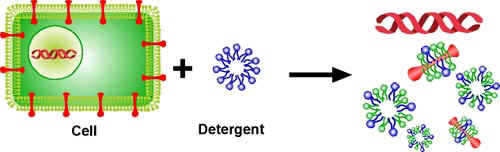
DNA can be extracted from many types of cells. The first step is to lyse or break open the cell. This can be done by grinding a piece of tissue in a blender. After the cells have broken open, a salt solution such as NaCl and a detergent solution containing the compound SDS (sodiumdodecyl sulfate) is added. These solutions break down and emulsify the fat & proteins that make up a cell membrane. Finally, ethanol is added because DNA is soluble in water. The alcohol causes DNA to precipitate, or settle out of the solution, leaving behind all the cellular components that aren’t soluble in alcohol. The DNA can be spooled (wound) on a stirring rod and pulled from the solution at this point.


Just follow these 3 easy steps:

Detergent, eNzymes (meat tenderizer), Alcohol


Objective:

To extract DNA from cells.

Materials:

Blender, split peas, salt, detergent, water, measuring cup and spoons, strainer, meat tenderizer, alcohol, test tube, glass stirring rod

Procedure:

  1. First, you need to find something that contains DNA such as split peas, fresh spinach, chicken liver, onion, or broccoli.

  1. Measure about 100 ml or 1/2 cup of split peas and place them in a blender.
  2. Add a large pinch of salt (less than 1 ml or about 1/8 teaspoon) to the blender.
  3. Add about twice as much cold water as the DNA source (about 200 ml or 1 cup) to the peas in the blender.
  4. Blend on high (lid on) for about 15 seconds.

  1. The blender separates the pea cells from each other, so you now have a really thin pea-cell soup.

And now, those 3 easy steps:

  1. Pour your thin pea-cell soup through a strainer into another container like a measuring cup or beaker.

  1. Estimate how much pea soup  you have and add about 1/6 of that amount of liquid detergent (about 30ml or 2 tablespoons). Swirl to mix.

  1. Let the mixture sit for 5-10 minutes.


The detergent captures the proteins & lipids of the cell membrane.

  1. Pour the mixture into test tubes or other small glass containers, each about 1/3 full.
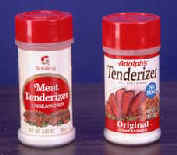
  2. Add a pinch of enzymes to each test tube and stir gently. Be careful! If you stir too hard, you’ll break up the DNA, making it harder to see. (Use meat tenderizer for enzymes. If you can’t find tenderizer, try using pineapple juice or contact lens cleaning solution.)


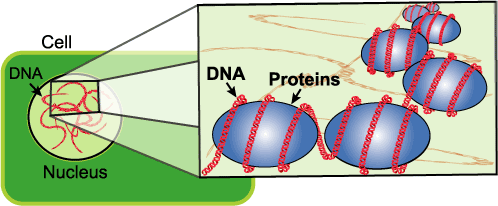
The DNA in the nucleus of the cell is molded, folded, and protected by proteins. The meat tenderizer cuts the proteins away from the DNA.

  1. Tilt your test tube and slowly pour rubbing alcohol (70-95% isopropyl or ethyl alcohol) into the tube down the side so that it forms a layer on top of the pea mixture. Pour until you have about the same amount of alcohol in the tube as pea mixture.

  1. Alcohol is less dense than water, so it floats on top forming two separate layers.
  2. All of the grease and the protein that we broke up in the first two steps move to the bottom, watery layer.
  3. DNA will rise into the alcohol layer from the pea layer. You can use a glass stirring rod or a wooden stick to draw the DNA into the alcohol.
  4. Slowly turning the stirring rod will spool (wrap) the DNA around the rod so it can be removed from the liquid.

Questions:

1. Does the DNA have any color?

2. Describe the appearance of the DNA.

3. Do only living things contain DNA? Explain.

Frequently Asked Questions: 1. I’m pretty sure I’m not seeing DNA. What did I do wrong?

First, check one more time for DNA. Look very closely at the alcohol layer for tiny bubbles. Often, clumps of DNA are loosely attached to the bubbles.

If you are sure you don’t see DNA, then the next step is to make sure that you started with enough DNA in the first place. Many food sources of DNA, such as grapes, also contain a lot of water. If the blended cell soup is too watery, there won’t be enough DNA to see. To fix this, go back to the first step and add less water. The cell soup should be opaque, meaning that you can’t see through it. Another possible reason for not seeing any DNA is not allowing enough time for each step to complete. Make sure to stir in the detergent for at least five minutes. If the cell and nuclear membranes are still intact, the DNA will be stuck in the bottom layer. Often, if you let the test tube of pea mixture and alcohol sit for 30-60 minutes, DNA will precipitate into the alcohol layer.

2. Why does the DNA clump together?

Single molecules of DNA are long and stringy. Each cell of your body contains six feet of DNA, but it’s only one-millionth of an inch wide. To fit all of this DNA into your cells, it needs to be packed efficiently. To solve this problem, DNA twists tightly and clumps together inside cells. Even when you extract DNA from cells, it still clumps together, though not as much as it would inside the cell.

Imagine this: the human body contains about 100 trillion cells, each of which contains six feet of DNA. If you do the math, you’ll find that our bodies contain more than a billion miles of DNA!

3. Can I use this DNA as a sample for gel electrophoresis?

Yes, but all you will see is a smear. The DNA you have extracted is genomic, meaning that you have the entire collection of DNA from each cell. Unless you cut the DNA with restriction enzymes, it is too long and stringy to move through the pores of the gel; instead, all you will end up seeing is a smear.

4. Isn’t the white, stringy stuff actually a mix of DNA and RNA?

That’s exactly right! The procedure for DNA extraction is really a procedure for nucleic acid extraction. However, much of the RNA is cut by ribonucleases (enzymes that cut RNA) that are released when the cells are broken open.


Fermentation Rootbeer


FERMENTATION – MAKING ROOT BEER
David Fankhauser’s Main Page


Introduction:

Fermentation has been used by mankind for thousands of years for raising bread, fermenting wine and brewing beer. The products of the fermentation of sugar by baker’s yeast Saccharomyces cerevisiae (a fungus) are ethyl alcohol and carbon dioxide. Carbon dioxide causes bread to rise and gives effervescent drinks their bubbles. This action of yeast on sugar is used to ‘carbonate’ beverages, as in the addition of bubbles to champagne).

We will set up a fermentation in a closed system and capture the generated carbon dioxide to carbonate root beer. You may of course adjust the quantities of sugar and/or extract  (Zatarain’s) to taste. 

EQUIPMENT
SUPPLIES
  • clean 2 liter plastic soft drink bottle with cap
  • funnel
  • 1 cup measuring cup
  • 1/4 tsp measuring spoon
  • 1 Tbl measuring spoon
  • Cane (table) sugar [sucrose] (1 cup)
  • Zatarain’s Root Beer Extract (1 tablespoon)
  • (When I could not find it locally, I ordered a case of 12 bottles for $18 from Zatarain’s, New Orleans, LA 70114
  • powdered baker’s yeast (1/4 teaspoon)  (Yeast for brewing would certainly work at least as well as baking yeast.)
  • cold fresh water


INSTRUCTIONS:

1) Assemble the necessary equipment and supplies
2) With a dry funnel, add in sequence:

1 level cup of table sugar (cane sugar) (You can adjust the amount to achieve the desired sweetness.)

3) Add: 1/4 teaspoon powdered baker’s yeast ( fresh and active)

(Fleischmann’s or other brand)

4) You can see the yeast granules on top of the sugar.
5) Shake to distribute the yeast grains into the sugar.
6) Swirl the sugar/yeast mixture in the bottom to make it concave (to catch the extract).
7) Add with funnel:

1 Tbl of root beer extract (I prefer Zatarain’s, but Hires, etc. will work.)

on top of the dry sugar

8) The extract sticks to the sugar which will help dissolve the extract in the next steps.
9) Half fill the bottle with fresh cool tap water (the less chlorine, the better).

Rinse in the extract which sticks to the tablespoon and funnel. Swirl to dissolve the ingredients.

10) Q.s. [fill up] to the neck of the bottle with fresh cool tap water, leaving about an inch of head space, securely screw cap down to seal. Invert repeatedly to thoroughly dissolve.

If you leave it in a warm temperature longer than two weeks, you risk an explosion…

11) Place at room temperature about three to four days until the bottle feels hard to a forceful squeeze. Move to a cool place (below 65 F). refrigerate overnight to thoroughly chill before serving. Crack the lid of the thoroughly chilled root beer just a little to release the pressure slowly.

NOTE: Do not leave the finished root beer in a warm place once the bottle feels hard. After a couple weeks or so at room temperature, especially in the summer when the temperature is high, enough pressure may build up to explode the bottle! There is no danger of this if the finished root beer is refrigerated.

12) Move to a refrigerator overnight before opening.


NOTE: There will be a sediment of yeast at the bottom of the bottle, so that the last bit of root beer will be turbid. Decant carefully if you wish to avoid this sediment.

A WORD ABOUT THE ALCOHOL IN HOME MADE ROOT BEER: The alcoholic content which results from the fermentation of this root beer and found it to be between 0.35 and 0.5 %. Comparing this to the 6% in many beers, it would require a person to drink about a gallon and a half of this root beer to be equivalent to one 12 ounce beer. I would call this amount of alcohol negligible, but for persons with metabolic problems who cannot metabolize alcohol properly, or religious prohibition against any alcohol,  consumption should be limited or avoided.