
This article is for educational purposes only and is not medical advice. Talk to a licensed healthcare provider before starting, stopping, or changing any treatment.
NAD+ supplementation comes in more than one form, and the differences go beyond how you take it. Oral supplements commonly use compounds that the body can use to produce NAD+, while injectable formulations deliver NAD+ through routes such as intravenous or subcutaneous administration.
Human research remains limited, particularly for injectable NAD+. This article compares the formats, looks at what small human studies have measured so far, and explains some of the questions to discuss with a licensed healthcare provider.
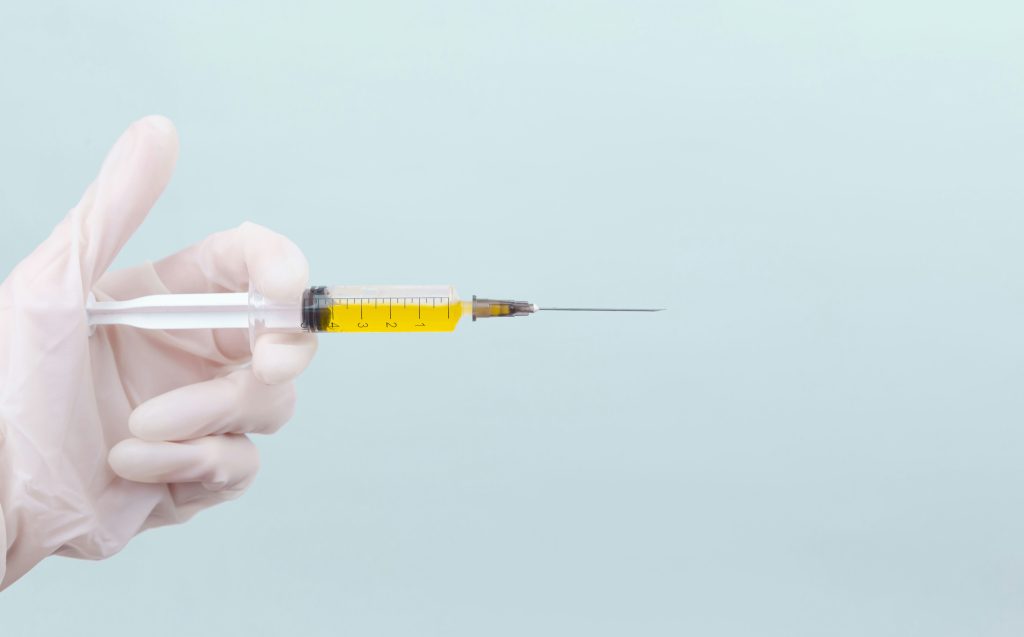
How NAD+ Injections Are Given
NAD+ can be administered through different routes depending on the formulation and clinical setting. Intravenous NAD+ is delivered directly into a vein, while some compounded formulations are administered as subcutaneous injections.
IV infusions are performed in a clinical setting and can take considerably longer than a standard injection. Infusion rates may need to be adjusted when patients experience discomfort during administration.
Subcutaneous injections are given into the fatty tissue beneath the skin. For example, The HCG Institute’s NAD+ 1000mg injections are a compounded subcutaneous formulation provided following medical review and used according to the prescribing provider’s instructions.
The appropriate route, dose, and schedule depend on the specific formulation and the provider’s assessment of the individual patient.
Oral NAD+ Supplements and NAD+ Precursors
Many oral products marketed for NAD+ support use precursor molecules rather than NAD+ itself. Two commonly studied precursors are nicotinamide mononucleotide (NMN) and nicotinamide riboside (NR).
These compounds participate in biological pathways the body uses to produce NAD+.
NAD+, or nicotinamide adenine dinucleotide, is a naturally occurring coenzyme involved in cellular metabolism. It participates in oxidation-reduction reactions involved in energy metabolism and also serves as a substrate for enzymes including sirtuins, poly(ADP-ribose) polymerases, and CD38.
Because oral precursors and injectable NAD+ use different routes and formulations, research involving one should not automatically be used to draw conclusions about the other.
What Human Studies Have Measured
Human research on NAD+ supplementation and its precursors remains relatively limited. Studies have examined outcomes including blood NAD+ concentrations and short-term tolerability, but these measurements should not be interpreted as evidence that a product produces a particular clinical benefit.
Oral NMN: Blood NAD+ Levels and Short-Term Tolerability
A randomized placebo-controlled study by Okabe and colleagues evaluated 250 mg of oral NMN daily for 12 weeks in healthy adults. The researchers reported an increase in whole-blood NAD+ concentrations in the NMN group. No obvious adverse effects or significant abnormalities in the physiological and laboratory measures evaluated during the study were reported.
A separate randomized trial by Yi and colleagues included 80 healthy middle-aged adults assigned to placebo or different daily NMN doses for 60 days. Blood NAD+ concentrations increased in the NMN groups compared with placebo and baseline. The researchers reported no safety issues based on the adverse-event, laboratory, and clinical measures evaluated during the study.
Igarashi and colleagues also studied oral NMN supplementation in healthy older men. Participants received 250 mg per day for up to 12 weeks. The researchers reported increased whole-blood NAD+ and related metabolite concentrations, while NMN was generally well tolerated during the study period.
These studies were relatively small and short-term. Their findings should therefore not be interpreted as establishing long-term safety or a particular health outcome.
IV NAD+: Findings From a Small Clinical Review
Human evidence involving direct IV NAD+ administration is more limited.
A 2026 retrospective study by Reyna and colleagues reviewed medical records from clients at a commercial wellness clinic who received four consecutive daily 500 mg IV NAD+ infusions or IV nicotinamide riboside.
Participants receiving IV NAD+ reported gastrointestinal symptoms, increased heart rate, and chest pressure during infusions. The researchers also evaluated laboratory markers related to liver, kidney, inflammatory, thyroid, and metabolic function over the study period.
This study has important limitations. It was retrospective, involved a small clinical sample, was conducted in a commercial setting, and was not a randomized placebo-controlled trial. Its findings also involved intravenous NAD+ specifically.
They should not be assumed to describe the tolerability or safety of subcutaneous NAD+ injections, which use a different route of administration.
What These Studies Do Not Show
An increase in blood NAD+ is a laboratory finding. By itself, it does not establish that supplementation will produce a particular health benefit.
The oral NMN studies described above followed participants for only a limited period, so they do not establish long-term safety.
The available IV study likewise does not establish the long-term safety or effectiveness of NAD+ infusions.
Results involving oral NMN also cannot automatically be applied to injectable NAD+, and findings involving IV NAD+ cannot automatically be applied to subcutaneous formulations.
These distinctions are important when interpreting the existing research.
Safety and Side Effects
Safety considerations can vary according to the specific product, dose, formulation, route of administration, medical history, and other medications or supplements a person uses.
In the oral NMN trials discussed above, participants were generally healthy adults followed for approximately two to three months. The studies reported that NMN was generally well tolerated during those study periods. These findings do not establish safety for longer-term use or for people with different health conditions.
The retrospective IV NAD+ study reported symptoms during administration including gastrointestinal discomfort, increased heart rate, and chest pressure. Because these findings came from IV administration, they should not automatically be attributed to subcutaneous NAD+ injections.
Subcutaneous injections can also cause local injection-site reactions such as discomfort, redness, or irritation.
People who are pregnant or breastfeeding, are undergoing treatment for cancer, have a history of cancer, have significant liver or kidney problems, or have other serious medical conditions should discuss NAD+ supplementation with an appropriate healthcare provider before considering it.
Anyone considering NAD+ should also tell their provider about current medications and supplements so the provider can evaluate the treatment in the context of their overall health.
How to Compare NAD+ Injections and Oral Supplements
The route of administration is only one part of the comparison.
Oral NMN and NR products are generally taken at home as supplements. Injectable NAD+ products may involve medical review, prescribing oversight, and specific administration instructions depending on the formulation.
Other practical considerations include:
- Route of administration
- Frequency of use
- Provider oversight
- Convenience
- Cost
- Individual medical history
- Current medications and supplements
- How much human evidence exists for the specific formulation being considered
Research on one NAD+ precursor, dose, or administration route should not be treated as evidence for every other NAD+ product.
A healthcare provider can help determine whether a particular option is appropriate based on the person’s health history and the characteristics of the specific formulation.
Conclusion
NAD+ injections and oral NAD+ supplements differ substantially in formulation and route of administration.
Small human trials have found that oral NMN can increase whole-blood NAD+ concentrations over periods of several weeks. A small retrospective study has also documented tolerability observations during IV NAD+ administration. However, these findings do not establish that either approach produces specific health outcomes, and long-term human safety data remain limited.
Research involving oral NMN should not automatically be applied to injectable NAD+, and IV findings should not automatically be applied to subcutaneous injections.
If you’re considering NAD+ in any form, discuss the specific formulation, potential risks, available evidence, and your medical history with a licensed healthcare provider before starting treatment.
References
- Okabe K, et al. (2022). Oral Administration of Nicotinamide Mononucleotide Is Safe and Efficiently Increases Blood Nicotinamide Adenine Dinucleotide Levels in Healthy Subjects. Frontiers in Nutrition. PMID: 35479740.
- Yi L, et al. (2023). The efficacy and safety of β-nicotinamide mononucleotide (NMN) supplementation in healthy middle-aged adults: a randomized, multicenter, double-blind, placebo-controlled, parallel-group, dose-dependent clinical trial. GeroScience. 45(1):29–43. DOI: 10.1007/s11357-022-00705-1. PMID: 36482258.
- Igarashi M, et al. (2022). Chronic nicotinamide mononucleotide supplementation elevates blood nicotinamide adenine dinucleotide levels and alters muscle function in healthy older men. npj Aging. 8(1):5. DOI: 10.1038/s41514-022-00084-z. PMID: 35927255.
- Reyna K, et al. (2026). Intravenous infusion of nicotinamide adenine dinucleotide (NAD+) versus nicotinamide riboside (NR): a retrospective tolerability pilot study in a real-world setting. Frontiers in Aging. 7:1652582. DOI: 10.3389/fragi.2026.1652582. PMID: 41704678.