Bird


Birds
All Materials © Cmassengale


Birds:

Well adapted to marine, freshwater, & terrestrial habitats
Bodies adapted for flight
Endothermic – body temperature controlled by metabolism

Evolution:

  • Evolved from reptiles
  • Few fossils due to lack of preservation of feathers or thin, hollow bones
  • Archaeopteryx:
    1. Possible link between birds & reptiles
    2. Lived during Jurassic period
    3. Large skull with reptile like teeth
    4. Bones not hollow
    5. Claws on forelimbs
    6. Long tail
    7. Strong legs & rounded wings for gliding
    8. Feathers
    9. Furculum – fused collarbone or wishbone

Archaeopteryx
Archaeopteryx Fossil

  • Hesperonis:
    1. Bird fossils from Cretaceous period
    2. Large, flightless bird
    3. Had teeth like reptiles

kish-02.jpg (71663 bytes)
Hesperonis

  • Ichthyornis:
    1. Smaller, tern like bird
    2. Lived during Cretaceous period
    3. Had large flight wings


Section 1 Review


Characteristics of Birds:

  • Body covered with feathers made of protein called keratin
  • Thin, hollow bones
  • Some bones fused for extra strength
  • Forelimbs modified into wings for  flight
  • Two hind limbs with claws to support upright body
  • Scales on legs
  • Toothless, horny beak
  • Additional air sacs  with lungs for more oxygen
  • Endotherms (40 to 41 degrees Celsius body temperature)
  • Four chambered heart with single, right aortic arch
  • Amniote egg with calcium carbonate shell
  • Oviparity with both parents often caring for eggs
  • Eggs usually incubated within a nest

Feathers:

  • Modified scales
  • Function to provide lift for flight & help conserve body heat
  • Five kinds of feathers —– down, contour, flight, filoplume, & bristles


Types of Feathers

  • Down feathers:
    1. Soft & fluffy
    2. Cover the body of nestlings
    3. Provide an undercoat insulating adult birds
  • Contour Feathers:
    1. Give streamline shape to body
    2. Provide coloration to adult birds
    3. Give additional insulation to body
  • Flight Feathers:
    1. Specialized contour feathers
    2. Found on wings & tail

  • Filoplumes:
    1. Called pin feathers
    2. Hairlike feathers under contour feathers on body

Parts of a feather:

  • Develop from tiny pits in the skin called follicles
  • Shaft emerges from the follicle
  • Two vanes develop on either side of shaft
  • Barbs branch off of each vane & have projections called barbules
  • Barbules have microscopic hooks to hold barbules together


Parts of a Flight Feather


Microscopic Hooks on Barbules

  • Birds preen their feathers to clean them & coat them with oil
  • Preen glands – oil glands located at the base of the tail
  • Birds shed or molt feathers periodically:
    1. Molting usually in late summer between breeding & migration
    2. Flight feathers replaced
    3. Some birds molt before courtship

Beaks and Feet:

  • Adapted to habitat & feeding
  • Hawks & eagles have hooked beaks & talons for tearing meat


Gentoo Penguin
Talons Hooked Beak Penguin Flippers


  • Swifts have tiny beaks that open wide to catch insects in midair
  • Flightless birds like ostriches have legs & feet modified for running & walking
  • Penguins have wings modified into flippers for swimming
  • Ducks & geese with webbed feet


Running Legs of Ostrich Webbed Feet on Duck


  • Legs of some birds such as herons &  egrets turn vivid colors to attract mates; caused by hormones

Skeleton and Muscles:

  • Pelvic & pectoral girdles fused for strength
  • Bones thin & hollow so bird lighter

A birdbone(notice the honey combed shape)
Hollow Bones

  • Furculum or wishbone is a fused collarbone that stabilizes bird in flight
  • Lighter beak replaces heavy teeth & jaws
  • Lower vertebrae fused so no heavy ligaments needed
  • Enlarged eye sockets reduce skull weight
  • Keeled sternum for attachment of large flight muscles
  • Pygostyle – terminal vertebrae support tail & aids in flight (lift, steering, & braking)
  • Two digits in forelimbs lost & other three digits fused to form wings
  • Wings shaped like air foils (thicker in front & tapering to back) so air moves faster on top causing lift

  • Powerful muscles make up 50% of body weight
  • each wing movement uses different set of muscles
  • Flight muscles called pectorals & are attached to wing & keeled sternum
  • When large pectorals contract, wings move down
  • When large pectorals relax & small pectorals contract, wings move upward

Body Temperature:

  • Metabolism generates body heat (endothermic)
  • Enables birds to survive in warm & cold environments
  • Rapid breathing & increased air sacs in lungs bring in more oxygen

Diagram of a bird's lung and air sac system, and countercurrent exchange
Air Sacs in Bird Lungs

  • Ingest large amounts of food for energy
  • Fluff out feathers to trap air for insulation
  • Aquatic birds have thin layer of fat for insulation

Digestive System:

  • Fast & efficient digestion (mouse digested in 3 hours)
  • No chewing
  • Crop for temporary food storage
  • Two part stomach — proventriculus & gizzard
  • Proventriculus is 1st chamber where digestive juices added
  • Gizzard is 2nd part for crushing food
  • Small stones & gravel eaten by birds aids grinding in gizzard
  • Pyloric sphincter valve at lower end of gizzard controls food movement into intestines
  • Duodenum – beginning of small intestine where bile (digests fats) & pancreatic juice are added & digested food is absorbed

birdanat.gif (87464 bytes)

Excretory System:

  • Paired kidneys filter nitrogen wastes (uric acid) from blood
  • No urinary bladder to store liquid wastes
  • Uric acid travels down ureters to cloaca where intestinal wastes & reproductive products added
  • Uric acid secreted in white, semi solid mass
  • Shorebirds have salt secreting glands above the eyes & secrete excess salt through their nostrils

Respiratory System:

  • Fly at high altitudes where there is less oxygen so need efficient respiratory system
  • High metabolic rate requires large amount of oxygen
  • Nine air sacs associated with lungs increase oxygen level & decrease density
  • Air sacs connected to air spaces in hollow bones
  • One way flow of air in lungs & air sacs so more oxygen is removed
  • Air pathway:
    air enters body through nostrils on beak  trachea (windpipe) syrinx (voice box) 2 primary bronchi 75% of air into two posterior air sacs and 25% of air into lungs air from lungs into other seven air sacs
  • When carbon dioxide exhaled, oxygen from posterior air sacs moves into lungs to always keep fresh oxygen supply

Circulatory System:

  • Four chambered heart
  • Right side of heart pumps deoxygenated blood from body cells to lungs
  • Left side of heart receives oxygenated blood from lungs & pumps it to the body cells
  • Single aortic arch
  • Rapid heartbeat (hummingbird 600X/minute & chickadee 1000X/minute)
  • Less active birds such as ostrich have slower heart rates (70X/minute)

Nervous System:

  • Large brains relative to size of bird
  • Most highly developed brain areas control flight
  • Cerebellum coordinates movement
  • Cerebrum controls navigation, mating, nest building, & care of young
  • Optic lobes receive & interpret visual stimuli
  • Keen vision
  • Have color vision for locating food
  • Large eyes located on side of head for wide field of vision in most birds
  • Some birds such as owls with eyes on front of head for binocular vision (depth perception)
  • No external ears, but have feathers around ear openings to direct sounds into ear canals
  • Tympanic membrane or eardrum for picking up sound vibrations
  • Semicircular canals in inner ear regulate balance
  • Poorly developed sense of smell except in ducks & flightless birds
  • Sense of taste helps avoid bitter tasting or toxic foods

Reproductive System:

  • Testes in males produces sperm that travels by the vas deferens to cloaca
  • Females have single ovary that makes eggs
  • Eggs are fertilized in the oviducts
  • Shell added by shell gland & then egg moves into
  • In mating, male presses cloaca to female to transfer sperm (internal fertilization)
  • Lay an amniote egg:
    1. Embryo suspended in fluid called albumen (white of egg)
    2. Chalaza – rope like strands suspending embryo in albumen
    3. Chorion is membrane inside of shell
    4. Yolk is stored food surrounded by yolk sac


Bird Egg

Incubation & development of Egg:

  • Eggs incubated by one or both parents
  • Brood patch – thickened, featherless patch of skin on abdomen of bird used to warm eggs
  • Membranes grow out of embryo’s digestive tract & surround yolk
  • Membranes make digestive enzymes to dissolve proteins & lipids in yolk
  • Yolk sac has blood vessels to carry food to embryo
  •  Wastes from embryo collect in membrane called allantois
  • Chorion membrane lines the shell & allows gas exchange
  • Young birds may be precocial or altricial
  • Precocial young:
    1. Have longer incubations
    2. More eggs laid
    3. Active as soon as hatch
    4. Nestlings can swim, walk, & feed themselves
    5. Need some parental care
    6. Includes ducks, geese, & swans
  • Altricial young:
    1.Lay fewer eggs
    2. Hatch quickly
    3. Hatchlings are blind, naked, & helpless
    4. Depend on parents for warmth & food for several weeks
    5. Includes songbirds, woodpeckers, hawks, pigeons, doves, raptors


Dunnock & Cuckoo
Altricial Young Precocial Young


Behavior:

  • Longer parental care allows more complex learning (courtship, nesting, migration, etc.)
  • Territoriality allows males to establish & defend breeding areas
  • Courtship behaviors are used by males to attract mates:
    1. Brightly colored feathers
    2. Flight displays
    3. Songs


Male Scarlet Tanager Breeding Plumage

  • Nest building holds eggs, conceals & shelters young birds, may help attract mates
  • Nests are built in sheltered, well-hidden spots in trees, on the ground, etc. & are made of twigs, mud, grass, feathers…

  • Migration to new areas is triggered by dropping temperatures & dwindling food supplies
  • Birds use migration clues including:
    1. Position of sun & stars
    2. Topographical landmarks
    3. Magnetic clues
    4.Air pressure changes
    5. Low frequency sounds


Section 2 Review

Classification:

  • Class Aves
  • 27 orders
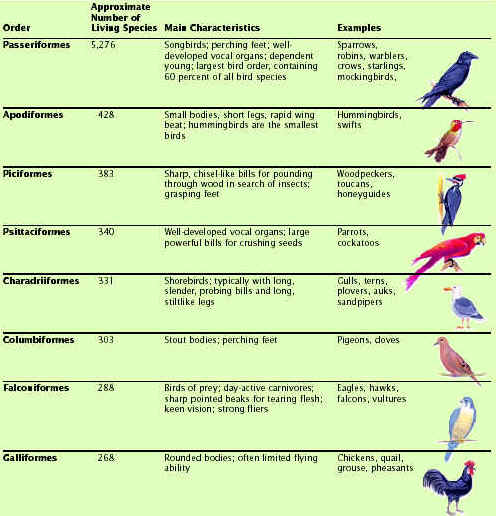
  • Gaviiformes – loons
  • Pelecaniformes – pelicans & cormorants
  • Ciconiiformes – wading birds like ibises & herons
  • Anseriformes – ducks, geese, & swans
  • Falconiformes – falcons, eagles, hawks, vultures
  • Galliformes – turkey, quail, pheasants
  • Gruiformes – cranes, coots, & rails
  • Charadriiformes – snipes, sandpipers, gulls, terns
  • Columbiformes – pigeons & doves
  • Psittaciformes – parrots, parakeets, & macaws
  • Cucluiformes – cuckoos & roadrunners
  • Strigiformes – owls
  • Caprimulgiformes – whippoorwill & nighthawk
  • Apodiformes – hummingbird & swifts
  • Coraciiformes – kingfishers
  • Piciformes – woodpeckers, sapsuckers, & flickers
  • Passeriformes – perching birds like robins, cardinals, blue jays


Pelican at Oranjestad waterfront
Pygmy Owl Brown Pelican
photograph of macaw Female Northern Cardinal Photograph
Macaw Female Cardinal


Food & Habitat Adaptations:

  • Anseriformes (ducks, geese, & swans) have webbed feet for swimming & flattened bills; young are precocial but need some parental care
  • Strigiformes (owls) have sharp, hooked beaks & talons (claws) for meat eating, keen hearing & eyesight, & forward facing eyes
  • Apodiformes (hummingbirds) are small, fast-flying birds with tiny feet & long tongues for drinking nectar; found only in western hemisphere
  • Psittaciformes (parrots, cockatoos, parakeets…) have a strong, hooked beak for seed opening & two forward & two rear facing toes for perching & climbing
  • Piciformes (woodpeckers, toucans, & flickers) have two rear facing toes for dwelling in tree cavities & sharp, chisel like bills for drilling into trees
  • Falconiformes or raptors ( hawks, eagles, vultures) have hooked beaks & talons & keen vision for seeing prey
  • Passeriformes or songbirds (blue jays, cardinals, sparrows, robins …) have enlarged rear facing toe to grip branches, a syrinx or voice box in males to produce songs, & a variety of beak shapes to feed on seeds, nectar, fruits, & insects; known as passerines or perching birds
  • Columbiformes (pigeons & doves) have small heads & bills, a crop that makes “pigeon’s milk” for feeding young, short incubation period (2 weeks)
  •  Ciconiiformes (herons, ibises, & egrets) have long legs for wading & sharp pointed bills for piercing frogs & fish
  • Galliformes (turkeys, quail, pheasants, & chickens)  have plump bodies with limited flying &a large gizzard for grinding grains
  • Sphenisciformes (penguins) have wings modified into flippers, an extra layer of body fat for insulation, & webbed feet for swimming
  • Struthioniformes (ostrich) are the largest birds that can’t fly but have long legs with only two toes adapted for fast running
Section 3 Review


BACK


Bullfrog Skeletal Reconstruction


Bullfrog Skeleton Reconstruction


Introduction:

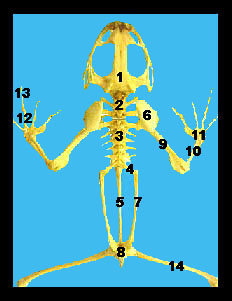
The skeleton of the frog consists chiefly of bony and cartilaginous elements.  The functions of a skeleton include providing support for the body,  protection of delicate internal organs and attachment surfaces for muscles.  In vertebrates, the axial skeleton consists of the skull, vertebral column, sternum (breast bone) and ribs (which are not present in amphibians).  The vertebral column of frogs is made up of 10 vertebrae, the first of which (called the atlas) articulates with the base of the skull.  The atlas is the only cervical vertebra in the frog.  The next seven vertebrae are abdominal vertebrae, which is the large sacrum with two strong transverse processes that join with the ileum.  The last vertebra is the long and highly modified urostyle.  Note:  Most vertebrates have a tail supported by caudal vertebrate, but frogs and toads are atypical in that they lack any tail and are therefore called anurans (“tail less amphibians”).
 

Lab_9b-17a  

1. Skull
2. Axis Cervical vertebrae)
3. Abdominal vertebrae
4. Cervical Vertebrae
5. Urostyle
6. Scapula
7. Ilium
8. Ischium
9. Humerus
10. Radio-ulna
11. Carpals
12. Metacarpals
13. Phalanges
14. Femur


The appendicular skeleton includes the limbs and the pectoral and pelvic girdles that support them.  In most vertebrates the forelimbs consist of three major bones — the humerus, radius and ulna, along with the smaller bones of the hand (carpals, metacarpals and phalanges).  Note that in the frog the radius and ulna have become fused into a single bone, the radio-ulna.  Likewise, the hindlimbs consist of three major bones — the femur, tibia and fibula, along with the smaller bones that make up the feet (tarsals, metatarsals and phalanges). Once again, in frogs and toads the tibia and fibula have become fused into a single bone, the tibio-fibula.  The pectoral girdle consists of four pairs of bones (the suprascapula, scapula, coracoid, and clavicle).  The last three pairs are connected to the sternum.  In frogs, the pelvic girdle, which supports the hindlimbs, is formed by the fusion of the ilium, ischium and non-ossified pubis.  Each femur fits into a socket on the pelvic girdle called an acetabulum.  Note that the pelvic girdle and limb structure are well adapted for giving a powerful, synchronous thrust of both hind limbs in swimming and jumping

Objective:

By reassembling an amphibian skeleton, students will learn the bones and modifications of a vertebrate.

Materials:

Dermestid beetles, small aquarium with air-vented lid,  dermestid bedding, food, & water supply, freeze-dried bullfrogs, tweezers, small container with lid for bones, 20% H2O2, thin piece of wood, paints, and glue.

Procedure:

  1. Place the freeze dried frog into a small aquarium of dermestid beetles.
  2. Leave the frog skeleton in the aquarium for several days to several weeks until all flesh has been stripped from the skeleton.
  3. Carefully remove all bones from the aquarium and use forceps to carefully pull away any flesh that remains..
  4. Rinse the bones in running water thoroughly.
  5. Bleach the bone in 20% hydrogen peroxide solution until the bones appear white.
  6. Dry the bones and articulate them. (use the above diagram to help in the arrangement of the bones.)
  7. Bones should be mounted on a thin piece of wood.
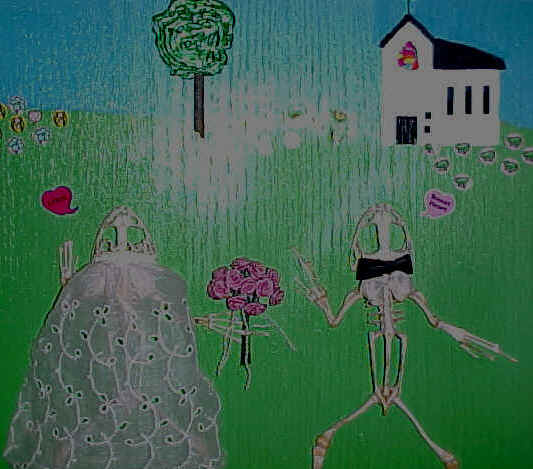
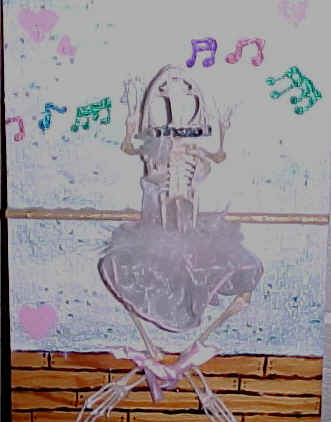
  8. You may be creative and place your frog in a scene of your choosing — playing football or basketball, swimming in a pond, practicing ballet, etc.

Examples:



Birds & Mammals Study Guide BI

Birds & Mammals Study Guide

What replaces teeth in modern birds?
How many chambers are there in a bird’s heart? a mammal’s heart?
Name 2 vertebrate groups that lay amniote eggs?
Did all fossilized birds have beaks? Explain.
Do most terrestrial vertebrates use internal or external fertilization?
Which mammal group carries its young in a pouch?
What mammal order lives entirely in water?
What characteristic of retile, bird, & mammal skin allows them to live on land?
Give several uses for hair or fur in mammals.
Name 2 main characteristics of all mammals.
What determines the type of teeth a mammal will have?
What group of mammals are egg layers?
What is the purpose of the placenta?
List several ways that birds are different from reptiles.
What were the earliest flying vertebrates?
From what group did birds probably arise?
Besides amniote eggs & living on land, name another way reptiles & birds are alike?
What group of mammals remain inside the mother until they are completely developed?
What mammal group has forelimbs modified into flippers?
What type of teeth are found in deer?
Name 2 sirenians.
What mammal group is born immature & finishes developing in the mother’s pouch?
In what order are dogs found?
Give 2 uses for the sounds that bats make? Can humans hear these sounds?
Name 2 marsupial mammals.
Echidnas & duck billed platypus are what type of mammals?
What are monotremes?
What are placental mammals?
Feathers are modified __________.
Describe the bones of birds.
What is the purpose of the crop in birds?
Birds excrete their nitrogenous waste as ____________.
Why is a bird’s respiration so efficient?
What are talons & what is their function?
Do all songbirds produce songs? Explain.
Where is the diaphragm located in mammals? What is its purpose?
Give the function of the syrinx in birds.
Reptiles called therapsids gave rise to what vertebrate group?
What type of teeth would carnivorous mammals have?
BACK


Build a Bug


Build-a-Bug


Introduction:

Most adult insects have the following characteristics:

    1. A body divided into three parts (head, thorax and abdomen)
    2. Three pairs of legs
    3. Usually one pair of antennae and a pair of compound eyes (a few exceptions to these characteristics are found)
    4. Usually two pairs of wings (absent in many insects such as lice, fleas, ants; flies have one pair of wings)

There are approximately 30 orders of insects. Choose one of the insects from these orders.

INSECT ORDERS

Click on the link to learn more about the characteristics of that order. There are links to specific insects on each page.  Visit the Field Guide Index to see a listing of all insects featured in the Field Guide.

Objective:

Students will build biologically correct insects in order to learn insect structure and adaptations.

Materials:

Any non-food item such as cardboard, egg cartons, clay, wire, felt, Styrofoam, pipe cleaners, nylon stockings, pipe cleaners, paint, glue, string, etc.

Guidelines:

  1. Your model must be an INSECT (i.e. no spiders, mites, ticks, centipedes, or millipedes, please). Note: Your insect does not have to live in the United States.
  2. Your model must be between 6-12 inches long, and sturdy.
  3. Be accurate when building your model (appropriate proportions, true color and form, etc.).
  4. The more detail your model has, the better.
  5. A written description must accompany your model and include:
  • The common name of the insect
  • The name of the order to which it belongs
  • A brief description of the insect’s habitat
  • Where the insect is located geographically
  • At least 2 interesting, and unique facts about the insect you have modeled (i.e. “it has 6 legs and 3 body segments” doesn’t count)
  • Your name and address on model description

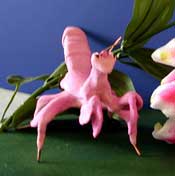
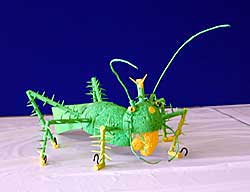
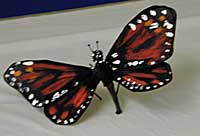
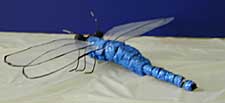
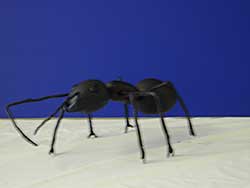
Examples of Models:


Spiny Katydid Monarch
Dragonfly Damselfly Luna Moth
Walking Stick Grasshopper Yellow jacket
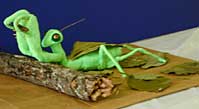
Atlas Moth Carpenter ant Praying Mantid