
WORLD BIOMES

BIOLOGY SAFETY CONTRACT
I, ____________________________ have read the safety rules for the biology classroom and lab and agree to follow all of the safety rules set forth in this contract. I realize that I must obey these rules to ensure my own safety, and that of my fellow students and instructors. I will cooperate to the fullest extent with my instructor and fellow students to maintain a safe lab environment. I will also closely follow the oral and written instructions provided by the instructor. I am aware that any violation of this safety contract that results in unsafe conduct in the laboratory or misbehavior on my part, may result in being removed from the laboratory, detention, receiving a failing grade, and/or dismissal from the course.
*Failure to have goggles at the beginning of any lab involving heat, chemicals or glassware (except microscopy) will result in removal from the room and a grade of “0” for the lab. The removal is required by the State of Arkansas.
I do/do not wear contact lenses.
I do/do not have a medical condition that could result in the need for emergency medical attention (explain here if you do).
Signed (student) _________________________________________Date ___________
_______________________________________________________________________________
Dear Parent or Guardian:
We feel that you should be informed regarding the school’s effort to create and maintain a safe science classroom/laboratory environment. With the cooperation of the instructors, parents, and students, a safety instruction program can eliminate, prevent, and correct possible hazards.
You should be aware of the safety instructions your son/daughter will receive before engaging in any laboratory work. Please read the list of safety rules above. No student will be permitted to perform laboratory activities unless this contract is signed by both the student and parent/guardian and is on file with the teacher, a safety test is passed with a 70% or greater, and a classroom map is constructed by the student.
Your signature on this contract indicates that you have read the Student Safety contract, are aware of the measures taken to ensure the safety of your son/daughter in the science laboratory, and will instruct your son/daughter to uphold his/her agreement to follow these rules and procedures in the the laboratory.
Signed (parent) ________________________________Date ___________
Day phone __________________ Convenient hours ___________________
Evening phone _________________Convenient hours __________________
| DNA Technology All Materials © Cmassengale |
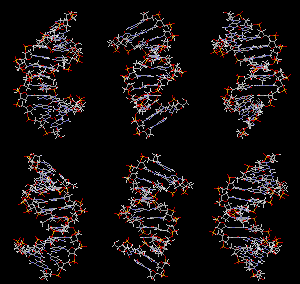 |
Introduction:
Viruses & their Structure:

Viral DNA ® mRNA ® protein
viral RNA ® cDNA ® mRNA ® protein

Retroviruses:
Vectors
Plasmids:
Viruses:
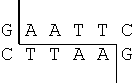
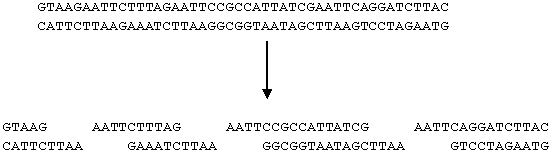
| Enzyme | Cutting Site |
| Bam HI | GGATCC |
| Hae III | GGCC |
| Pst I | CTGCAG |
| Hind I | GANTC |
Sticky Ends & Recombinant DNA:
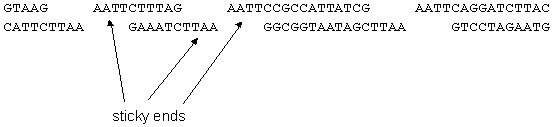
Genomic Libraries:
Polymerase Chain Reaction (PCR):


DNA Fingerprinting (RFLP Analysis):


Safety and Ethical Issues:

Biology I Second Semester
Updated May 2007

Week of January 8 assignments:
Read & outline chapter 10 on Nucleic Acids; PowerPoint: Nucleic Acids & protein Synthesis; chapter 10 outline due

Week of January 14 assignments:
Chapter 10 study guide; Lab: Strawberry DNA; Chapter 10 TEST on Nucleic Acids; Read & outline chapters 8 & 12 on genetics
Week of January 21 assignments:
PowerPoint on genetics; Monohybrid crosses & ratios; Chapter 8 outline due
I have a Dream! Martin Luther King Holiday
Week of January 28 assignments: 
Lab: Karyotyping; Work genetics problems; Notes on genetic disorders; genetics review; TEST on chapters * & 12 genetics; Read chapters 13 & 14 on evolution
Week of February 3 assignments:
Cover section 14.1 and chapter 15 on Charles Darwin & natural selection; Lab: Natural Selection in Peanuts
Week of February 11 assignments: Interims
study guide on evolution; TEST on chapters13 & 14 Evolution; Read & outline chapter 18 on Taxonomy; PowerPoint notes on taxonomy; Peanut lab write up due
Week of February 18 assignments:
Practice taxonomic keying; Complete taxonomy notes; Chapter 18 TEST on Taxonomy; Read & outline chapters 24 & 25 on bacteria & viruses
Monday Holiday — President’s Day!
Parent-Teacher Conference!
Week of February 25 assignments:
Notes on Sponges & Cnidarians; Assign Invertebrate drawings; study guide & take online quiz; Continue Koch’s lab
Week of March 3 assignments:
Complete Virus notes; Virus model due; Chapter 25 outline due; TEST on Bacteria & Viruses; Handout & worksheet on plant unit
Week of March 10 assignments:
Cover nonvascular plants, angiosperms, & gymnosperms
End of Third Nine weeks
Spring Break March 17 – 21!

Week of March 24 assignments:
Plant worksheet due; review for plant test; *UNIT TEST on Plants; Assign ecosystem collage; Start answering ecology unit worksheet

Week of March 31 assignments:
Work on and finish ecology unit worksheet; review for ecology test; TEST on Ecology; Read & outline chapter 35 on Sponges & Cnidarians
Good Friday, April 4th!
Week of April 7 assignments:
Ecosystem Collage due!; Notes on Sponges & Cnidarians; study guide; Test on Chapter 35 Sponges & Cnidarians; read & outline chapter 36 on Round & Flat worms
Week of April 14 assignments: Interims
Notes on worms; Chapter 36 outline due; read & outline chapter 37 on Mollusks & Annelids; notes on mollusks & annelids
Biology End-of-Course Exam on Wednesday April 16th and Thursday April 17th!
Week of April 21 assignments:
study guide & take online echinoderm test; Lab: Starfish Dissection; read & outline chapters 41 &42 on fish & amphibians; notes on fish; Scientist/Career Report due!
Week of April 28 assignments:
Dissect earthworm; *TEST on chapters 36 & 37 Worms & Mollusks; Read & outline chapters 38 & 39 on Arthropods & Insects; Start notes on arthropods
Week of May 5 assignments:
Notes on Insects; review for arthropod test; TEST on chapters 38 & 39 Insects & other Arthropods; read & outline Chapter 40 on Echinoderms
Click frog for jokes
Week of May 12 assignments:
Notes on Echinoderms; Dissect starfish; TEST on Chapter 40 Echinoderms; Read & outline chapters 41 & 42 on fish & amphibians; Assign vertebrate/invertebrate project
Week of May 19 assignments: Graduation May 23!
Notes on reptiles, birds, and mammals; Read chapters 44 & 45 on birds mammals; UNIT TEST on Vertebrates; Vertebrate/Invertebrate Project due!; semester Test review
Final Exams Start Next Week- Don’t Forget to study!!!
Week of May 26 assignments:
Semester Exams Tuesday, Wednesday, & Thursday; Textbooks due!
Final Exams Start – Don’t Forget to study!!!
End of Fourth Nine weeks
Enjoy your summer!
| Bilogy Openers | ||
All Materials © Cmassengale |
||
| Chapters 1 – Introduction #1 #2 #3 #4 #5 #6 #7 #8 #9 #10 |
Chapter 16 – Speciation #1 #2 #3 #4 #5 #6 #7 #8 #9 #10 |
Chapter 32 – Animal Intro #1 #2 #3 #4 #5 #6 #7 #8 #9 #10 |
| Chapter 2 – Chemistry #1 #2 #3 #4 #5 #6 #7 #8 #9 #10 |
Chapter 17 – Classification #1 #2 #3 #4 #5 #6 #7 #8 #9 #10 |
Chapter 33 – Sponges & Cnidarians #1 #2 #3 #4 #5 #6 #7 #8 #9 #10 |
| Chapter 3 – Biochemistry #1 #2 #3 #4 #5 #6 #7 #8 #9 #10 #11 #12 #13 #14 #15 #16 #17 #18 #19 #20 |
Chapter 18 – Ecology #1 #2 #3 #4 #5 #6 #7 #8 #9 #10 |
Chapter 34 – Worms #1 #2 #3 #4 #5 #6 #7 #8 #9 #10 |
| Chapter 4 – Cells #1 #2 #3 #4 #5 #6 #7 #8 #9 #10 |
More Chapter 18 Ecology #11 #12 #13 #14 #15 #16 #17 #18 #19 #20 |
Chapter 35 – Mollusks & Annelids #1 #2 #3 #4 #5 #6 #7 #8 #9 #10 |
| Chapter 5 – Homeostasis #1 #2 #3 #4 #5 #6 #7 #8 #9 #10 |
Chapter 20 – Community Ecology #1 #2 #3 #4 #5 #6 #7 #8 #9 #10 |
Chapter 36 – Arthropods #1 #2 #3 #4 #5 #6 #7 #8 #9 #10 |
| Chapter 6 – Photosynthesis #1 #2 #3 #4 #5 #6 #7 #8 #9 #10 |
Chapter 21 – Ecosystems #1 #2 #3 #4 #5 #6 #7 #8 #9 #10 |
Chapter 37 – Insects #1 #2 #3 #4 #5 #6 #7 #8 #9 #10 |
| Chapter 7 – Cell Respiration #1 #2 #3 #4 #5 #6 #7 #8 #9 #10 |
Chapter 22 – Environment #1 #2 #3 #4 #5 #6 #7 #8 #9 #10 |
Chapter 38 – Echinoderms #1 #2 #3 #4 #5 #6 #7 #8 #9 #10 Chapter 38 – Chordates #1 #2 #3 #4 #5 |
| Chapter 8 – Cell Reproduction #1 #2 #3 #4 #5 #6 #7 #8 #9 #10 Chapter 8 – Meiosis #1 #2 #3 #4 #5 #6 #7 #8 #9 #10 |
Chapter 23 – Bacteria #1 #2 #3 #4 #5 #6 #7 #8 #9 #10 |
Chapter 39- Fish #1 #2 #3 #4 #5 #6 #7 #8 #9 #10 |
| Chapter 9 – Genetics #1 #2 #3 #4 #5 #6 #7 #8 #9 #10 |
Chapter 24 – Viruses #1 #2 #3 #4 #5 #6 #7 #8 #9 #10 |
Chapter 40 – Amphibians #1 #2 #3 #4 #5 #6 #7 #8 #9 #10 |
| Chapter 10 – Nucleic acids #1 #2 #3 #4 #5 #6 #7 #8 #9 #10 |
Chapter 25 – Protists #1 #2 #3 #4 #5 #6 #7 #8 #9 #10 |
Chapter 41 – Reptiles #1 #2 #3 #4 #5 #6 #7 #8 #9 #10 |
| Chapter 11 – Genes #1 #2 #3 #4 #5 #6 #7 #8 #9 #10 |
Chapter 26 – Fungi #1 #2 #3 #4 #5 #6 #7 #8 #9 #10 |
Chapter 42 – Birds #1 #2 #3 #4 #5 #6 #7 #8 #9 #10 |
| Chapter 12 – Human Genetics #1 #2 #3 #4 #5 #6 #7 #8 #9 #10 |
Chapter 28 – Plant Classification #1 #2 #3 #4 #5 #6 #7 #8 #9 #10 |
Chapter 43 – Mammals #1 #2 #3 #4 #5 #6 #7 #8 #9 #10 |
| Chapter 13 – DNA Technology #1 #2 #3 #4 #5 #6 #7 #8 #9 #10 |
Chapter 29 – Plant Structure #1 #2 #3 #4 #5 #6 #7 #8 #9 #10 |
OPENER ANSWER SHEET |
| Chapter 14 – Origin of Life #1 #2 #3 #4 #5 #6 #7 #8 #9 #10 |
Chapter 30 – Plant Reproduction #1 #2 #3 #4 #5 #6 #7 #8 #9 #10 |
Template 1 Orange Clock Template 2 Yellow Clock |
| Chapter 15 – Evolution #1 #2 #3 #4 #5 #6 #7 #8 #9 #10 |
Chapter 31 – Plant Responses #1 #2 #3 #4 #5 #6 #7 #8 #9 #10 |
Template 3 Androids Template 4 Food for Thought |